




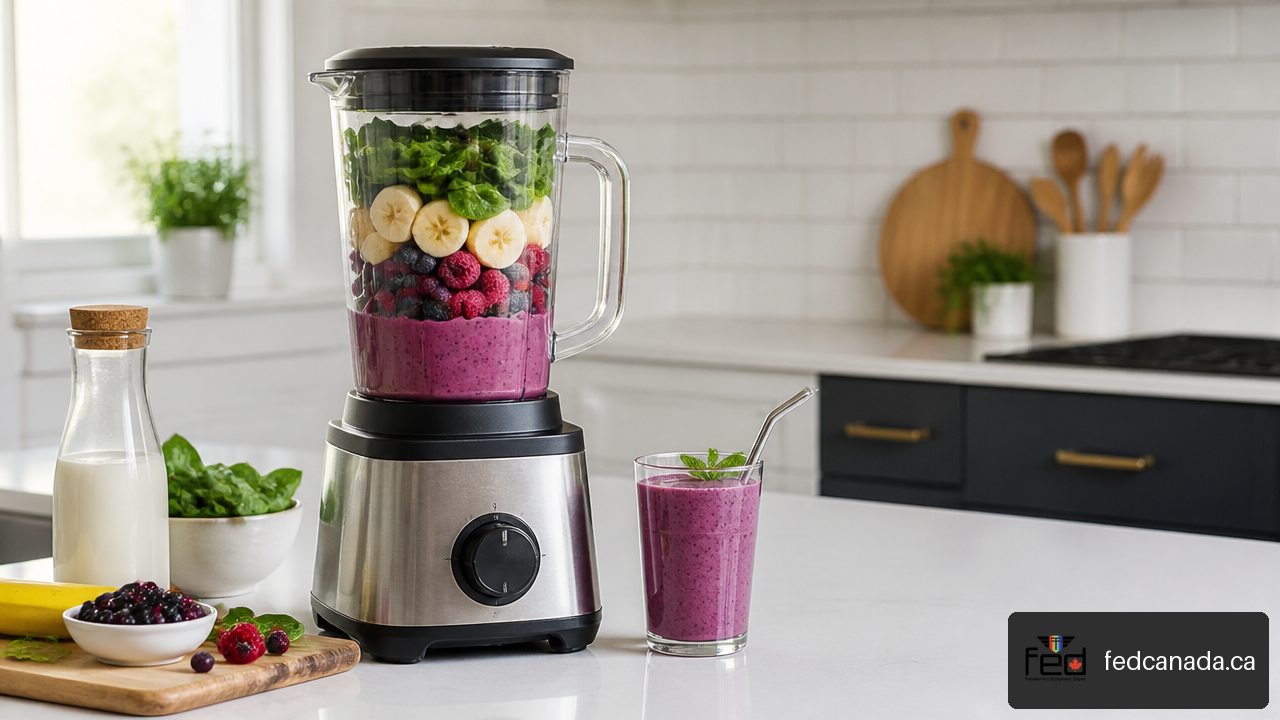
How to Choose a Smoothie Blender That Blends Smoothly
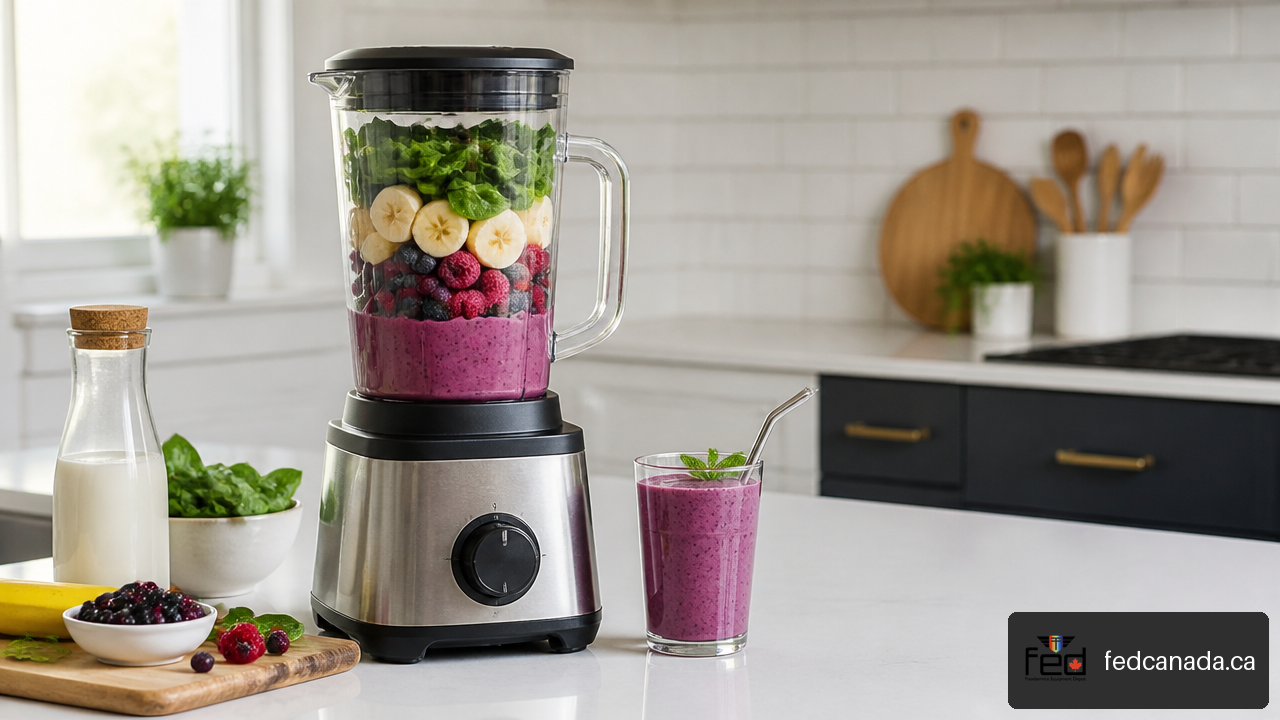
A good smoothie blender does more than spin a blade. It needs to pull frozen fruit, greens, seeds, protein powder, and liquid into a steady vortex so the ingredients become smooth instead of circling above the blades. I recommend choosing based on the smoothies you actually make, not just the largest wattage number on the box.
A compact personal blender may be ideal for one drink before work. A high powered jug blender may make more sense for thick frozen bowls, several servings, or leafy greens. The best choice comes down to ingredient load, container geometry, batch size, cleanup expectations, and how often the blender will run.
Table of Contents
- Key Takeaways
- Choose the Right Smoothie Blender Format
- What Creates a Smooth Smoothie
- How to Blend Frozen Fruit Without Stalling
- Commercial Smoothie Blenders for Busy Service
- Smoothie Blender FAQ
Key Takeaways
Start with your recipe, not the advertised wattage
Motor wattage matters, but it is only one part of smoothie performance. A blender also depends on blade design, container width, blade position, ingredient size, liquid volume, and the thickness of the recipe. A high wattage blender can still struggle if a small smoothie sits too high above wide blades or if the container is overloaded with hard frozen ingredients.
Match the container to the batch size
A narrow single serve cup often promotes circulation for one smoothie. A wide full size jar is usually better for multiple servings, but it may not circulate a very small batch as efficiently. If you regularly make one 12 to 20 ounce smoothie, prioritize a container designed for that volume.
Use a practical loading sequence
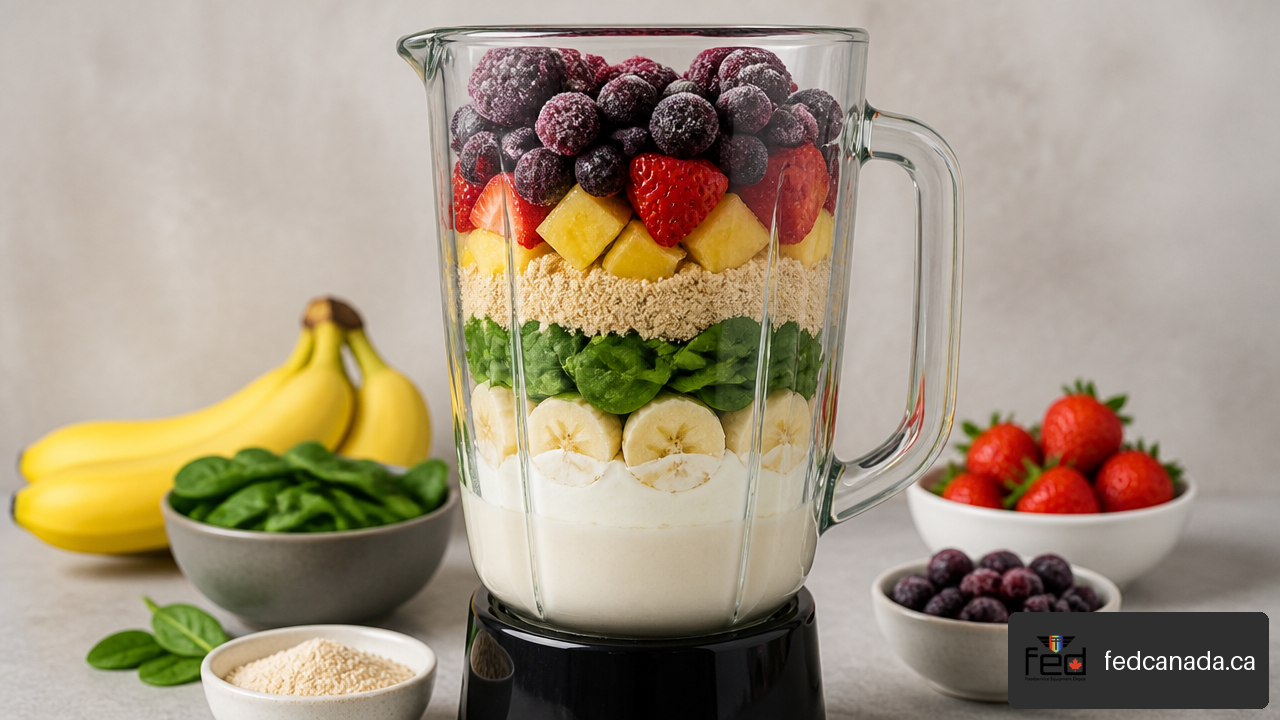
For frozen smoothies, I recommend this order:
- Add liquid first.
- Add soft ingredients such as yogurt, banana, or nut butter.
- Add greens and powders.
- Add fresh fruit.
- Finish with frozen fruit or ice in manageable pieces.
This helps the blade establish movement before it meets the densest ingredients. In a smoothie discussion, users commonly identified too little liquid as a reason ingredients stop circulating in the blender. Reports of stalled smoothie circulation are anecdotal, but they point to a useful rule: a thick blend still needs enough liquid to reach and feed the blade.
A smoothie should move before it becomes perfectly smooth. If nothing is circulating, more blending time may only heat the motor and leave chunks behind.
Choose the Right Smoothie Blender Format
Personal blenders for one daily smoothie
A personal blender is usually the practical choice for one person who wants a fast breakfast shake, protein smoothie, or fruit drink. The blending cup often doubles as the drinking cup, limiting transfers and cleanup.
Choose a personal smoothie blender when you mainly use:
Milk, plant based beverages, juice, or water
Soft fruit and banana
Protein powder, oats, yogurt, and nut butter
Moderate amounts of frozen berries or smaller frozen fruit pieces
Avoid relying on a light duty personal blender if your typical recipe contains large ice cubes, dense frozen mango chunks, fibrous greens, or several tablespoons of seeds. Those ingredients place more demand on the blade and motor than a basic shake.
Full size jug blenders for thick or shared recipes
A full size blender works well for families, meal prep, smoothie bowls, and recipes that include substantial frozen fruit, greens, dates, or ice. Its larger container also makes it easier to blend multiple servings without repeatedly running small batches.
The tradeoff is minimum volume. A wide container can leave a small amount of ingredients spread around the sides rather than pulled into the blade zone. For example, a single serving made with half a banana, a handful of berries, and a small splash of milk may blend better in a narrow cup than in a large, wide jar.
Look for these features if you want thicker smoothies:
A tapered jar that guides ingredients toward the blade
Variable speed controls rather than a single fixed speed
A tamper designed for the specific blender jar
A secure lid with a removable center cap
Replacement parts for the container, lid, blade assembly, and seals
Portable blenders have a clear limit
Portable blenders are convenient for mixing soft fruit, protein powder, or pre blended ingredients away from home. They are not automatically substitutes for countertop smoothie blenders.
Some users in a portable blender discussion reported disappointing results when ice was included, even where the unit was marketed for that task. Portable blender ice performance reports should be treated as user feedback rather than controlled testing, but the practical takeaway is sound: portability usually requires compromises in motor size, battery capacity, container size, and frozen ingredient capability.
Immersion blenders are a niche option
An immersion blender can be useful for soft fruit smoothies, soups, sauces, or blending in a tall cup. It is less convenient for hard frozen fruit and ice because the ingredients may scatter, ride up the sides, or require repeated repositioning. Consider one when storage is the priority and your smoothie recipes stay relatively soft.
| Blender type | Best use | Main advantage | Watch for |
|---|---|---|---|
| Personal blender | One serving | Compact, low cleanup | Limited capacity and frozen food tolerance |
| Full size jug blender | Multiple servings and thick blends | Better capacity and control | Wide jars can struggle with tiny batches |
| Portable blender | Soft ingredients on the go | Rechargeable convenience | Often limited with ice and hard frozen fruit |
| Immersion blender | Soft recipes and multipurpose prep | Small footprint | Less effective for dense frozen smoothies |
What Creates a Smooth Smoothie
Motor power is useful, but it is not the whole story
Wattage is an electrical rating, not a complete prediction of texture. Two blenders with similar wattage can perform differently because of blade shape, motor torque, speed control, jar design, and how efficiently ingredients circulate.
Instead of asking only, “How many watts is it?” ask these questions:
Can the blender handle the frozen fruit load I use most often?
Does the container shape suit a single serving or a larger batch?
Are the blades and seals replaceable?
Does the product documentation describe operating limits and care instructions?
Can I use a tamper safely for dense recipes if the model supports one?
A practical texture test is more revealing than a power claim. Compare blenders with the same recipe: measured liquid, frozen berries, banana, greens, and a small amount of seeds. Blend for the same amount of time, allow the smoothie to rest briefly, then check for skin fragments, seed grit, ice pieces, and unmixed powder. That approach does not create a universal ranking, but it gives you a comparison based on your own recipes.
Blade design and jar geometry create the vortex
Smooth blending requires circulation. The blade chops ingredients near the bottom, while the jar shape helps pull ingredients down from the sides. If the blender creates an air pocket around the blade, the blade may spin quickly while the ingredients barely move. This is often called cavitation.
Cavitation is especially common with very thick frozen smoothies. The mixture can bridge above the blade, leaving empty space underneath. The solution is not always more liquid. For a smoothie bowl, adding a large amount of liquid may ruin the texture. A compatible tamper, smaller frozen fruit pieces, a brief pause to redistribute ingredients, or a slightly larger batch can work better.
The seal deserves attention before purchase
The blade assembly seal is easy to overlook because it does not change a smoothie’s texture on day one. Over time, however, a worn gasket or loose blade assembly can lead to leaks. Liquid reaching the motor base can create a bigger problem than a messy countertop.
Before buying, check whether the model offers:
A removable blade assembly or replaceable gasket
Clear instructions for cleaning and tightening components
Readily available replacement cups, lids, jars, or blade units
A warranty that explains what is covered
Do not operate a blender if liquid is leaking toward the base. Stop, unplug it, inspect the container and seal, and replace damaged components as directed by the manufacturer.
How to Blend Frozen Fruit Without Stalling
Build movement before high speed
A smoothie blender generally performs best when the ingredients begin moving at a lower speed and then increase gradually. Starting immediately at maximum speed can push light ingredients upward or leave dense frozen pieces parked above the blade.
A community discussion specifically noted that beginning at a lower speed before increasing can help prevent ingredients from being pushed away from the blades. Starting low before increasing blender speed is a simple technique worth trying, especially with a container packed with frozen fruit.
Use this rescue protocol for a stalled blend
If the motor runs but the mixture is not moving, stop rather than forcing the machine through a thick air pocket.
- Turn the blender off and unplug it before touching the container.
- Wait for the blade to stop completely.
- Remove the cup or jar and gently redistribute ingredients with a suitable utensil only when the blade is no longer connected to power.
- Add a small amount of liquid, not a full extra cup at once.
- Reattach the container securely.
- Start at low speed or use short pulses until circulation begins.
- Increase speed only after the ingredients are moving consistently.
For a thick smoothie bowl, use a tamper only if the blender is explicitly designed for one. Never insert a utensil through the lid while the blade is operating.
Reduce the frozen fruit load strategically
Frozen fruit gives smoothies body and a cold texture, but it also increases resistance. Small adjustments can lower strain without making a watery drink.
| Adjustment | Effect on blending | Best when |
|---|---|---|
| Partially thaw fruit | Reduces hardness and blending time | Your blender leaves fruit chunks |
| Use smaller frozen pieces | Improves contact with the blade | Large mango or strawberry pieces stall the blend |
| Replace some ice with frozen fruit | Adds creamier body with less hard ice | You want a thick smoothie with less crunch |
| Add liquid in small increments | Restores circulation without over thinning | The mixture forms an air pocket |
| Make a slightly larger batch | Helps fill a wide jar’s blade zone | A full size blender struggles with one serving |
Know when the motor needs a break
A hot smell, rapidly changing motor pitch, or an automatic shutdown can indicate excessive load. Exact run limits vary by model, so follow the manufacturer’s instructions rather than assuming every blender can run continuously for the same length of time.
If a blender stops during a dense blend, turn it off, unplug it, and allow it to cool before trying again. Repeatedly restarting a hot motor against the same dense mixture is unlikely to solve the underlying issue. Reduce the frozen load, add a little liquid, or split the batch.
Commercial Smoothie Blenders for Busy Service
Choose for repeatability and recovery time
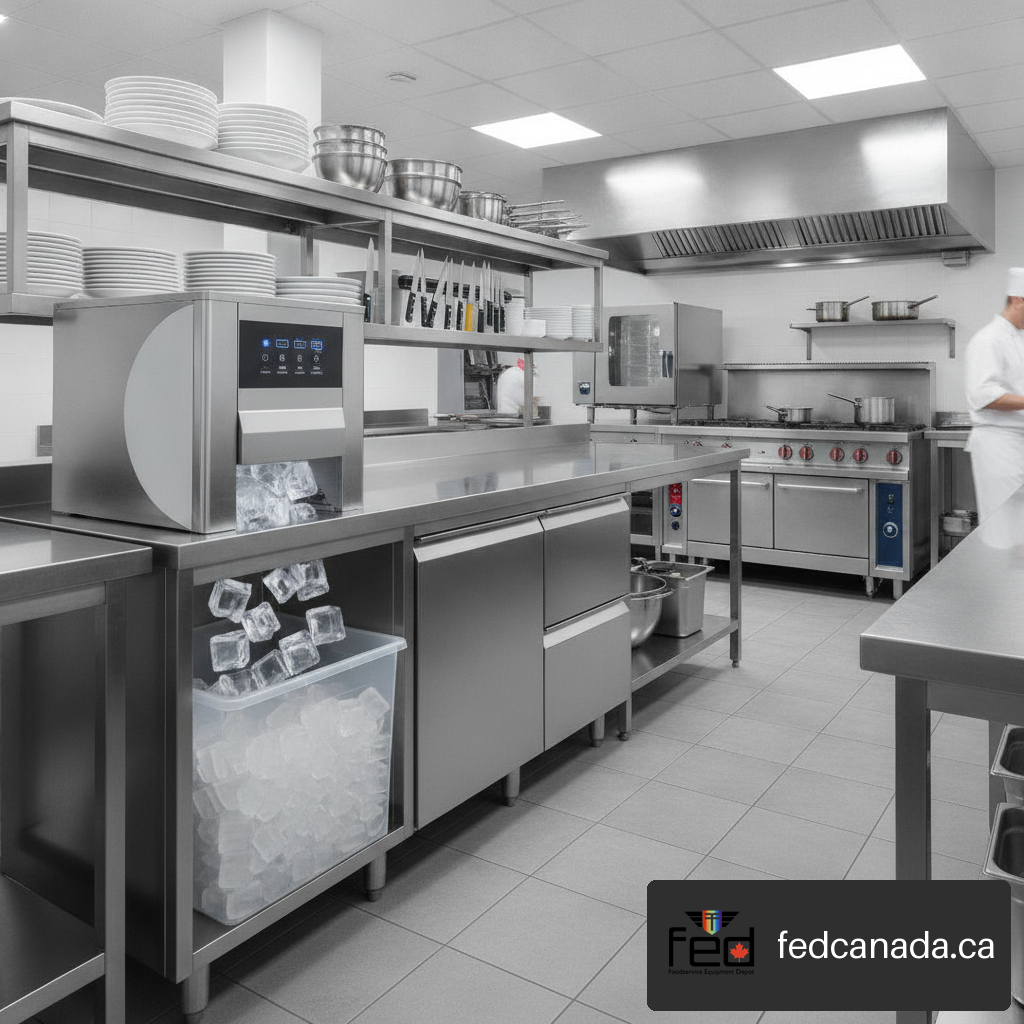
For cafés, juice bars, restaurants, gyms, and catering operations, the right blender is not simply the most powerful unit available. It is the model that can produce consistent drinks at your expected pace, fit the available counter space, and be cleaned between orders without disrupting service.
Commercial operations should consider:
Expected smoothies per hour
Cup sizes and menu portion standards
Typical use of ice, frozen fruit, greens, powders, and nut butters
Available electrical capacity and counter space
Noise level near customers or open kitchens
Replacement container, blade, and seal availability
Staff training for loading, cleaning, and overheating prevention
A large capacity countertop unit can suit prep work and multi serving batches. For example, an Omcan 4L Countertop Blender may be relevant where capacity and a removable cutting unit matter more than single serve convenience.
Manage noise without sacrificing workflow
High speed blending can be disruptive in a small café, hotel breakfast area, or customer facing juice bar. A sound enclosure can help reduce perceived noise around the service counter, though it does not remove the need for proper loading and sensible operating practices.
For operations where quieter front counter service is a priority, a Hamilton Beach Commercial Quiet Blender is the type of equipment worth evaluating alongside capacity, container condition, and service needs.
Pair blending with efficient beverage service
Smoothies often share space with juices, chilled beverages, and self serve stations. If a menu includes both made to order smoothies and ready to pour drinks, separating those workflows can reduce bottlenecks. A Cofrimell Commercial Juice Dispenser can complement a beverage station by keeping juice service separate from the blending counter.
The clearest commercial buying question is this: What happens during the busiest 15 minutes of service? Choose equipment based on that answer. A blender that performs well for occasional home use may not be the right fit for repeated frozen drink orders.
Smoothie Blender FAQ
What is the best type of blender for making one smoothie every day?
A personal blender is usually the best fit for one daily smoothie made with liquid, fruit, protein powder, yogurt, and moderate frozen ingredients. Choose a full size blender instead if you regularly use dense greens, hard frozen fruit, ice, or make more than one serving.
Is a personal blender powerful enough for frozen fruit and ice?
Some are, but capability varies widely. A personal blender may handle small frozen berries and softer fruit better than large ice cubes or hard frozen chunks. Check the product instructions, use enough liquid, and avoid packing the cup beyond its intended capacity.
How much liquid should I add to a frozen fruit smoothie?
There is no universal amount because cup size, fruit type, yogurt, nut butter, and desired thickness all change the result. Start with enough liquid to reach the blade area, then add small increments if circulation stops. For a thick smoothie, add only a little at a time rather than turning it into a thin drink.
Why does my smoothie blender get stuck or spin without mixing?
The likely causes are too little liquid, too much frozen material, an air pocket around the blade, or a batch that is too small for a wide jar. Stop the blender, redistribute the ingredients, add a small amount of liquid, and restart slowly.
Is a higher wattage blender always better for smoothies?
No. Higher wattage can be useful for demanding recipes, but blade design, jar geometry, speed controls, ingredient size, and loading technique also affect performance. A well matched container can outperform a more powerful blender used with the wrong batch size.
Is a narrow jar better than a wide jar for small smoothies?
Often, yes. A narrow container can keep a small batch closer to the blade and support better circulation. A wide jar can work well for larger batches but may leave one small serving spread too thinly across the bottom.
Why does my blender smell hot or shut off while making smoothies?
The motor may be under excessive load or activating thermal protection. Stop blending, unplug the unit, let it cool, and reduce the thickness of the next batch. Check your model’s manual for its operating guidance and do not keep restarting it against a stalled mixture.
Sources / References
- reddit.com — https://www.reddit.com/r/Smoothies/comments/1vj9s4d/blender_always_doing_this/
- reddit.com — https://www.reddit.com/r/Smoothies/comments/xnsvf3/smoothie_help_is_it_me_or_my_blender_anyone_ever/
- reddit.com — https://www.reddit.com/r/Smoothies/comments/qej4ae/blender_gets_stuck_frequently_while_making/
Recent Posts

Leave a Comment
Your email address will not be published. Required fields are marked *