





Ice Cream Machine Guide: Choose, Use, and Troubleshoot
An Ice Cream Machine can turn a chilled dessert base into something smooth, airy, and scoopable, but the best machine depends less on brand hype than on your freezer space, batch schedule, and preferred texture. I recommend choosing the process first: classic churning, built in refrigeration, or processing a fully frozen pint.
Table of Contents
- How an Ice Cream Machine Works and Which Type Fits
- How to Get Better Texture From Every Batch
- Troubleshooting and Caring for an Ice Cream Machine
- Key Takeaways
- FAQ
How an Ice Cream Machine Works and Which Type Fits
The two jobs: freezing and churning
An ice cream machine does two things at once: it removes heat from a dessert base and keeps that base moving while it freezes. The freezing part creates tiny ice crystals. The churning part, driven by a paddle or dasher, scrapes cold material from the vessel wall, redistributes it through the liquid, and folds in some air.
That movement is not decorative. Without agitation, the coldest mix stays against the freezing surface and can form larger, crunchier ice crystals. With steady churning, crystals remain smaller and the base thickens into the familiar soft serve stage. The final texture still depends on the recipe, temperature, and storage, but the machine gives the freezing process a far better starting point.
A typical dairy base is an emulsion: fat droplets are suspended through water, sugars, proteins, and flavoring. Fat contributes richness and body. Sugar lowers the freezing point, which is why a properly balanced base remains scoopable rather than freezing into a solid block. An emulsifier, whether naturally supplied by egg yolk or added in a commercial formulation, can help fat and water stay more evenly dispersed.
A machine cannot rescue every formula. If a base is too watery, too warm, or too low in sugar and solids, it can still freeze hard and icy after churning.
Frozen bowl, compressor, or frozen pint?
The best choice comes down to workflow. A frozen bowl machine stores its cooling power in the bowl. A compressor machine makes cold as it runs. A frozen pint processor starts with a solid frozen dessert and mechanically shaves and blends it into a creamy texture.
| Machine type | How it processes dessert | Best fit | Main tradeoff |
|---|---|---|---|
| Frozen bowl machine | Churns a liquid base in a bowl frozen ahead of time | Occasional batches and lower upfront cost | Requires substantial freezer planning |
| Compressor machine | Refrigerates and churns a liquid base in one unit | Frequent use, back to back batches, entertaining | Larger footprint and higher purchase cost |
| Frozen pint processor | Shaves and reprocesses a solid frozen pint | Individual portions, protein desserts, mix in focused treats | Different process from classic churning |
Best Buy Canada’s ice cream maker buying guidance notes that frozen bowl machines need advance freezing, while compressor models chill the mixture during operation; it also highlights capacity, fill lines, freezer space, and cleaning as practical buying criteria.
Frozen bowl machines are simple and often appealing for a household that makes dessert every few weeks. The compromise is hidden in the calendar. The bowl must be cold all the way through, not merely frosty on the outside. ChefPicks’ Canadian comparison says these bowls may need roughly 12 to 24 hours in the freezer, while frozen pint machines process a solid frozen base rather than churning a liquid one.
That distinction matters. A frozen pint processor does not create ice cream by gradually freezing a flowing liquid under churn. It begins with a hard frozen block, then uses a blade to shave, fracture, and blend that block. The result can be remarkably creamy, especially for single servings, but it is a different texture pathway. Comparing it directly with a freshly churned custard is a bit like comparing whipped potatoes with mashed potatoes: both can be enjoyable, but the mechanics and starting states are not the same.
A measurable freezer and batch size test
Before buying a frozen bowl machine, measure a real freezer shelf rather than estimating from memory. Record usable shelf height, width, and depth after accounting for drawers, bins, and food already stored there. Then compare those dimensions with the bowl’s exterior dimensions and allow room to place it flat. A bowl that only fits on its side is not a reliable solution. Its internal freezing medium may not settle evenly, and it can be inconvenient to keep the bowl ready for a spontaneous batch.
For a household with a crowded freezer, a compressor model can be more practical even if it costs more at the outset.
Also separate vessel capacity from finished yield. A 1.5 quart vessel does not necessarily mean 1.5 quarts of finished ice cream. Churning incorporates air, called overrun, and additions such as cookie pieces, fruit, or nuts need physical space. Leave room beneath the maximum fill line. A base that rises into the lid can churn unevenly, leak, or overload the paddle.
For foodservice operations, this calculation becomes even more important. A countertop home style machine may suit recipe development, small event service, or specialty portions, but it is unlikely to sustain a busy dessert program. Batch freezer capacity, recovery time, refrigeration output, sanitation procedures, and local food safety requirements should all be considered before treating a small machine as production equipment.
How to Get Better Texture From Every Batch
Start with a cold, balanced base
Chilling the mix before processing shortens the time it spends in the machine and reduces the chance of large crystals forming while the machine catches up. A base that has been refrigerated until fully cold is usually easier to churn consistently than one mixed moments earlier at room temperature.
For many traditional dairy recipes, balance is more useful than chasing one universal ratio. The mix needs enough sugar to keep it softer, enough fat or other solids to provide body, and enough water control to avoid a coarse, icy finish. Sorbet is especially sensitive because fruit varies widely in water and sugar content. A juicy watermelon purée and a dense mango purée may need different amounts of sugar even when the recipes look similar on paper.
Use these general preparation steps:
- Cook or blend the base as required by the recipe.
- Chill it in a covered container until thoroughly cold.
- Assemble the machine before removing a frozen bowl from the freezer.
- Start the paddle before adding a liquid base if the manual directs that sequence.
- Add delicate mix ins near the end, once the base has thickened.
- Transfer the finished dessert promptly to a cold storage container for firming.
A warm base is not always a disaster, but it asks the machine to remove more heat before the texture can develop. Fair warning: a frozen bowl machine has a limited cold reserve. Spending much of that reserve cooling a warm mixture can leave too little freezing power for a proper churn.
Churning time is a texture signal, not a race
Many machines finish a batch in roughly 20 to 40 minutes, but the clock should not be the only decision maker. Stop when the mixture looks like thick soft serve and the paddle begins moving through noticeable resistance. It will usually firm further in the freezer.
Stopping too early leaves a loose base that can freeze into a dense, icy slab. Running too long can strain the motor, especially with a very cold or thick formulation. If the paddle begins to labor, do not force the machine through the final stage just to hit a recipe’s stated time.
Gelato, frozen yogurt, and sorbet can all be made in many ice cream machines, though the best settings vary. Gelato is often served slightly softer and typically aims for a denser, lower air texture. Frozen yogurt may need careful sweetness and fat balance because yogurt’s tang and water content affect perceived hardness. Sorbet needs enough dissolved sugar and solids to avoid becoming a fruit flavored ice block.
Use mix ins without sabotaging the freeze
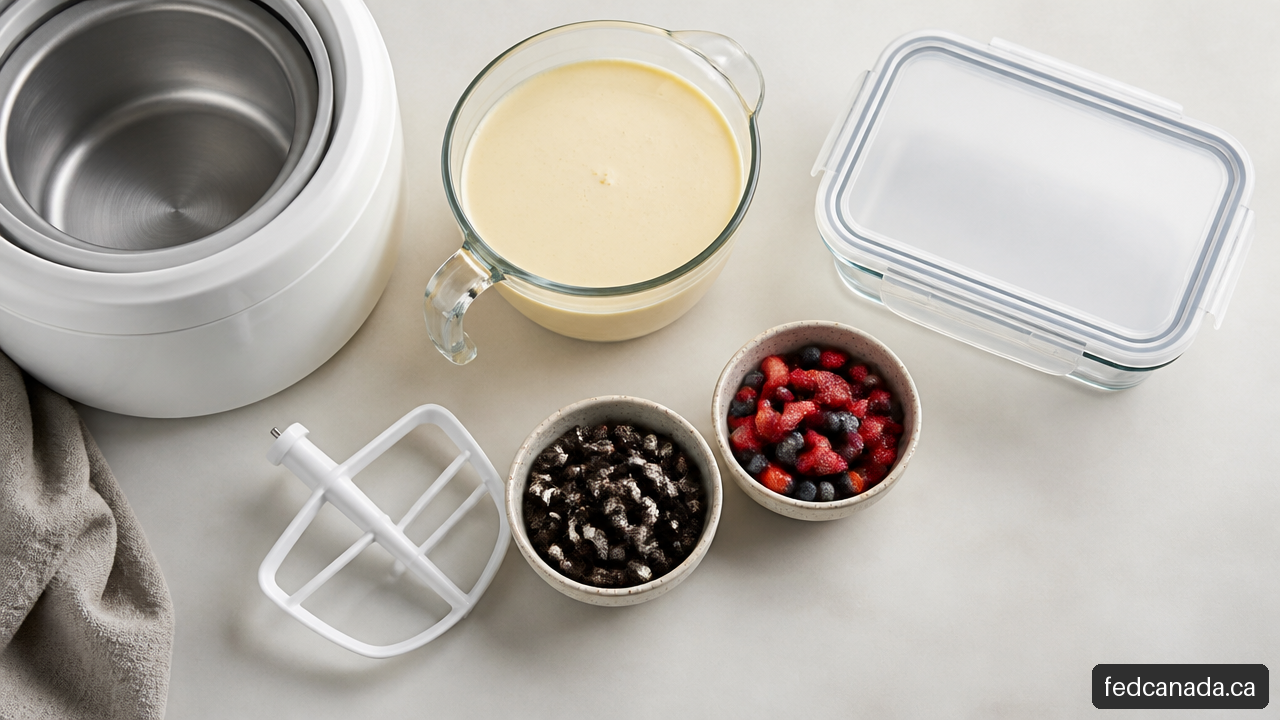
Mix ins should be cold, dry where possible, and small enough for the machine’s clearance. Warm brownies, syrupy fruit, or a large handful of room temperature candy can warm the churning base exactly when it needs to freeze fastest.
For a practical example, add chilled cookie pieces during the final minute or two rather than at the start. The machine can establish a smooth frozen structure first, then distribute the pieces without making the paddle fight through an uneven, heavy mass.
Choose a workflow you will actually repeat
I recommend comparing ownership by total workflow, not by the advertised churn time alone.
| Workflow factor | Frozen bowl machine | Compressor machine | Frozen pint processor |
|---|---|---|---|
| Preparation before dessert | Freeze bowl in advance | Chill base, then start machine | Freeze filled pint solid before processing |
| Active processing | Churns liquid base | Churns liquid base | Reprocesses a frozen base |
| Consecutive batches | Limited unless extra bowls are ready | Usually more practical | Depends on pre frozen pint supply |
| Freezer demand | Large bowl occupies space | Finished containers need freezer space | Multiple pints occupy freezer space |
| Best service style | Planned family batch | Repeated fresh batches | One portion at a time |
A compressor machine is often worth the extra cost when the friction is operational rather than financial. Consider a weekend where two flavors are needed for guests. A frozen bowl unit may handle this only if two bowls have been frozen in advance or the first batch is followed by another long freeze. A compressor unit can generally begin another chilled batch after the first is removed, though manufacturers’ cooldown and operating instructions still control.
Troubleshooting and Caring for an Ice Cream Machine
If the ice cream stays soft or liquid
Start with the cold chain. Was the base fully chilled? Was the frozen bowl stored level in a freezer cold enough, long enough? Was the bowl removed only when everything else was ready? Those answers solve many disappointing batches.
If a frozen bowl seems cold but produces a thin result, return it to the freezer for a longer uninterrupted freeze. Some bowls may need a full day at about 0°F, or minus 18°C, when a shorter period is not enough. Avoid opening the freezer repeatedly during that time, especially in a tightly packed freezer that is recovering from warm groceries.
Then review the formula. Excess water, too little sugar, or a large quantity of warm add ins can prevent a base from setting well. Do not add more ice or freeze water directly into the mix as a rescue attempt. That usually makes texture worse.
If the paddle stops or becomes stuck
Turn the machine off before investigating. Check that the bowl, paddle, lid, and drive connection are seated correctly. A mix that has become exceptionally thick can trigger motor protection or create too much resistance. Let the mixture soften slightly, remove the obstruction if visible, and consult the machine manual before restarting.
Community troubleshooting should be treated carefully because designs differ. In one r/icecreamery discussion about paddle obstruction, users reported checking for frozen water or debris around the paddle and allowing frozen components to defrost before restarting. That can be a sensible visual check, but it is not a universal manufacturer diagnosis.
A separate community report about rotation stopping described machines halting when components appeared imbalanced. Check alignment first, but do not assume every stopping issue is an imbalance. Repeated shutdowns, burning smells, damaged parts, or unexplained errors are reasons to stop using the unit and seek authorized service.
Compressor ventilation is part of performance
Compressor machines need room to release heat. If the condenser cannot draw and exhaust air effectively, refrigeration performance can suffer. This is easy to overlook when a machine is squeezed between appliances or pushed against a wall after each use.
The HTG Service ice cream machine manual identifies dust in ventilation openings, insufficient clearance, and excessive condenser intake temperature as conditions that can contribute to operating problems.
Keep vents clear, wipe away dust with the machine unplugged, and follow the manufacturer’s stated clearance requirements. A hot kitchen, sunny counter, or enclosed cabinet can make a compressor work much harder.
Cleaning and Canadian compatibility checks
Clean the removable bowl, paddle, lid, and any seals promptly after use. Dried dairy residue is harder to remove and can harbor odors. Hand washing is the safer default unless the manual specifically says a part is dishwasher safe. Electrical housings and compressor sections should never be immersed.
For Canadian buyers, verify these details before ordering, especially from cross border sellers:
- Confirm the appliance is intended for Canadian 120 volt household power and has the correct plug.
- Check the exact model number and suffix, not just the product name.
- Confirm that the warranty is valid in Canada and identify the service route before purchase.
- Check whether replacement bowls, paddles, lids, and seals are available for that regional model.
- Read the Canadian instruction manual for clearance, cleaning, and electrical requirements.
This is not paperwork for its own sake. A bargain import can become expensive if the replacement paddle is unavailable locally or the warranty applies only in another country.
Key Takeaways
- An Ice Cream Machine creates smoother frozen desserts by freezing and agitating the base at the same time.
- Frozen bowl machines suit planned batches, compressor machines suit repeat production, and frozen pint processors use a fundamentally different solid base workflow.
- Measure freezer shelf space before choosing a frozen bowl model, and remember that realistic finished yield is lower than the vessel’s maximum capacity.
- A thoroughly chilled base, restrained fill level, and cold mix ins help the machine form smaller crystals and a smoother texture.
- If performance drops, check temperature, assembly, paddle resistance, ventilation, and cleanliness before assuming the machine has failed.
- Persistent motor, compressor, or error issues should be handled through the manufacturer or an authorized service centre rather than repeated restart attempts.
FAQ
What is the difference between a frozen bowl, compressor, and frozen pint ice cream machine?
A frozen bowl machine churns a liquid base in a pre frozen vessel. A compressor machine chills and churns the liquid base using built in refrigeration. A frozen pint processor starts with a fully frozen solid base and shaves and blends it until creamy. Choose based on the workflow and texture style you want, not only the number of dessert programs.
Which ice cream machine is best for occasional home use?
A frozen bowl machine is often the practical choice for occasional use if there is reliable freezer space and batches can be planned a day ahead. Avoid it if the freezer is crowded or spontaneous dessert making is the priority. A compact compressor model may be easier to live with for frequent users despite its larger counter footprint.
Do I need to freeze the bowl before using an ice cream machine?
Yes, for a frozen bowl machine. The bowl supplies the cold needed to freeze the base during churning. Freeze it for the time specified by the manufacturer, often overnight, and keep it in the freezer until the base and machine are ready.
How long should an ice cream machine churn?
Churn until the mixture reaches a thick soft serve consistency, often within 20 to 40 minutes depending on the machine, base temperature, and recipe. The exact time varies. If the paddle slows dramatically or the mixture is already very thick, stop rather than forcing the motor.
Why is my ice cream machine producing soft or liquid ice cream?
The most likely causes are a bowl that was not frozen long enough, a warm base, an overfilled vessel, a recipe with too much water, or a machine that cannot shed heat effectively. Start by chilling the base longer and confirming the bowl or compressor has proper operating conditions.
Can an ice cream machine make gelato, sorbet, and frozen yogurt?
Usually, yes. Gelato, sorbet, and frozen yogurt each need a recipe designed for their different sugar, fat, water, and solids levels. A machine program can help, but the formula still controls whether the final dessert is dense, smooth, icy, or too hard to scoop.
Is a compressor ice cream machine worth the extra cost?
It can be worthwhile when repeated batches, flexible timing, and avoiding a permanently stored freezer
Recent Posts


Leave a Comment
Your email address will not be published. Required fields are marked *