



Proofers and Dough Sheeters: A Bakery Equipment Starter Guide
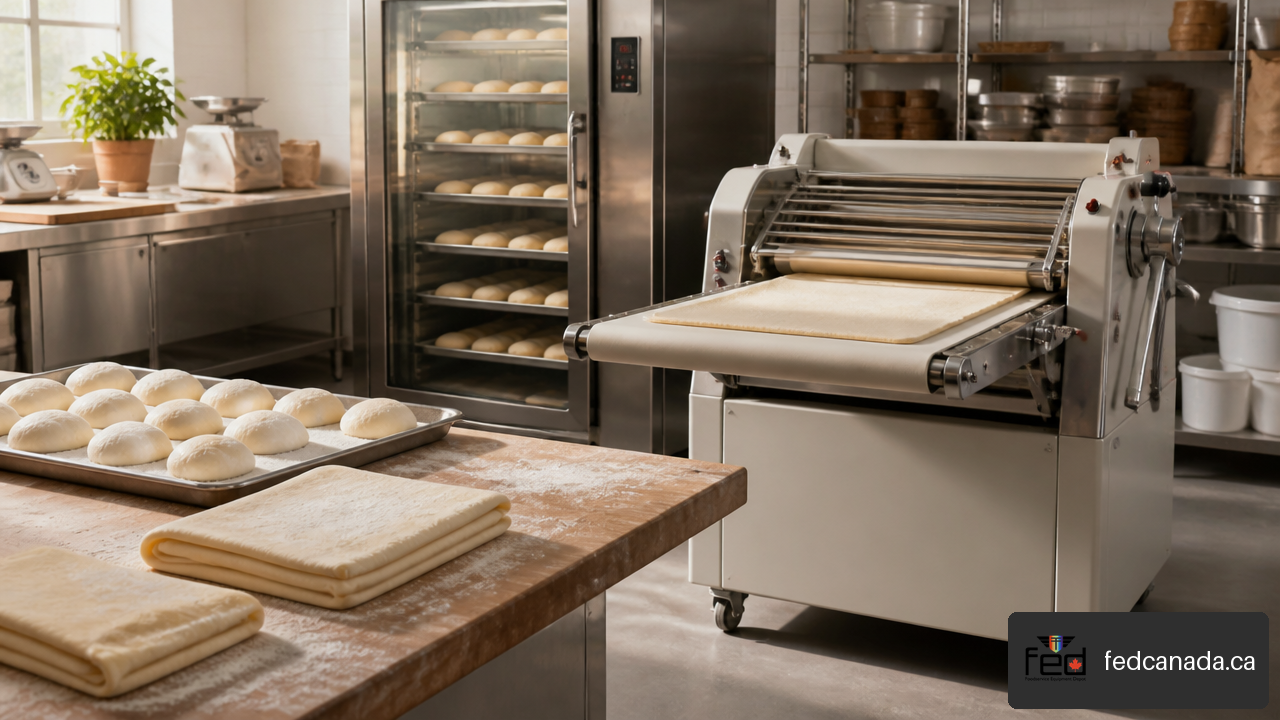
Choosing bakery equipment begins with one practical question: where does your bakery lose consistency, time, or usable production space? A proofer helps manage final fermentation before baking. A dough sheeter reduces dough to a controlled thickness. Neither machine automatically fixes a weak process, but each can make a well-designed process more repeatable.
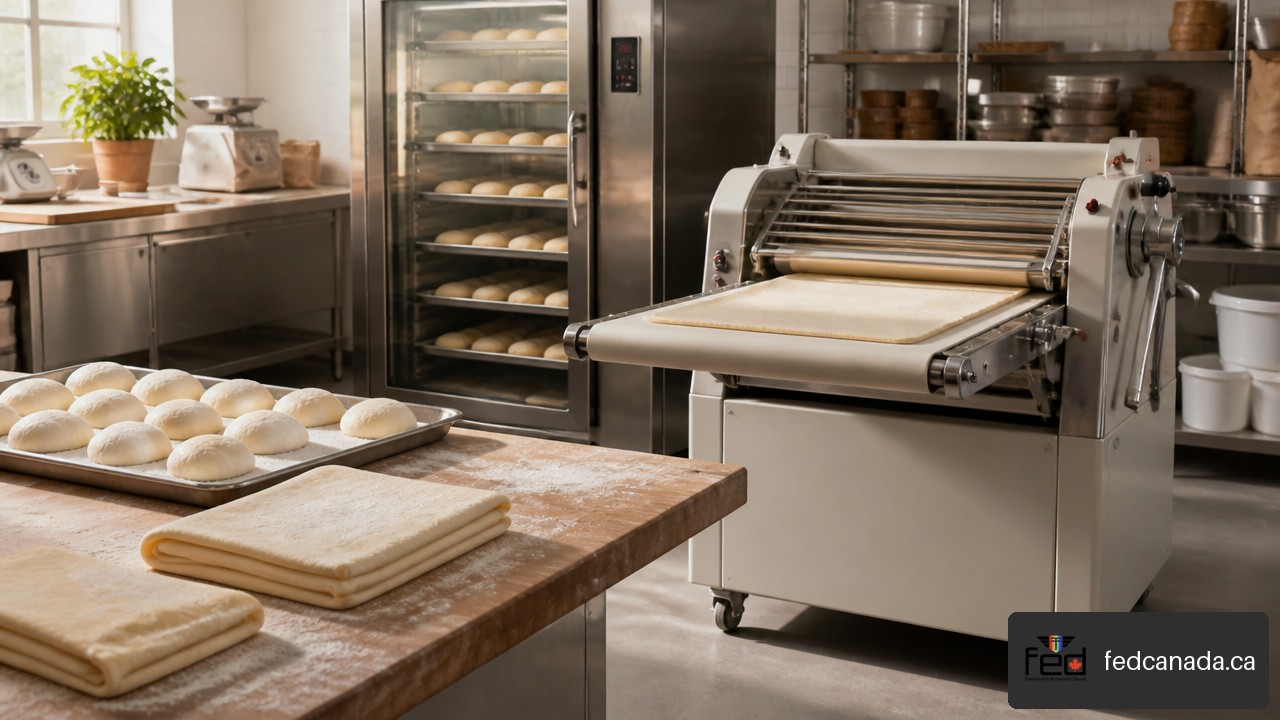
For a small café, that may mean evenly proofed morning buns without tying up every warm corner of the kitchen. For a pastry operation, it may mean producing croissant dough sheets that fit the same pans and bake more predictably. We recommend looking beyond a machine’s advertised capacity and asking how it fits the mixer, benches, pans, racks, oven, cooling area, staff schedule, and cleaning routine already in place.
Table of Contents
- How proofers and dough sheeters work
- Choosing the right size and format
- Building equipment into a bakery workflow
- Key Takeaways
- FAQ
How Proofers and Dough Sheeters Work
A proofer manages the final fermentation environment
A bakery proofer is an enclosed cabinet or room designed to manage warmth and humidity while shaped yeast dough ferments before baking. This final rise affects volume, crust appearance, crumb structure, and how evenly a product bakes. The goal is not simply to make dough rise faster. It is to create repeatable conditions so trays loaded at different times have a better chance of reaching the oven at the right stage.
Inside the cabinet, heat raises the air temperature while a water reservoir, humidification system, or similar moisture source limits surface drying. When proofing humidity is too low, dough can form a dry skin that restricts expansion or produces a rough crust. When moisture is excessive, condensation can collect on surfaces and make delicate products tacky. A digital display is useful, but it is not the same as uniform conditions throughout the chamber.
We suggest thinking of a proofer as a controlled holding stage between shaping and baking. It is especially useful when your room temperature changes throughout the day, when production includes multiple batches, or when product quality depends on a narrow timing window. Yeasted breads, buns, rolls, bagels, doughnuts, pizza dough, and enriched breakfast pastries can all benefit from better final proof control.
A useful rule of thumb: dough sheeters matter most for laminated pastry production, while proofers matter most for yeasted products. Some menus, including Danish pastries, use both because the dough is laminated and also contains yeast.
A retarder-proofer changes the schedule, not just the temperature
A retarder-proofer combines refrigerated holding with controlled proofing. Its key benefit is scheduling flexibility. Shaped dough can be held cold to slow fermentation, then brought through a timed proofing phase so it is closer to bake-ready when staff arrive or when oven capacity opens up.
That distinction matters. A larger standard proofer gives more tray capacity. A retarder-proofer can separate the time of shaping from the time of baking. For example, a bakery that shapes cinnamon buns late in the afternoon may prefer cold holding overnight and a programmed proofing cycle before the morning bake. The value is not merely “more space.” It is the ability to reduce an early-morning production crunch.
This does not mean every bakery needs one. A retarder-proofer introduces more variables: dough temperature going in, refrigeration performance, recipe timing, cleaning requirements, and staff training. If your menu changes daily or your yeast levels vary significantly from batch to batch, programming may need close attention. It can support consistency, but it does not replace recipe development.
A dough sheeter controls thickness through rollers
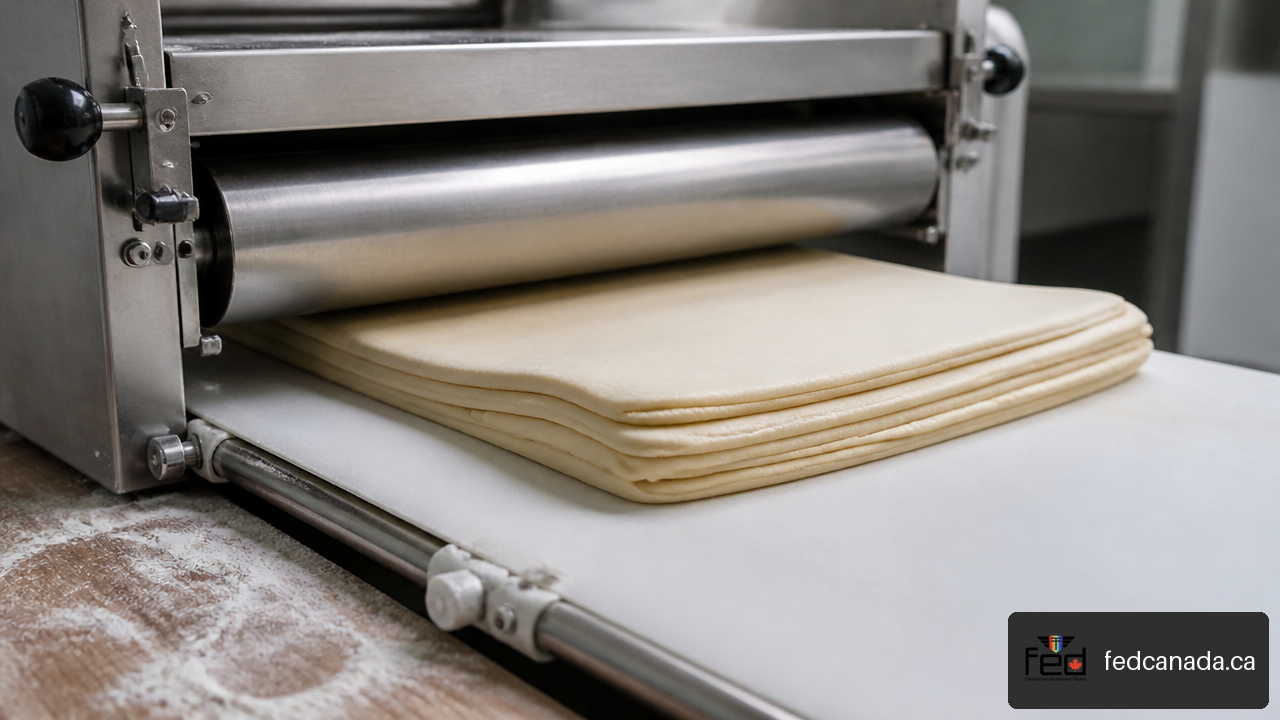
A dough sheeter passes dough between rollers set to a chosen roller gap. Each pass reduces thickness. Depending on the model, the operator may guide the dough manually or use a reversible belt system that sends the dough back and forth through the rollers without lifting it after every pass.
This is valuable when thickness affects the finished product. Pie dough that varies in thickness may bake unevenly. Pizza bases can bake differently from one side of the oven deck to the other if their thickness is inconsistent. Laminated dough depends on repeated rolling and folding to create alternating layers of dough and fat. A sheeter makes those reductions more controlled than hand rolling alone.
Dough sheeters generally come in two size categories: tabletop units for smaller operations and floor-standing units for larger ones. The best fit depends less on the label and more on actual dough pieces, required roller width, available clearance, and how often the machine will run during a shift.
Sheeting can harm laminated dough when conditions are wrong
Automation is not automatically gentler. Laminated dough needs fat that is plastic enough to stretch with the dough but firm enough to remain in distinct layers. If butter is too hard, it can crack and rupture layers. If it is too soft, it can smear into the dough. Excessive compression, repeated unnecessary passes, or sharp reductions in roller gap can also stress the dough and increase shrinkage.
A cautious process generally involves gradual reductions, short rests when the dough tightens, and attention to dough temperature. Consider a croissant sheet that springs back after a pass. Sending it repeatedly through the machine may force it thinner in the moment, but it can produce uneven shape later. A short rest may be the better answer.
Choosing the Right Size and Format
Start with the bottleneck, not the product brochure
Tray count and belt width matter, but they do not tell the whole story. We recommend mapping the slowest stage in your production sequence before choosing equipment. A bakery may own a large proofer yet still be limited by oven deck space. Another may buy a fast sheeter but lack refrigerated bench space for dough resting between passes.
Use this simple production check:
| Process stage | What to measure | Why it affects equipment choice |
|---|---|---|
| Mixing | Batch size and batches per shift | Shows how much dough enters the system at once |
| Dividing and shaping | Pieces or trays completed per hour | Determines how quickly the proofer fills |
| Proofing | Time in cabinet and trays in circulation | Shows the real capacity needed before baking |
| Sheeting | Dough weight, sheet size, passes, and rest time | Indicates belt width, roller range, and bench needs |
| Baking | Oven trays or racks per load and bake time | Prevents proofing capacity from exceeding oven output |
| Cooling and finishing | Rack space and handling time | Avoids congestion after the oven |
For instance, if your oven accepts 12 trays per load and baking plus unloading takes 25 minutes, a 40-tray proofer may be useful only if your proofing cycle and staff schedule can support that queue. Otherwise, dough may overproof while waiting for oven access. Capacity should support flow, not create a traffic jam.
Compare proofer formats by workflow
| Proofer type | Best suited to | Strength | Watch for |
|---|---|---|---|
| Under-counter proofer | Cafés and compact bakeries | Uses space beneath a work surface | Limited tray capacity and loading access |
| Cabinet proofer | Small to medium batch production | Flexible tray-based workflow | Door openings can affect chamber conditions |
| Roll-in or rack proofer | Rack-based, higher-volume production | Reduces tray transfers | Requires clear floor space and compatible racks |
| Retarder-proofer | Operations needing overnight scheduling | Adds cold holding and timed proofing | More complex programming and maintenance |
An under-counter model can be a sensible first proofer when floor space is tight and batches are modest. A rack proofer makes more sense when the bakery already loads, transports, and bakes from compatible wheeled racks. The practical question is whether staff can move product through the room without lifting every tray multiple times.
At FED, our proofer range runs from compact cabinets to full-size insulated units. For smaller batches, look at a restored Omcan 43554 10 pan heated proofer cabinet. For mid-size production, the Metro C5 3 Series 18 pan insulated proofer and holding cabinet doubles as a holding cabinet. For higher tray counts, the Winholt INHPL-1836C 35 pan insulated heater proofer handles full racks of sheet pans. Insulated cabinets generally hold conditions better through frequent door openings than non-insulated ones.
Choose sheeter dimensions around dough and pans
For a dough sheeter, the usable roller width should accommodate your target sheet plus reasonable side clearance. A machine that barely fits a sheet can create awkward trimming, stretching, and handling. Also measure more than the machine footprint. A reversible sheeter needs room at both ends for its conveyor tables or belts, plus clearance for loading, unloading, cleaning, and safe staff movement.
Before buying, record these details:
- The largest dough piece weight you plan to sheet
- The finished sheet width and length needed for your pans or cutting patterns
- The thinnest practical setting needed for your menu
- The number of passes and rests required for laminated dough
- Bench, refrigeration, and rack space around the machine
- Doorways, turns, and delivery access into the bakery
A tabletop sheeter may be sufficient for a café producing occasional tart shells, pie dough, and a limited pastry selection. A floor-standing reversible unit is more suitable when laminated dough is central to the menu and the machine will run through repeated batches. There is no universal daily dough threshold that applies to every bakery because sheet size, pass count, staffing, and product complexity all change the workload.
For tabletop work, we carry the Doyon DL12SP 12 inch countertop dough sheeter and the Doyon DL18SP countertop dough sheeter. For laminated dough production, restored reversible units such as the Omcan BE-CN-2083-CSS reversible sheeter and the floor-standing Omcan BE-CN-2083-FSS come up in our clearance stock. Restored units sell quickly, so check availability first.
Treat utilities and service access as purchase requirements
Purchase price is only part of the cost. A proofer may need electrical service, water filling or connection, drainage considerations, and access for cleaning. Water quality is worth checking before installation because minerals can contribute to deposits in reservoirs or humidification components. A sheeter may require electrical service, belt cleaning access, roller access, and enough room for a technician to reach panels and moving parts.
Canadian electrical and certification checks
In Canada, look for a CSA or cUL mark on the data plate of any proofer or sheeter, and NSF certification where food contact and sanitation matter. Many cabinet proofers and countertop sheeters run on a standard 120V circuit, but larger insulated proofers, retarder-proofers and floor-standing reversible sheeters often need 208V or 240V service, sometimes three phase. Confirm the voltage, phase and plug type against your panel before delivery, especially when buying restored or imported equipment.
Fair warning: an equipment unit that fits perfectly against a wall may become difficult to sanitize or service. Confirm clearances from the manufacturer’s installation information before finalizing your layout.
Building Equipment Into a Bakery Workflow
Run acceptance tests before committing
A proofer should be evaluated in conditions close to real production, not only when empty on a showroom floor. If a supplier demonstration is possible, we would ask for a practical test using your tray format or a comparable load.
- Place temperature probes, where appropriate, at multiple shelf locations rather than checking only the display.
- Load the cabinet with trays similar to a normal production batch.
- Open the door as staff would during loading, unloading, or checking product.
- Observe recovery time after the door closes.
- Check whether upper and lower shelves show noticeably different dough development.
- Ask how often water must be refilled or how the water system is cleaned.
- Inspect corners, gaskets, racks, drains, and reservoirs for cleaning access.
This type of test reveals issues a nominal temperature range cannot show. A cabinet can display the correct setting while product near the door dries faster or shelves recover at different speeds after frequent opening.
Define your manual baseline before calculating payback
A sheeter or proofer may reduce labor pressure, but the amount depends on the current process. Instead of assuming savings, measure a normal week before buying. Record rolling time per batch, number of staff involved, rejected pieces, trimming waste, proofing delays, oven waiting time, and cleaning time.
Then compare the likely new process against that baseline. For example, if one person spends 35 minutes hand rolling pie dough but the real source of delays is an oven that cannot keep up, a sheeter may improve consistency without increasing daily output. That can still be worthwhile, but it is a different business case.
Build operating habits that protect product quality
For proofers, cleaning and water management are part of quality control. Empty standing water as directed by the manufacturer, clean removable components, inspect seals, and watch for mineral deposits. If dough surfaces dry out, check door opening frequency, humidity setup, and whether trays are waiting uncovered before entering the cabinet. If condensation becomes excessive, review settings, loading patterns, and water-system condition.
For sheeters, clean belts and rollers according to the manufacturer’s instructions, remove flour buildup, and avoid forcing dough through an unsuitable gap. Dough that tears, smears, or shrinks is not always a machine problem. It may need a temperature adjustment, a rest period, a different dough piece size, or gentler reductions.
A useful rule: Buy the machine that removes the constraint you can measure, not the one with the largest advertised number.
Key Takeaways
A proofer controls the environment around final fermentation, while a dough sheeter controls dough thickness and repeatability.
A retarder-proofer is primarily a scheduling tool because it can hold shaped dough cold before moving it toward final proof.
Size a proofer around the full path from mixing to oven loading, not tray capacity alone.
Size a sheeter around dough piece weight, required sheet dimensions, roller range, belt clearance, and pan compatibility.
Laminated dough needs gradual reductions and suitable dough and fat temperature. More passes are not always better.
Evaluate recovery time, shelf consistency, water handling, cleaning access, utilities, and service clearance before purchase.
Measure the current manual process before estimating labor savings or return on investment.
FAQ
What is the difference between a proofer and a retarder-proofer?
A proofer provides controlled warm and humid conditions for final fermentation. A retarder-proofer adds refrigeration so dough can be held cold before its final proofing stage. Choose a retarder-proofer when production scheduling, overnight holding, or staggered bake times are major concerns. Choose a standard proofer when you mainly need more consistent same-day proofing.
Do I need a proofer for a small bakery?
Not always. A small bakery may work successfully with room-temperature fermentation if recipes, room conditions, and production timing are stable. A proofer becomes more compelling when seasonal temperature changes, limited warm space, inconsistent rise, or a growing tray count causes avoidable variation. Compact under-counter or cabinet formats may suit smaller premises.
What temperature and humidity should a bakery proofer use?
There is no universal setting that fits every dough. The correct conditions depend on dough temperature, hydration, sugar and fat content, yeast level, product shape, desired fermentation time, and the bakery’s schedule. Use your recipe’s established process as the starting point, then validate the outcome with the finished product rather than relying only on a generic machine setting.
How do I know whether a dough sheeter is necessary for my menu?
A sheeter is most useful when you repeatedly need even sheets for laminated pastries, pie dough, tart shells, pizza bases, flatbreads, or other rolled products. It may be less urgent for a bread-focused bakery where shaping and fermentation, rather than rolling, are the main labor constraints. Track hand rolling time, thickness variation, waste, and production delays before deciding.
Is a tabletop dough sheeter sufficient for a café or small pastry shop?
It can be, especially for limited-batch pastry programs. Confirm the unit’s roller width, dough-piece capacity, conveyor clearance, roller-gap range, and cleaning access. A tabletop machine is a poor fit if staff must process large dough pieces all day, if sheet dimensions exceed the belt area, or if the machine cannot be safely positioned with enough loading space.
Can a dough sheeter be used for pizza dough and bread dough?
Yes, many operations use sheeters for pizza bases, flatbreads, and selected bread products. The key is whether the dough formula and handling method suit rolling. Highly fermented or very gas-filled dough can be deflated if processed aggressively. For artisan products where open crumb is the goal, hand handling may remain preferable for some stages.
How do I prevent laminated dough from tearing or shrinking in a sheeter?
Keep dough and fat at workable temperatures, reduce the roller gap gradually, avoid unnecessary passes, and give the dough time to rest if it resists rolling. Tearing can indicate brittle fat or excessive stress. Shrinkage often signals tight gluten development or insufficient rest. Adjusting the process is usually more useful than simply forcing a thinner setting.
How many trays or racks should a proofer hold?
Start with the number of trays that must be proofed while the oven completes one or more bake cycles, then account for batch timing and product proof duration. A bakery that loads 12 trays into an oven every 25 minutes needs enough circulating capacity to prevent shaped dough from waiting too long. Also make sure rack dimensions, tray sizes, and oven workflow are compatible.
Can I use a home proofing box or a residential pasta roller instead of commercial equipment?
For a few loaves a week, perhaps. But residential proofing boxes and hand-crank or attachment rollers are built for occasional home use, small dough pieces and short run times. Commercial proofers hold full sheet pans and recover after repeated door openings, and commercial sheeters handle large dough pieces through many passes per shift. They also carry the commercial certifications inspectors and insurers expect, so residential equipment is rarely a good fit for a business kitchen.
Find Your Bakery Equipment at FED
Call or visit FED to talk through proofers and sheeters for your production. New equipment is listed in our online catalogue with pricing, and used and clearance units, including restored proofers and dough sheeters, are available for pickup at our Calgary warehouse. See what is in stock on our clearance page.
Recent Posts


Leave a Comment
Your email address will not be published. Required fields are marked *