




Mixer Paddle Attachments: Types, Compatibility & Sizing Guide
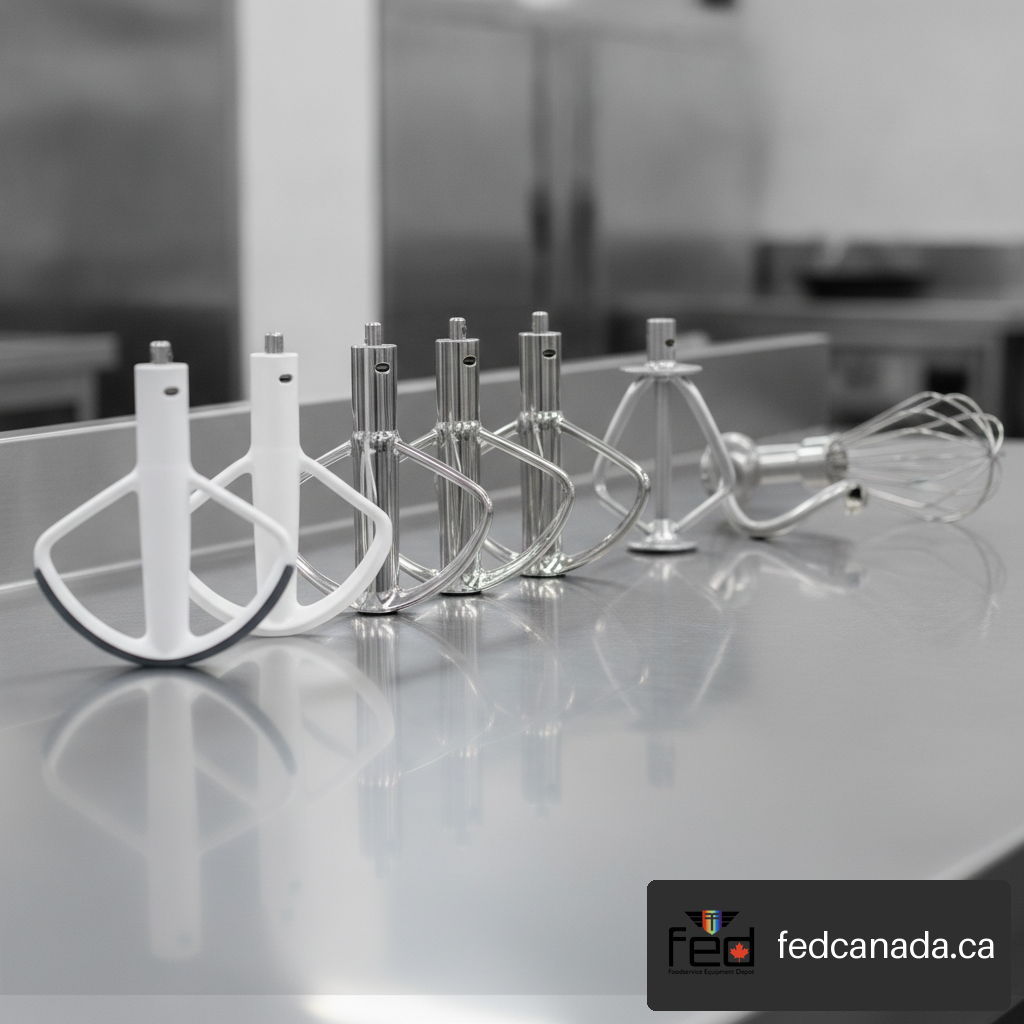
A mixer paddle attachment—frequently called a flat beater—is the fundamental workhorse of any residential or commercial stand mixer. Designed to thoroughly blend medium-to-heavy batters without aerating them like a whisk or overworking them like a dough hook, selecting the correct flat beater is essential for consistent culinary performance. However, choosing the wrong size, material, or design can lead to poorly incorporated ingredients, damaged internal drive gears, or persistent bowl-scraping issues. In this comprehensive guide, we examine how paddle attachments work, how to identify the exact fit for your mixer frame, and how to troubleshoot common operating problems.
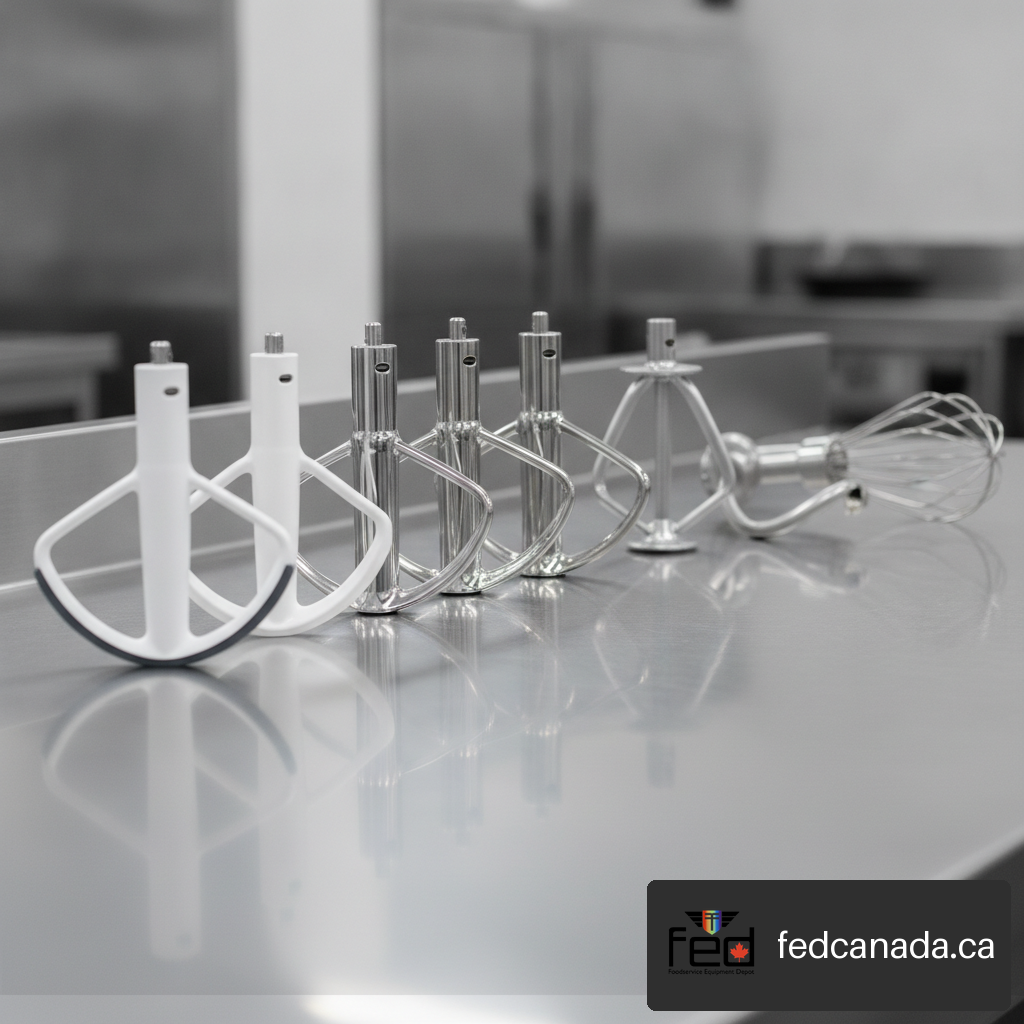
Table of Contents
- Key Takeaways
- What Is a Mixer Paddle Attachment and How Does It Work?
- Mixer Paddle Compatibility: Bowl Sizes, Drive Types, and Fitting Methods
- Material and Construction Options: Stainless Steel, Coated, and Flex-Edge
- Setup, Maintenance, and Troubleshooting Common Operating Issues
- Culinary Beater Shafts vs. Industrial Mixing Tools
- Frequently Asked Questions
- Sources / References
Key Takeaways
Core Purpose: The paddle attachment is designed for general mixing, creaming, beating, and folding normal-to-heavy batters without incorporating excessive air.
Compatibility Depends on Frame and Capacity: Paddle attachments are not universal; you must match your mixer's mechanism (tilt-head vs. bowl-lift) and exact bowl volume.
Material Trade-Offs: Coated beaters offer easy release and dishwasher convenience but can chip over time, whereas solid stainless steel provides lifetime durability.
Clearance Setup: Improper paddle height can scratch your bowl or leave unmixed ingredients at the bottom; simple adjustment procedures can correct bowl clearance.
Gear Safety: Using a flat beater for heavy, low-hydration bread dough can overload the internal motor transmission and strip sacrificial gears.
What Is a Mixer Paddle Attachment and How Does It Work?
To understand why the flat beater is the default accessory on most stand mixers, it helps to analyze its underlying mechanics. The primary job of a flat beater is to push ingredients across the inner surface of the bowl while creating shear force. According to official stand mixer accessory guides, flat beaters are engineered for mixing, stirring, beating, folding, and shredding normal-to-heavy mixtures safely and efficiently.
Unlike a balloon whisk, which relies on thin wire tines to trap air pockets within liquids, a paddle has wide, solid crossbars. These crossbars move dense ingredients horizontally and vertically without inflating the volume of the mixture. Conversely, unlike a spiral or C-shaped dough hook, which stretches and folds elastic gluten matrices, the flat beater breaks up dense lumps, creams fats with sugar, and creates smooth, uniform emulsions.
Ideal Culinary Applications and Recipe Boundaries
We recommend using the flat beater whenever a recipe calls for thorough blending without the intention of creating a light, foamy structure. Common applications include:
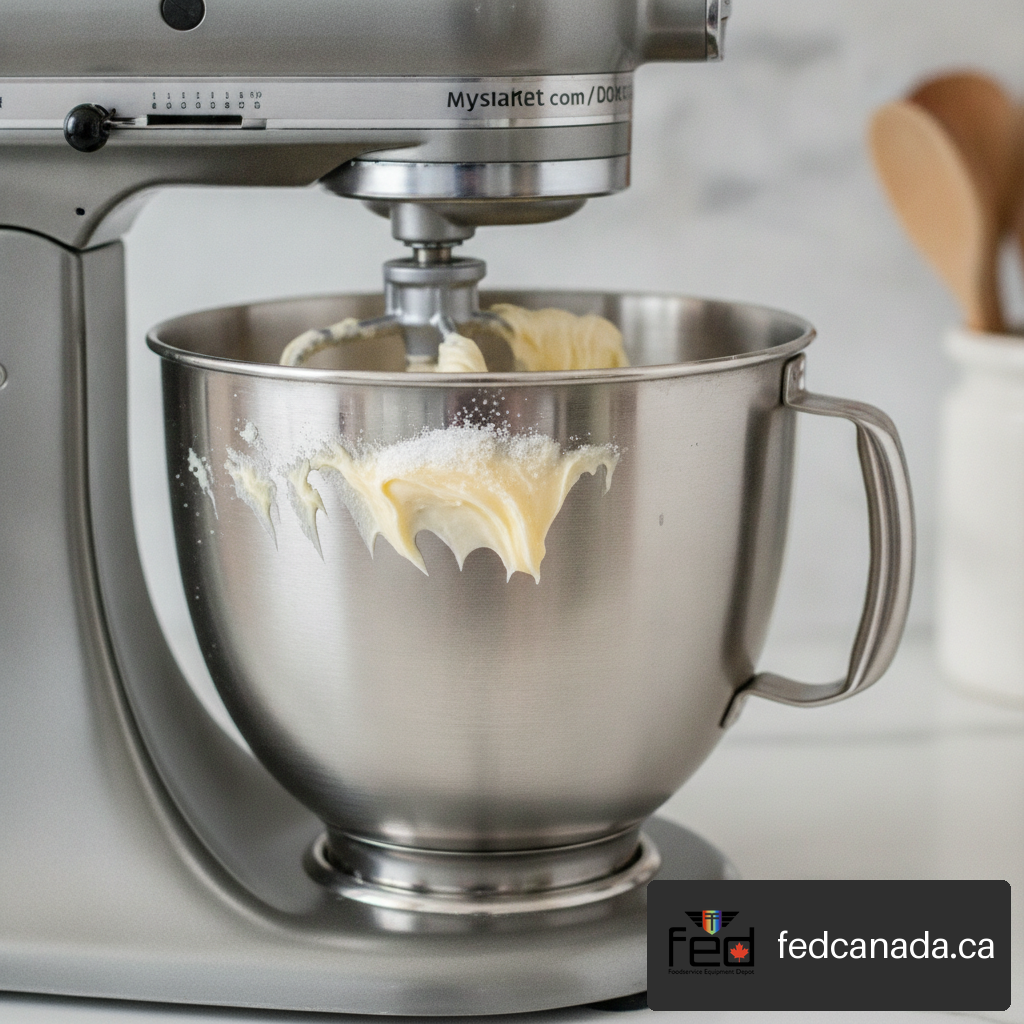
Creaming Butter and Sugar: The broad surface sweeps fat across the bowl walls, friction-softening the butter while creating microscopic pockets for sugar crystals.
Cookie and Biscuit Doughs: Handles dense butter, flour, chip, and nut mixtures effortlessly without breaking down solid inclusions.
Cake and Quick-Bread Batters: Combines wet and dry ingredients evenly while minimizing unwanted gluten development.
Mashed Vegetables: Crushes boiled potatoes, sweet potatoes, or squash against the bowl sides for a smooth or textured mash.
Shredding Cooked Meats: On medium speeds, the rigid crossbars rapidly break down warm poached chicken breast or slow-roasted pork shoulder.
When to Switch: Paddle vs. Whisk vs. Dough Hook
Using the wrong attachment is one of the most common mistakes in both home and commercial kitchens. As clarified in the stand mixer attachment overview, paddle attachments are specialized for general mixing and are explicitly not intended for heavy kneading or high-velocity whipping.
The table below outlines when each primary mixing tool should be deployed:
| Attachment Type | Primary Motion | Target Viscosity | Best For | Avoid Using For |
|---|---|---|---|---|
| Flat Beater (Paddle) | Shear & Friction | Medium to Heavy | Cookie dough, cake batter, frosting, meat shredding | Egg whites, heavy yeast dough |
| Wire Whisk | Aeration & Lifting | Liquid to Thin | Meringue, whipped cream, royal icing, soufflés | Stiff cookie dough, heavy batters |
| Dough Hook | Stretching & Folding | Dense & Elastic | Yeast breads, brioche, pizza dough, bagel dough | Thin batters, creaming butter |
Mixer Paddle Compatibility: Bowl Sizes, Drive Types, and Fitting Methods
One of the most frustrating challenges when replacing or upgrading a paddle attachment is ensuring proper fit. Flat beaters are not cross-compatible across all models or brands. Even within a single manufacturer's lineup, a paddle built for a 4.8-liter mixer will not work on a 6.9-liter mixer.
Tilt-Head vs. Bowl-Lift Mixer Geometry
Stand mixers generally fall into two structural designs, each requiring a fundamentally different paddle shape and length:
- Tilt-Head Mixers: The upper motor housing pivots upward to allow bowl removal. Beaters for these models feature a shorter vertical neck and a specific bayonet-style notch that twists onto the beater shaft pin.
- Bowl-Lift Mixers: The motor head remains fixed, and the bowl is raised or lowered using a side lever. Because the bowl geometry is deeper and the support arms hold the bowl stationary, paddles for bowl-lift models feature longer stems and wider sweeping frames.
For instance, technical product specifications for a stainless-steel tilt-head paddle listing indicate that specific beaters are designed precisely for 4.3, 4.7, and 4.8-liter tilt-head frames. Installing this same paddle on a bowl-lift unit will result in improper bowl reach or total failure to lock onto the drive shaft.
Matching Capacity: From Compact Models to Commercial Units
Bowl volume plays an equally critical role in compatibility. A flat beater must maintain a uniform gap (typically 1 to 2 millimeters) between its outer edges and the interior bowl curve. If the paddle is too small for the bowl, a thick layer of unmixed butter or flour will settle on the bottom and sides. If the paddle is too large, it will collide violently with the stainless steel bowl.
For high-capacity machines, parts documentation for a large bowl-lift paddle specification shows that larger coated beaters are sized specifically for 6.6 and 6.9-liter commercial or heavy-duty bowl-lift mixers. Attempting to guess compatibility based on visual appearance alone often leads to incorrect purchases.
Step-by-Step Compatibility Verification Workflow
To ensure you buy the exact replacement or accessory paddle for your machine, follow this standard decision workflow:
- Locate the Model Number: Check the base plate underneath your mixer frame to find the exact model code (e.g., KSM150, K5SS, KSM7580).
- Identify the Drive Frame: Determine whether your unit is a tilt-head or bowl-lift model.
- Confirm Bowl Volume and Material: Check whether your bowl is glass, ceramic, or stainless steel, as glass bowls often feature thicker walls requiring slightly narrower beaters.
- Cross-Reference the Shaft Connection: Confirm whether your drive shaft uses a standard spring-loaded pin pincher, a keyway slot, or a commercial hex lock.
Material and Construction Options: Stainless Steel, Coated, and Flex-Edge
Flat beaters are manufactured in three main material configurations. Each material offers distinct advantages and operational trade-offs regarding durability, sanitation, and bowl scraping performance.
| Material / Design | Key Advantages | Primary Disadvantages | Ideal Use Environment |
|---|---|---|---|
| Coated Cast Aluminum | Lightweight, smooth release, often lower cost | Coating can chip if dropped or scraped against hard objects | Standard residential baking |
| Solid Stainless Steel | Lifetime durability, 100% dishwasher safe, non-reactive | Heavier weight, higher initial purchase price | Commercial kitchens, heavy daily use |
| Flex-Edge (Silicone Wipe) | Eliminates manual bowl scraping, mixes wet batter faster | Flexible edge can wear out; not suitable for hard, cold butter | Sticky batters, frostings, creamed mixtures |
Cast Aluminum with Non-Stick Enamel Coating
Coated paddles are the standard accessory included with many home stand mixers. The core is pressure-cast aluminum covered with a nylon or white enamel glaze. This creates a slick surface that releases sticky batters quickly and allows for easy hand cleaning.
However, coated beaters have a finite lifespan. If the mixer's bowl clearance is incorrectly adjusted and the paddle repeatedly strikes the metal bowl bottom, the enamel coating can crack, chip, or flake into food. Once the outer coating is compromised, water can penetrate the exposed underlying aluminum, leading to oxidation and dark grey residue.
Solid Stainless Steel Construction
For commercial bakeries, high-volume prep lines, and serious home cooks, solid stainless steel flat beaters represent the highest standard of durability. Because they are cast from solid metal without an applied surface coating, there is zero risk of flaking, peeling, or rusting.
Stainless steel paddles are completely impervious to aggressive commercial dishwashers, harsh chemical sanitizers, and high thermal temperatures. While they carry a higher initial purchase price, their infinite operational lifespan makes them the most cost-effective long-term choice.
Flex-Edge and Scraper Paddle Designs
Flex-edge beaters feature a flexible silicone or rubber blade molded along one or both outer edges of a rigid frame. As the paddle rotates, the silicone lip flexes against the bowl walls, constantly wiping down ingredients that would otherwise cling to the sides.
While flex-edge paddles cut down on manual stopping and scraping time by up to 30%, they are not ideal for every task. When working with rock-hard, chilled butter or dense paste, the silicone edge can bend excessively, reducing shearing efficiency or tearing the flexible blade over time. We recommend using standard rigid beaters for stiff doughs and reserving flex-edge beaters for soft creamed mixtures, light batters, and warm frostings.
Setup, Maintenance, and Troubleshooting Common Operating Issues
Even a high-quality paddle attachment will perform poorly if the mixer setup is out of alignment. Below are the most common mechanical issues encountered during operation and how to resolve them.
Adjusting Bowl Clearance and the Dime Test
If your paddle leaves an unmixed pool of flour at the bottom of the bowl—or if it makes a harsh clacking noise as it hits the metal base—the mixer's clearance needs adjustment. You can verify and correct clearance using a simple procedure known as the dime test:
- Ensure the mixer is turned off and unplugged, then attach your flat beater.
- Drop a clean metal dime flat into the bottom center of the mixing bowl.
- Lower and lock the mixer head (or lift the bowl into position on bowl-lift models).
- Turn the mixer to Speed 1 for two full rotations while watching the dime.
- Evaluate the Motion:
Correct Clearance: The paddle gently touches the dime, causing it to move smoothly about 1/4 inch to 1/2 inch with each pass.
Too High: The paddle passes completely over the dime without touching it at all.
Too Low: The paddle slams into the dime, dragging it continuously around the bowl floor.
- Adjustment: Locate the neck adjustment screw near the hinge point on tilt-head models. Using a flathead screwdriver, turn the screw slightly counter-clockwise to raise the paddle, or clockwise to lower it.
Diagnosing Unexpected Detachment and Pin Slippage
It can be alarming when a flat beater unexpectedly detaches mid-mix, dropping into a bowl of thick batter. Based on user troubleshooting accounts in culinary gear forums, a paddle that repeatedly falls off usually points to one of three mechanical failure points:
Incomplete Twist-Lock: The operator failed to push the paddle fully up against the internal spring before twisting it over the locking pin on the beater shaft.
Worn or Broken Spring and Washer: Inside the upper hub of the drive shaft sits a small tension spring and washer. If this spring loses tension or snaps, the paddle will slide downward off the locking pin during vibration.
Deformed Shaft Pin: Over years of heavy mixing, the small cross-pin on the drive shaft can wear down or become misaligned, preventing the paddle slot from catching securely. If tightening and checking the spring does not resolve detachment, professional mechanical service or shaft replacement is necessary.
Gear Overload Risks and Handling Stiff Batters
Using a flat beater for low-hydration bread doughs, dense bagels, or thick pasta dough can cause catastrophic mechanical damage. Stand mixers utilize a planetary drive train powered by internal gears. In many modern countertop mixers, one key internal component—the worm follower gear—is intentionally made from nylon or brass to act as a mechanical fuse.
When a paddle encounters excessive resistance from stiff dough, the motor continues to spin, causing the drive shaft to bind. Instead of burning out the expensive electrical motor, the sacrificial nylon gear shears its teeth off to protect the machine. Community troubleshooting discussions highlight that a mixer running audibly while the beater shaft remains completely stationary is a classic symptom of a stripped internal gear. For heavy yeast-leavened mixtures, always switch to dedicated heavy-duty commercial dough mixers rather than forcing a standard flat paddle attachment beyond its structural limits.
Culinary Beater Shafts vs. Industrial Mixing Tools
When sourcing replacement equipment online, buyers often encounter confusing search results containing industrial hardware tools. It is critical to separate culinary flat beaters from heavy construction mixing paddles to prevent equipment damage or cross-contamination hazards.
Culinary Beater Shafts vs. Construction Drill Attachments
While both accessories are described in supplier catalogs as "paddle mixer attachments," their engineering interfaces and structural intent are entirely different. According to construction paddle mixer listings, heavy-duty industrial mixing paddles are designed specifically for high-viscosity building materials like plaster, mortar, render, tile adhesive, and grout.
Industrial paddles connect via standardized power tool interfaces, such as large hexagonal shafts or threaded M14 metric couplings. They are designed to operate under high torque from heavy-duty power drills, and their surface finishes are not certified food-safe. Culinary stand mixer paddles, by contrast, use precise food-grade bayonet shafts designed exclusively for sanitary food processing.
Commercial Kitchen Prep and Immersion Mixing Options
In high-volume commercial kitchens, attempting to mix 20-gallon batches of soup, sauce, or mashed potatoes using a standard countertop stand mixer paddle is inefficient. For large-scale liquid and semi-solid food prep, operators typically utilize commercial immersion blenders equipped with specialized power arms. Accessories such as high-capacity detachable blender shaft attachments allow chefs to blend, purée, and agitate heavy stocks directly inside large stockpots and steam kettles, providing an ideal complement to countertop flat beaters.
Frequently Asked Questions
Is a mixer paddle attachment the same thing as a flat beater?
Yes. "Paddle attachment" and "flat beater" are interchangeable terms used by appliance manufacturers, chefs, and bakers to describe the broad, rigid mixing accessory supplied with stand mixers.
Can I use a paddle attachment to knead bread dough?
No. A flat beater is intended for mixing, beating, and creaming medium-viscosity batters. Kneading heavy, elastic yeast dough with a paddle puts excessive strain on the drive shaft and can strip internal motor gears. Always use a dedicated dough hook for bread recipes.
Why is my paddle scraping the bottom of the stainless steel bowl?
If your paddle is making contact with the bowl, the mixer's clearance is set too low. You can adjust the clearance height using the central adjustment screw located near the hinge pin on tilt-head models or behind the bowl mount on bowl-lift models.
Can coated flat beaters be washed in the dishwasher?
Some coated paddles are labeled dishwasher-safe by their manufacturers, but high-heat dishwashing cycles and harsh detergent salts can cause enamel coatings to dull, micro-fracture, or chip over time. Hand-washing in warm, soapy water is recommended to maximize coating lifespan.
What causes a stand mixer paddle to fall off during mixing?
Unexpected detachment usually occurs when the paddle is not rotated completely into its locking pin slot, or when the tension spring inside the beater shaft has become worn, loose, or broken. Inspect the spring assembly and ensure the attachment is fully twisted into position before turning on the power.
Are mixer paddle attachments universal across all stand mixer brands?
No. Paddle attachments vary widely in total length, sweeping width, and shaft connection style. You must match the paddle to your specific mixer brand, motor frame design (tilt-head vs. bowl-lift), and exact bowl volume.
Is a drill mixer paddle safe to use for food preparation?
No. Industrial drill paddles used for mixing plaster, mortar, or paint feature non-food-grade steel, industrial lubricants, and rough weld joints that can harbor dangerous bacteria or leach heavy metals into food. Always use certified food-grade stainless steel or coated culinary accessories.
Sources / References
KitchenAid — Paddle attachments for heavy mixing and shredding: https://www.kitchenaid.com/countertop-appliances/mixers/paddle-attachments
KitchenAid Australia — What Is a Paddle Attachment For a Stand Mixer?: https://kitchenaid.com.au/blogs/kitchenthusiast/what-is-a-paddle-attachment
KitchenAid Ireland — Paddle Attachment for Medium Tilt-Head Mixers: https://www.kitchenaid.ie/mixer-parts/859704001994/paddle-attachment-for-medium-tilt-head-mixers-stainless-steel-5ksm5thfbss-stainless-steel
KitchenAid Ireland — Paddle Attachment for Large Bowl-Lift Mixers: https://www.kitchenaid.ie/mixer-parts/859704001830/paddle-attachment-for-large-bowl-lift-mixers-5k7fb-stainless-steel
Screwfix — Paddle Mixer Attachments: https://www.screwfix.com/c/tools/paddle-mixer-attachments/cat17880002
Recent Posts

Leave a Comment
Your email address will not be published. Required fields are marked *