




Panini Press Buying Guide: Features, Uses, and Care
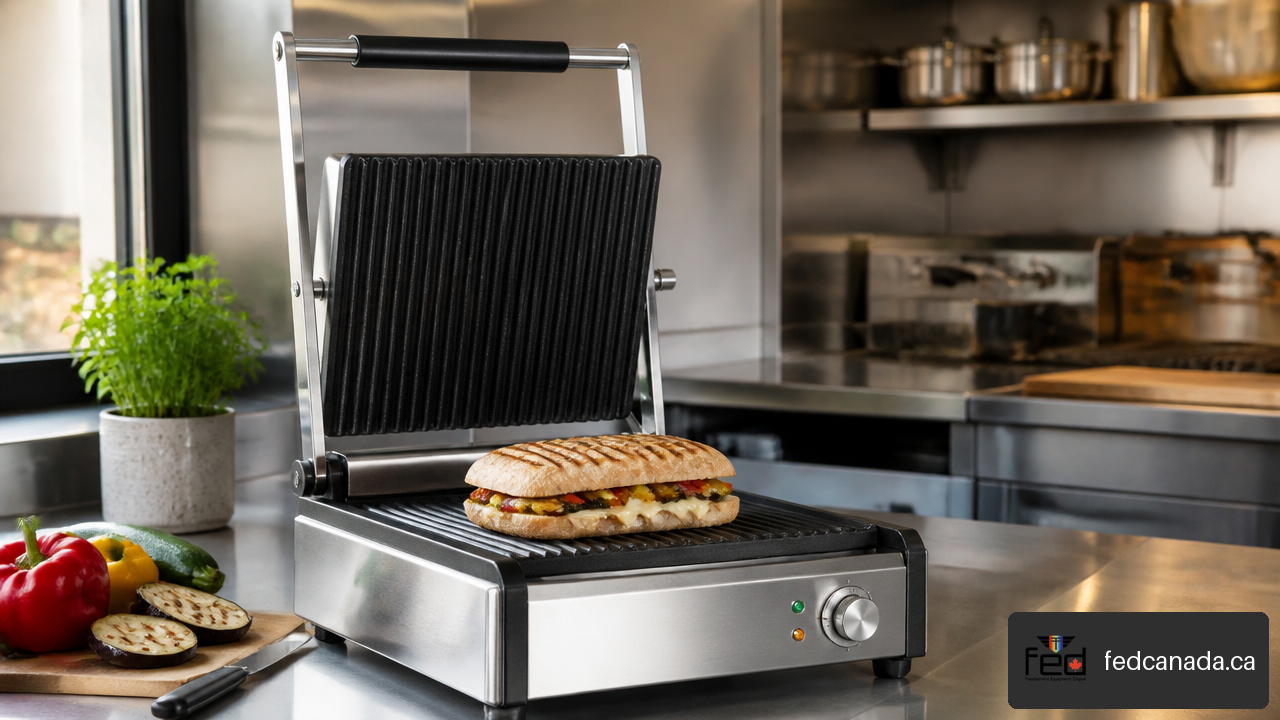
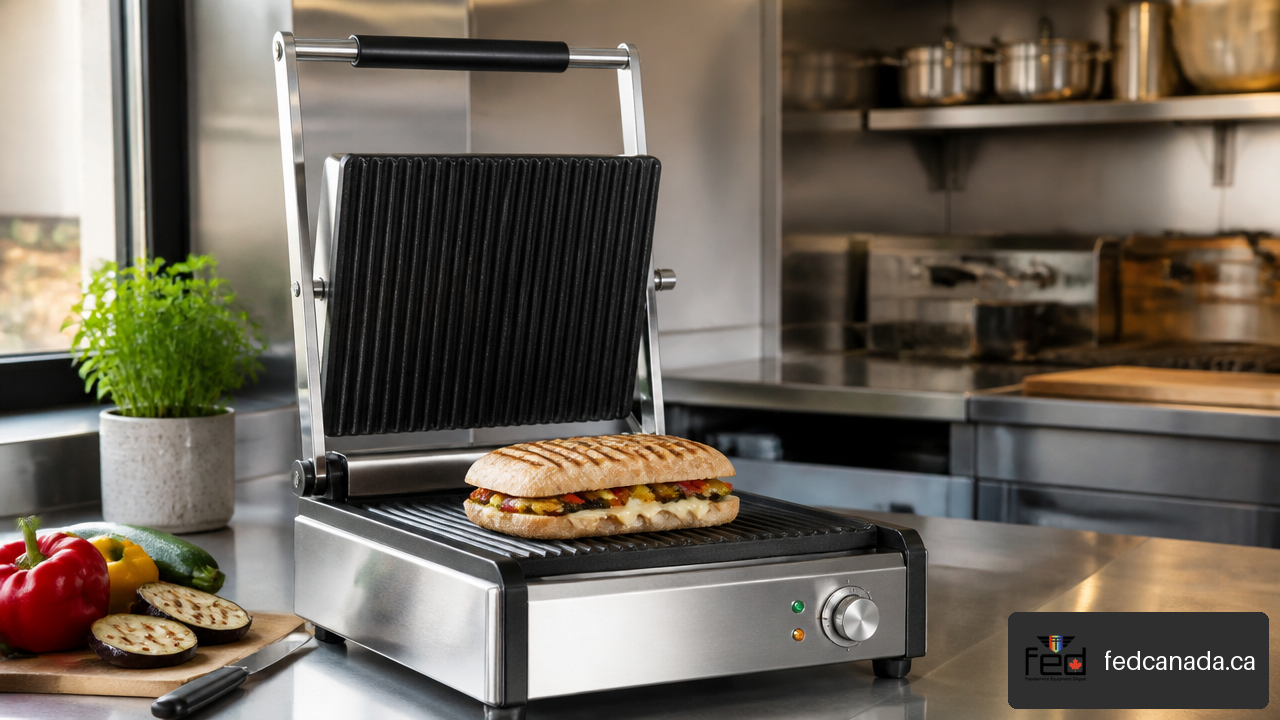
A panini press does more than toast bread. It applies heat from above and below while gently compressing the sandwich, turning crusty bread, cheese, and fillings into a crisp, cohesive meal with far less flipping than a skillet requires. I recommend choosing one based on your actual volume, sandwich style, cleaning routine, and available workspace rather than buying solely for grill marks.
Table of Contents
Key Takeaways
A panini press heats both sides of food at once, which helps bread brown while cheese and warm fillings heat through.
For occasional home use, compact electric presses are usually practical. For repeated service, plate area, heat recovery, construction, and cleaning time matter more than a single wattage number.
A floating hinge is valuable when sandwiches vary in thickness because it lets the top plate sit more evenly instead of crushing one edge.
Moisture management is the difference between a crisp panini and a soggy sandwich. Keep wet ingredients away from the bread, drain fillings, and avoid overstuffing.
Non stick plates, enamelled cast iron, and seasoned cast iron need different care. Always follow the manufacturer’s instructions for the specific surface.
A skillet or oven can be the better tool for very delicate sandwiches, loose fillings, oversized bread, or large batches.
How to Choose a Panini Press
Start with the way you will use it
The right panini press depends on workload. A compact unit can make an excellent lunch for one or two people, but it may feel slow when several sandwiches are needed back to back. In a café, concession, or small foodservice operation, the important question is not simply, “How hot does it get?” It is, “How consistently can it produce the next sandwich after the previous one comes off?”
That is where heat recovery matters. When cold bread and fillings hit hot plates, the surface temperature drops. A press that regains heat quickly is more likely to maintain browning across a run of sandwiches. Product listings rarely provide standardized recovery measurements, so I would treat wattage as one clue rather than a performance guarantee. Plate mass, thermostat behavior, cooking surface area, and ventilation also affect results.
| Workload | Practical press characteristics | When to avoid it |
|---|---|---|
| Occasional home lunches | Compact footprint, simple controls, easy storage | Avoid if you regularly cook several sandwiches at once |
| Family meals | Larger plate area, floating hinge, removable plates | Avoid very small two slice designs if batch cooking is common |
| Café or quick service | Durable construction, accessible controls, grease management, consistent recovery | Avoid light duty units if they will run through repeated service periods |
| Mobile or limited counter space | Compact body, manageable weight, straightforward cleanup | Avoid bulky cast iron setups if storage and safe handling are limited |
A Canadian listed panini grill with 1,500 W power, two slice capacity, adjustable height, and ribbed non stick plates shows why specifications must be read together rather than in isolation. See the listed 1,500 watt two slice panini grill specifications for an example of how power, capacity, and plate design can be presented on one product page.
For a small counter setup where smooth contact is preferred for wraps, breakfast sandwiches, or flatter grilled cheese, a Single Panini Grill can be a more targeted choice than a deeply ribbed model.
Evaluate plates, hinges, and controls together
Plates determine much of the food experience. Ribbed plates make defined grill marks and create small channels that can direct some rendered fat away from the food. Smooth plates provide fuller contact with bread and are often easier to use with delicate tortillas, eggs, or thin sandwiches. Reversible plates can expand versatility, but only if they are easy to remove, reinstall, and clean correctly.
Canadian retail listings show how much panini press designs can vary, including reversible plates, adjustable temperature control, floating hinges, removable drip trays, and dishwasher safe plates. Those differences are visible across the Canadian panini press feature listings. The useful takeaway is simple: the product name does not tell you enough.
A floating hinge is usually worth prioritizing when you use ciabatta, focaccia, croissants, stuffed wraps, or sandwiches with uneven fillings. The upper plate rises and settles over the food rather than forcing the entire sandwich to the height of its thickest point. This improves contact and reduces the temptation to push down hard on the lid.
Use adjustable height when the goal is warming and browning without aggressive compression. A turkey, brie, and apple sandwich, for example, can flatten quickly if the lid rests directly on a tall pile of ingredients. Set the lid lightly, let the cheese begin to melt, then lower it only as much as needed for contact.
Electric versus cast iron: choose the heat system
An electric press is self contained: plug it in, preheat it, cook, and clean it. It is generally the simplest route for everyday sandwiches. Cast iron presses work differently. They are heavy top pieces used with a skillet, grill pan, grill, or sometimes an oven. The lower cookware supplies heat from beneath while the weighted press heats and compresses from above after it has been preheated.
Le Creuset’s Canadian panini press is an example of this paired cookware approach: it is enamelled cast iron, 23 cm wide, ribbed and weighted, and intended for use with compatible skillets or grill pans. The dimensions and setup details are described on the Le Creuset Canada enamelled cast iron panini press page.
For cast iron, I suggest a compatibility check before purchase:
Measure the flat, usable cooking area of the skillet or grill pan, not just its outside diameter.
Compare that measurement with the press width so the press sits inside the pan rather than balancing on curved edges.
Check handle clearance, especially on compact induction cooktops or crowded grill surfaces.
Confirm the cookware manufacturer permits the intended heat source and that the press can be lifted safely when hot.
The Victoria cast iron model is stated to work on induction, cooktops, grills, and open fires, and it is sold pre seasoned with flaxseed oil with hand washing instructions. Review the manufacturer details on the Victoria cast iron press compatibility and care listing. Still, induction compatibility should never be assumed just because an item is cast iron. Flatness, pan pairing, and the cooktop maker’s restrictions can change the outcome.
Cooking Better Sandwiches and More
Build the sandwich for heat and moisture control
A press cannot fix a poorly built sandwich. It can only heat, compress, and brown what is inside it. The common problem is moisture migration: water from tomatoes, pickles, sauces, thawed vegetables, or juicy proteins moves into the bread before the crust can set. The result is a browned exterior with a damp center.
Build from the bread inward with a moisture barrier. Cheese, butter, mayonnaise, pesto, or a thin layer of spread can help separate wet ingredients from the crumb. This is not about adding large amounts of fat. It is about controlling where moisture travels.
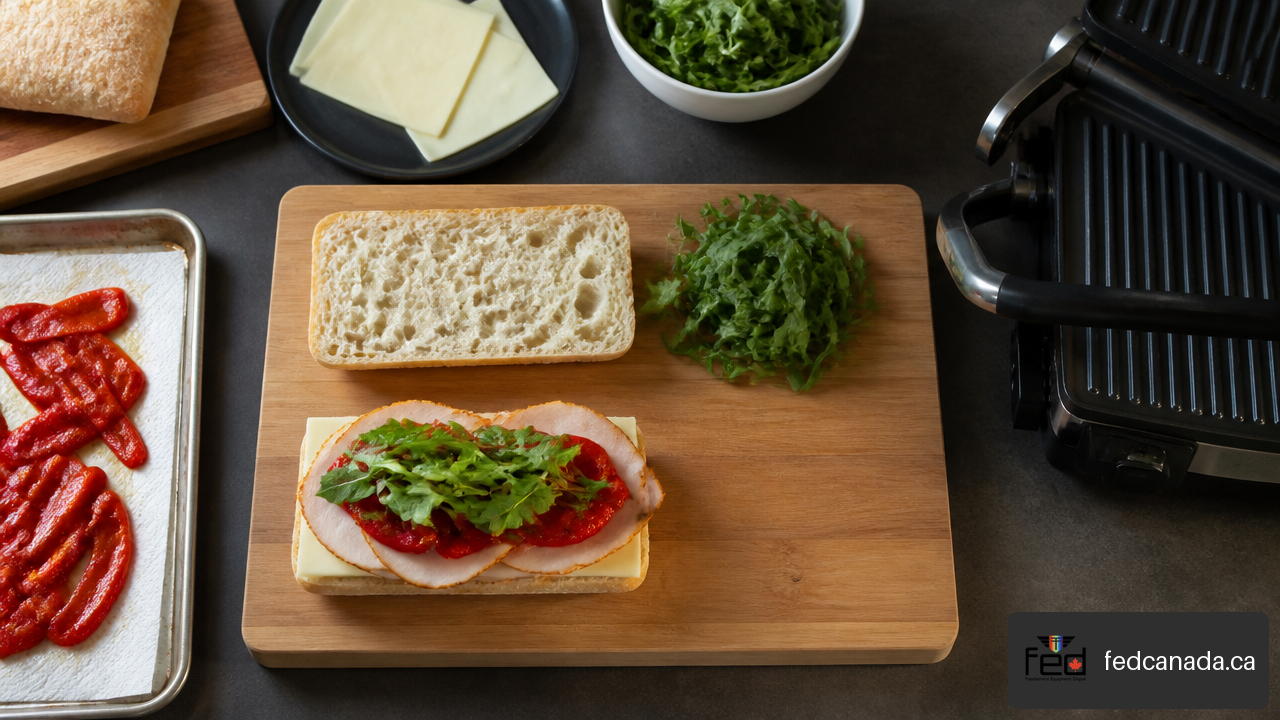
For a turkey and roasted pepper panini, drain the peppers well, keep the cheese next to the bread, and place the turkey between the cheese layers. The cheese melts into the sandwich structure while the wetter ingredient is buffered away from the bread. With a tomato mozzarella panini, use thin tomato slices and blot them first. Thick slices release enough liquid to soften the center before the crust has time to crisp.
Bread matters too. Ciabatta, sourdough, focaccia, and sturdy country loaves hold up well because they have enough structure to withstand pressure. Very soft sandwich bread can work for grilled cheese, but it needs less pressure and a lower risk of overfilling. If the lid must be forced shut, remove filling. A panini should compress gently, not burst at the seams.
Preheat, then use modest pressure
Preheating is essential because the initial contact starts browning the bread. Adding food to a lukewarm press gives fillings more time to leak before the bread develops a crisp exterior. Many electric models signal readiness, but those lights indicate the appliance’s thermostat point, not necessarily the exact food surface temperature.
A reliable sequence is:
Preheat the press with the lid closed.
Assemble the sandwich while fillings are cold or only lightly warmed, unless raw ingredients require separate cooking.
Place the sandwich near the center of the lower plate.
Close the lid gently and let the hinge do the work.
Check for even color before serving, rather than relying only on a timer.
Cooking time varies with bread density, filling temperature, plate design, and desired crispness. A thin grilled cheese may finish quickly, while a thick sandwich containing cold roasted vegetables can take longer. If the bread browns before the filling is hot, lower the heat if possible, reduce sandwich thickness, or use fillings that are already cooked and warm. Turning the temperature higher often makes the mismatch worse.
Use the press beyond panini, with limits
A press can be useful for quesadillas, wraps, grilled cheese, flatbreads, cooked vegetables, and some thin proteins. The key distinction is whether the food benefits from top and bottom contact.
| Food | Why a press works | Watch for |
|---|---|---|
| Quesadillas | Fast crisping and melted cheese | Cheese leakage at the edges |
| Wraps | Seals and browns the exterior | Overfilling can split the tortilla |
| Grilled cheese | Even heat on both sides | Soft bread can flatten easily |
| Pre cooked vegetables | Adds browning and warmth | Excess moisture can steam rather than sear |
| Thin cooked proteins | Reheats quickly in a sandwich | Raw thick meat needs food safe internal cooking, not guesswork |
For commercial sandwich service, a panini press is one part of a broader workflow. A Natural Gas Infrared Cheese Melter can be useful when melted or browned cheese is needed on open faced items that should not be compressed. The press is better when the finished item needs sealed layers, crisp bread, and two sided contact.
A skillet or oven may be the better choice when ingredients are especially delicate. Open faced melts, very loose breakfast sandwiches, tall burgers, and pastries with flaky layers can suffer under a weighted lid. Use the press where contact improves the dish, not simply because it is available.
Care, Cleaning, and Troubleshooting
Match your cleaning method to the surface
The safest cleaning routine depends on plate material. Do not treat every dark cooking surface as seasoned cast iron, and do not assume all non stick coatings tolerate the same tools or temperatures.
| Surface type | Best general approach | Avoid |
|---|---|---|
| Removable non stick plates | Cool slightly, wipe residue, wash as the manual permits, dry completely | Metal utensils, abrasive pads, aggressive scraping |
| Fixed non stick plates | Unplug, let cool, wipe with a soft damp cloth | Immersing the appliance or flooding electrical areas |
| Enamelled cast iron | Allow to cool, wash carefully, dry thoroughly | Thermal shock and harsh abrasion |
| Seasoned cast iron | Clean promptly, dry fully, maintain seasoning as appropriate | Leaving it wet or storing it with trapped moisture |
Fair warning: “dishwasher safe” is not a universal promise for every press component. If a model says its plates are dishwasher safe, follow that manual. For other designs, hand washing is the safer default. A drip tray should be emptied before grease cools into a thick film.
Solve sticking without damaging the press
Sticking has several causes. Food can adhere because the press was not sufficiently preheated, because sugary sauces caramelized, because melted cheese escaped onto bare plates, or because residue from earlier cooking created a rough patch. Scraping that patch with metal can make the next problem worse.
Restaurant operators discussing sticky press surfaces on Reddit mentioned oiling, maintaining adequate heat, and periodically seasoning suitable surfaces. Those are anecdotal practices, not controlled testing, and they may not be appropriate for coated electric plates. The discussion is available in this restaurant operator discussion about panini press sticking.
For a coated electric press, follow the manufacturer’s instructions before adding oil directly to the plates. A light coating on the outside of bread may be more appropriate than oiling the appliance itself. For seasoned cast iron, maintenance practices can differ, which is why surface identification comes first.
Keep the equipment safe and useful
Place an electric press on a stable, heat tolerant counter with clearance around the lid and vents. Keep the cord away from hot surfaces and avoid running several high draw appliances from an overloaded outlet arrangement. If you are buying for a food business, confirm the appliance suits the expected service volume and any local operational requirements.
Commercial kitchen purchasing is easier when equipment is evaluated as a system rather than as isolated appliances. For broader planning, Essential Equipment for Commercial Kitchens provides useful context for balancing cooking, refrigeration, prep, ventilation, and storage needs.
Panini Press FAQ
What is the difference between a panini press and a sandwich maker?
A panini press usually has opposing heated plates and a lid designed to contact the top of the food. A sandwich maker may be designed around sealed, shaped pockets for sliced bread. Some contact grills can perform both jobs, but a floating hinge and adjustable height make a press more forgiving with thicker sandwiches.
Is a floating hinge worth paying for?
Usually, yes, if sandwich thickness varies. It helps the top plate rest on the food more evenly and reduces crushing. It matters less for thin grilled cheese, flat quesadillas, or identical sandwiches made in a controlled routine.
What wattage is good for a home panini press?
There is no single best number. A home press should heat reliably, fit the intended portion size, and be easy to clean and store. Higher wattage may support faster recovery, but plate construction and thermostat performance also affect real cooking results. Compare wattage with cooking area and expected batch size.
Can I cook raw chicken or steak on a panini press?
Thin proteins can cook on some presses, but sandwich presses are not ideal for guessing doneness in thick raw meat. Use a food thermometer and follow safe cooking practices. For thick chicken breasts, burgers, or dense cuts, a grill, skillet, or oven gives more control.
Why is my sandwich brown outside but cold in the middle?
The sandwich is likely too thick, the fillings are very cold, or the heat is too high for the structure. Use thinner layers, warm dense cooked fillings first, and reduce the temperature when your press allows it. A lighter lid position can also slow excessive browning.
How do I stop cheese from leaking onto the plates?
Keep cheese inside the bread edges, avoid overfilling, and leave a small border around the filling. Shredded cheese melts quickly and can escape more easily than slices. If leakage happens, let the press cool enough for safe cleaning instead of scraping hot residue aggressively.
Can I use a cast iron panini press on induction?
Possibly, but check the specific press, the compatible skillet or grill pan, the flat contact area, and the induction cooktop manufacturer’s guidance. A cast iron press may be compatible while the overall paired cookware setup is not ideal for your cooktop size or shape.
Sources and References
Le Creuset Canada — Panini Press: https://www.lecreuset.ca/en_CA/panini-press/CA-20153026000021.html
Kitchenalia — Victoria Panini Press – Cast Iron: https://kitchenalia.ca/products/victoria-panini-press-cast-iron
Best Buy Canada — Panini Press: https://www.bestbuy.ca/en-ca/shop/appliances/panini-press
Gourmet Warehouse — Panini Grill & Sandwich Press – Brushed Stainless: https://gourmetwarehouse.ca/panini-grill-sandwich-press-brushed-stainless/
Reddit r/restaurantowners — Treating a panini press so things won't stick: https://www.reddit.com/r/restaurantowners/comments/1tgwly9/treating_a_panini_press_so_things_wont_stick/
Recent Posts



Leave a Comment
Your email address will not be published. Required fields are marked *