




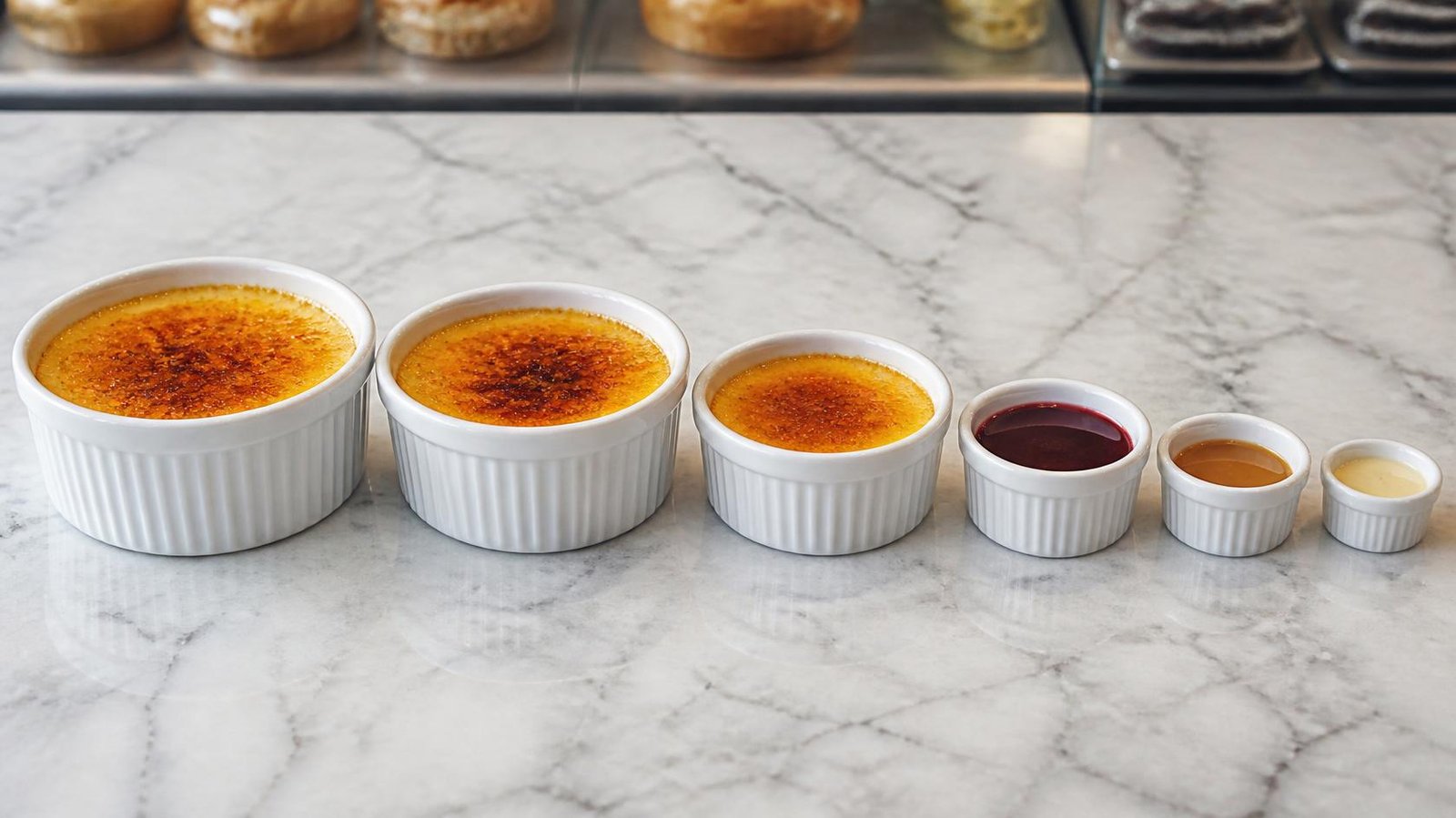
Ramekins: How to Choose the Right Size, Shape, and Material
Ramekins are small dishes with an outsized role in the kitchen. They can hold a measured sauce, bake a delicate custard, organize ingredients for prep, or turn a simple baked egg into an individual serving with a polished presentation. The most useful ramekin is not simply the prettiest one; it is the one with the right capacity, geometry, material, and heat rating for the job.
Table of Contents
Find the right section
- What a Ramekin Is and What It Does
- How to Choose Ramekin Size and Shape
- Materials, Heat Ratings, and Safe Use
- Key Takeaways
- Frequently Asked Questions
- Sources
What a Ramekin Is and What It Does
A small dish built for individual portions
A ramekin is a small culinary dish used for baking, serving, or holding prepared ingredients. The term can also refer to a baked cheese preparation, as documented in Merriam-Webster’s definition of ramekin, but in everyday kitchen use it usually means the vessel itself.
Most ramekins are round with straight or gently flared sides. That profile helps them perform several jobs well: they portion food consistently, hold heat during service, and create a tidy border around baked dishes. A ramekin can be a soufflé dish, a custard cup, a condiment holder, or a prep bowl depending on its size and construction.
The key is to separate nominal capacity from usable capacity. A dish labeled 6 ounces may technically hold 6 ounces to its rim, but it should not always be filled that high. A soufflé needs room to rise. A bubbling macaroni and cheese needs clearance to avoid spilling. A custard may need space for a sugar crust or garnish. The practical fill level changes with the recipe.
Cooking, serving, and prep are different jobs
It is tempting to treat every small dish as interchangeable. They are not. A ramekin used for prep only needs enough room for measured spices, chopped herbs, or a sauce ingredient. A ramekin used for baking must be specifically rated for the intended oven temperature. A ramekin used for table service should also be comfortable to handle and appropriate for the portion being served.
Here is a practical way I recommend separating the roles:
| Primary use | What matters most | Typical examples |
|---|---|---|
| Prep and mise en place | Easy handling, visibility, stackability | Salt, spices, chopped garlic, garnishes |
| Cold service | Capacity, presentation, food-safe material | Dips, dressings, olives, butter |
| Oven baking | Manufacturer heat rating, shape, usable volume | Custards, baked eggs, individual cobblers |
| Water bath baking | Heat-rated construction, stable sides, matching dimensions | Crème brûlée, flan, cheesecake |
| Direct finishing | Specific broiler or torch compatibility | Sugar-topped custards, gratins |
For busy foodservice operations, keeping separate ramekins for prep and hot service can reduce confusion. Plastic condiment cups may work well for cold portions or ingredient staging, but they are not a substitute for oven-safe ceramic, porcelain, stoneware, or glass bakeware unless the manufacturer explicitly says otherwise.
Why individual portions work so well
Individual baking has a simple operational advantage: each serving is already divided before it reaches the table. That supports portion control, reduces the need for cutting or scooping, and can make desserts and starters feel more intentional.
A ramekin also changes how food cooks. A shallow, wide dish exposes more surface area. A deeper dish concentrates the food vertically. Those differences affect browning, evaporation, and how quickly the center sets. Two ramekins with the same stated capacity can therefore produce noticeably different results.
Think beyond the ounce label. Capacity tells you how much a ramekin can hold. Diameter and depth tell you how a recipe will cook and look.
How to Choose Ramekin Size and Shape
Start with the serving function
Ramekins commonly range from about 50 to 250 mL, or roughly 1½ to 8½ U.S. fluid ounces, as summarized in this general overview of ramekin capacities. Larger dishes are also sold as ramekins or mini cocottes, so product dimensions matter as much as the name on the label.
A useful size decision begins with the food’s role on the menu or at the table.
| Capacity range | Common role | Choose it when | Avoid it when |
|---|---|---|---|
| 2 ounces or about 60 mL | Sauces, condiments, spice prep | The portion is small and controlled | You need a dessert or baked egg portion |
| 4 ounces or about 120 mL | Small desserts, sides, dips | The recipe is compact or rich | The food rises, bubbles, or needs topping space |
| 6 ounces or about 180 mL | Baked eggs, custards, individual desserts | You need a flexible everyday size | You are serving a hearty entrée portion |
| 8 ounces or about 240 mL | Larger desserts, mac and cheese, chili | The dish is substantial but still individual | You need very shallow custard coverage |
| 10 ounces and above | Starters, larger puddings, baked sides | The recipe includes filling, topping, or sauce | You need tightly controlled small portions |
Le Creuset connects approximately 100 mL ramekins with condiments and dips, 200 to 250 mL options with individual desserts, and roughly 300 mL dishes with larger puddings or savory starters in its ramekin and mini pot size guidance. Those ranges are useful starting points, not universal rules.
Match geometry to the recipe
The shape of a ramekin is often more important than shoppers expect. Width, internal depth, and side profile each influence the finished dish.
A wide, shallow ramekin works best when surface area matters. Crème brûlée is the classic example: a broad top creates more area for the caramelized sugar layer while keeping the custard relatively shallow. The Spruce Eats specifically notes that wider, shallower vessels suit crème brûlée particularly well.
A taller, straight-sided ramekin is generally more appropriate for soufflés. Straight walls give the rising mixture a more vertical path. This does not guarantee a tall soufflé, since technique and recipe formulation still matter, but the vessel supports the intended shape better than a broad, low dish.
A medium-width, medium-depth ramekin is the versatile middle ground for baked eggs, cobblers, mac and cheese, dips, and small casseroles. This is often the best choice when one size must cover many recipes.
Account for headspace before baking
Headspace is the empty space between the food and the top edge of the ramekin. There is no universal fill percentage that applies to every recipe because ingredients expand differently. Egg-heavy soufflés can rise dramatically. Cheese-topped casseroles may bubble at the edges. A dense custard changes very little in volume.
Instead of relying on one fixed rule, use this recipe-based method:
- Read the recipe’s yield and divide it by the number of servings.
- Compare that amount with the ramekin’s stated capacity.
- Leave visible clearance for any food that rises, foams, melts, or bubbles.
- Consider toppings separately. Streusel, cheese, breadcrumbs, fruit, or brûléed sugar all require surface room.
- If the recipe is new, place the filled ramekins on a sheet pan before baking to make handling safer and catch an occasional overflow.
For example, a 6-ounce ramekin may be excellent for a baked egg with vegetables and cheese, but the same dish can become crowded if the egg mixture is poured too close to the rim. In that case, an 8-ounce ramekin may provide a better working volume even if the finished portion remains modest.
The most versatile size for everyday use
If only one size is practical, I would generally choose a 6-ounce ramekin. It is large enough for baked eggs, individual puddings, dips, and many single-serve desserts while still being compact enough for sauces or ingredient prep in a pinch.
That recommendation has limits. Choose 4-ounce ramekins when desserts are especially rich or portions need to be tightly controlled. Choose 8-ounce dishes when serving a warm starter, small casserole, or comfort-food side. Wayfair’s ramekin size and use guide similarly places 2-ounce dishes with sauces, 4-ounce dishes with desserts and sides, 6-ounce dishes with baked eggs and desserts, and 8-ounce dishes with heartier baked portions.
Materials, Heat Ratings, and Safe Use
Ceramic, porcelain, stoneware, glass, and plastic
Material affects appearance, weight, heat handling, and intended use. Still, material alone does not establish oven safety. A ceramic ramekin may be oven-safe, while another ceramic piece with a decorative finish or different construction may have a lower temperature limit or no oven rating at all.
| Material | Strengths | Watch for | Best use |
|---|---|---|---|
| Ceramic | Familiar appearance, broad availability, good presentation | Product-specific heat limits and glaze condition | Everyday baking and serving when rated |
| Porcelain | Smooth finish, refined presentation, easy-to-clean surface | Chipping at rims and product-specific temperature guidance | Custards, sauces, desserts, restaurant service |
| Stoneware | Substantial feel and attractive rustic presentation | Weight, storage space, varying heat specifications | Baked sides, cobblers, savory starters |
| Glass | Food visibility and simple presentation | Thermal shock concerns and manufacturer limits | Layered desserts and recipes requiring visibility |
| Plastic | Lightweight, often economical, useful for prep | Usually unsuitable for oven baking unless clearly heat-rated | Cold sauces, ingredient prep, takeout service |
The safest purchasing habit is simple: read the product’s exact care and temperature information before using it in an oven, microwave, freezer, dishwasher, or broiler. Generic material assumptions are not enough.
Oven-safe is not the same as broiler-safe
A ramekin described as oven-safe has been approved by its manufacturer for oven use under stated conditions. That does not automatically mean it can go under a broiler, withstand direct flame from a kitchen torch, or move from freezer to a fully heated oven.
These are different stresses:
- Normal oven baking heats the dish more gradually from surrounding hot air.
- Broiling exposes the top and rim to intense overhead heat.
- Torching concentrates heat in a small area, usually on the surface of sugar.
- Thermal shock happens when a dish experiences a rapid temperature change, such as moving from a freezer directly into a hot oven or adding cold liquid to a hot ramekin.
Fair warning: there is no universal material-only rule that can safely predict performance in each scenario. For crème brûlée, use a dish that the manufacturer specifically approves for the intended finishing method, or caramelize sugar separately and use another serving approach. For frozen make-ahead dishes, follow the item’s instructions rather than assuming a freezer-safe label also means direct-to-oven safety.
Water baths and gentle custards
Ramekins are frequently used in water baths for custards, flans, cheesecakes, and crème brûlée. The water bath buffers oven heat, helping the custard cook more gently than dry heat alone. It can reduce harsh edge cooking while the center sets.
Choose ramekins with similar dimensions when baking several at once. Mismatched sizes may finish at different times because the depth and volume of custard vary. Set the ramekins in a larger roasting pan, then add hot water around them carefully once the pan is on an oven rack or a stable surface. Avoid splashing water into the custard.
Use a pan deep enough to hold water securely, but do not assume water-bath use makes every vessel safe. The ramekin itself still needs an appropriate oven rating.
Cleaning and storage for a longer service life
Dishwasher-safe ramekins are convenient, but hand washing may be preferable for pieces with metallic decoration, delicate finishes, or chips near the rim. For baked-on food, soak the ramekin in warm water first, then use a nonabrasive sponge. Harsh scouring can dull glazed surfaces or create scratches that make future cleanup harder.
Inspect ramekins regularly, especially in commercial settings. Retire pieces with significant cracks, deep chips, or crazing that affects cleanability. Stack carefully with padding or separators when necessary. A chipped rim is not just an appearance issue; it can make the dish uncomfortable to handle and more vulnerable to further damage.
Key Takeaways
Choose by use, not by name alone
- Select capacity based on the portion, topping space, and whether the food will rise or bubble.
- Treat internal diameter, depth, and usable headspace as separate buying criteria from stated ounces.
- Choose broad, shallow ramekins for caramelized custards and taller, straighter dishes for soufflés.
Put safety information ahead of assumptions
- Confirm the manufacturer’s rating for oven, microwave, freezer, dishwasher, broiler, and torch use.
- Do not assume that ceramic, porcelain, stoneware, or glass is automatically safe for every heat application.
- Keep plastic ramekins for cold service or prep unless the product is specifically rated for baking.
Frequently Asked Questions
What is the difference between a ramekin and a soufflé dish?
The terms overlap. A soufflé dish is typically a ramekin or small baking vessel with straight, relatively tall sides intended to support a soufflé’s upward rise. A ramekin is the broader term and may be shallow, wide, tall, decorative, or designed mainly for sauces and prep.
What size ramekin is best for crème brûlée?
A wider, shallower ramekin is generally the better choice because it creates more surface area for the caramelized sugar topping and keeps the custard layer relatively thin. Capacity matters, but shape matters more here. A 4- to 6-ounce wide dish is often suitable for an individual portion.
Is a 4-ounce or 6-ounce ramekin better for desserts?
Choose 4 ounces for rich desserts, small puddings, or controlled portions. Choose 6 ounces for more flexible dessert service, including cobblers, custards, mousses, and individual cakes. If the dessert includes fruit, sauce, or a crumb topping, the larger option usually gives more practical working space.
What size ramekin is best for baked eggs?
A 6-ounce ramekin is often a strong starting point for one or two eggs with vegetables, cheese, or sauce. Move up to 8 ounces if the recipe includes substantial fillings or if you need more headspace for bubbling ingredients.
Can ramekins go in the oven or microwave?
Some can, but the answer depends on the specific product. Check the manufacturer’s instructions for the exact ramekin rather than relying only on whether it is labeled ceramic or porcelain. The same applies to microwave, freezer, and dishwasher use.
Can ramekins go under a broiler or be used with a kitchen torch?
Only when the manufacturer specifically approves that use. Oven-safe does not automatically mean broiler-safe or torch-safe. Broiling and torching create much more concentrated heat than ordinary baking, which can stress some materials or finishes.
Can ramekins go from the freezer directly into a hot oven?
Do not assume they can. Rapid temperature changes can create thermal stress, and freezer-safe plus oven-safe does not necessarily mean safe for a direct freezer-to-oven transfer. Follow the product instructions; when instructions are unclear, allowing the dish to warm gradually is the more cautious option.
Sources and References
Verified references
- Merriam-Webster + “Ramekin” definition — https://www.merriam-webster.com/dictionary/ramekins
- Wikipedia + “Ramekin” — https://en.wikipedia.org/wiki/Ramekins
- Le Creuset + “Ramekins & Mini-Pots” — https://www.lecreuset.co.uk/en_GB/c/cooking-and-baking/baking/ramekins-and-mini-pots
- Wayfair + “What Is a Ramekin? Definition, Sizes, & Best Uses” — https://www.wayfair.com/sca/ideas-and-advice/guides/what-is-a-ramekin-T4984
- The Spruce Eats + “The 5 Best Ramekins and Soufflé Dishes, Tested and Reviewed” — https://www.thespruceeats.com/best-ramekins-and-souffle-dishes-5079402
Recent Posts
Leave a Comment
Your email address will not be published. Required fields are marked *