




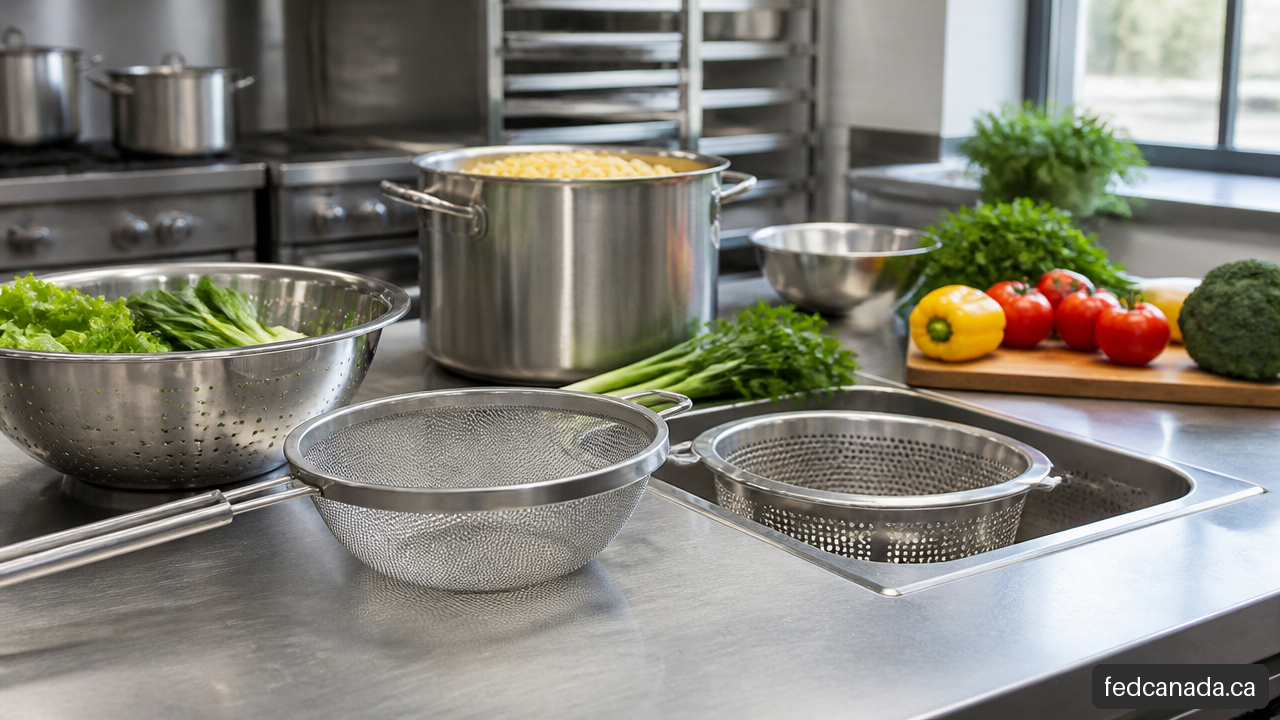
Strainer Guide: Choosing, Using, and Cleaning the Right Type
A strainer separates solids from liquids, but the right design depends entirely on the job. In food preparation, it may rinse quinoa, clarify stock, or sift flour. In a sink, it catches scraps before they enter the drain. In plumbing and equipment systems, it protects valves, pumps, and other components from debris. We should identify the use first, then choose the opening size, material, shape, and cleaning routine that fit the task.
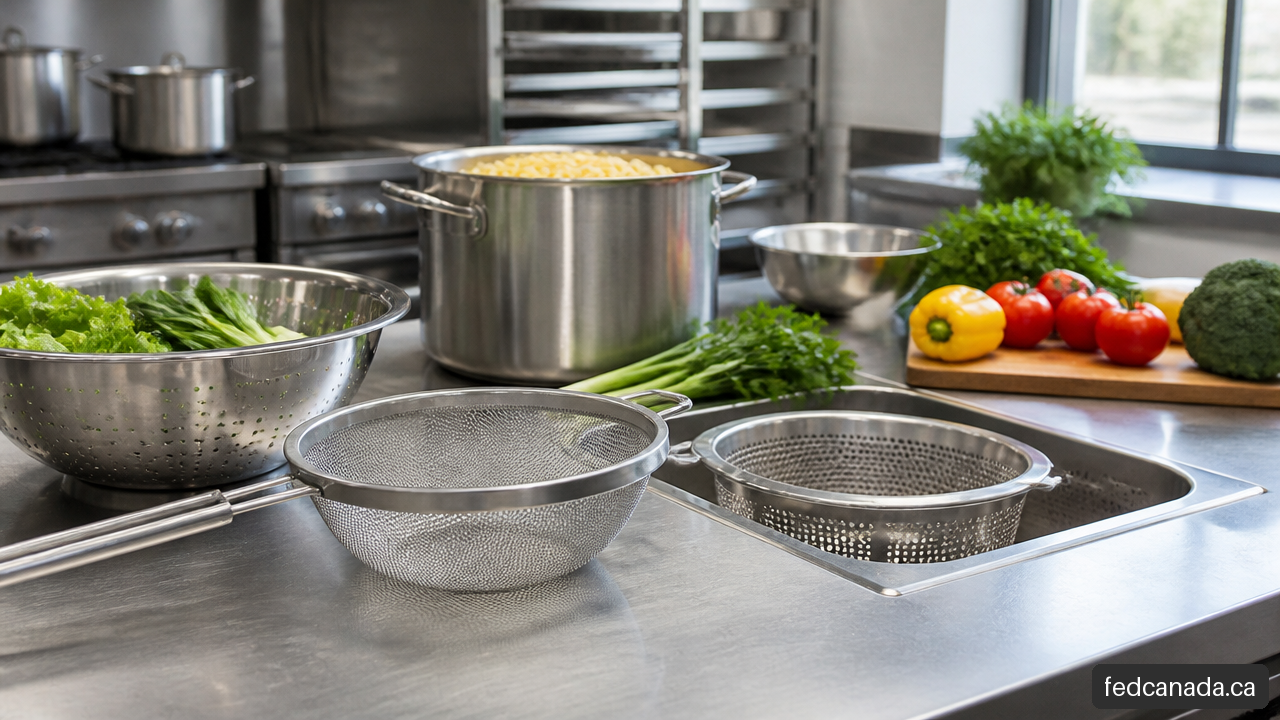
Table of Contents
- Strainer types and what each one does
- How to choose the right strainer
- Materials, durability, and food safety
- Cleaning and maintenance that protect performance
- Key Takeaways
- FAQ
Strainer Types and What Each One Does
The word strainer is broad. Before comparing products, we need to separate the main meanings. A foodservice operation may use several types in one day: a colander at prep, a fine sieve at pastry, a sink basket at the dish area, and a pipe strainer upstream from equipment.
Food strainers, sieves, and colanders
A kitchen strainer is usually a handheld or bowl-shaped tool with mesh or perforations. Liquid passes through its openings while food particles remain above. The opening size is the key variable: larger holes drain quickly, while smaller openings retain smaller particles.
A sieve is typically used to sort dry ingredients or create a smoother texture. A colander is a larger perforated bowl designed to drain bulk foods. A fine-mesh strainer is the more precise choice when particles are small or the liquid itself is valuable.
| Tool | Best use | What it retains | When to avoid it |
|---|---|---|---|
| Colander | Draining pasta, washed vegetables, large batches | Large food solids | Fine grains, loose tea, or small seeds may escape |
| Fine-mesh strainer | Sauces, stocks, tea, flour, rice, quinoa | Small particles and sediment | Heavy solids can clog it quickly |
| Sieve | Sifting flour, cocoa, powdered sugar | Dry clumps and oversized particles | Draining high-volume wet foods |
| Chinois or conical strainer | Clarifying sauces, soups, and purées | Fine pulp and solids | Fast, low-precision draining jobs |
| Food mill with screen | Purées and sauces | Skins, seeds, fibrous material | Simple rinsing or draining tasks |
For example, a colander works well for draining a pot of pasta because the noodles are much larger than the openings. Use that same colander for quinoa, however, and a portion of the grain may pass through or lodge in the holes. A fine-mesh strainer solves the retention problem, but it needs more deliberate rinsing because starch and small food particles can block the mesh.
Marketplace listings commonly position fine-mesh kitchen strainers for flour, tea, juice, rice, and quinoa. That is a useful starting point, but the better rule is simple: choose an opening smaller than the particles you need to retain, while keeping it open enough for the liquid to move at a practical pace.
Sink strainers and drain screens
A sink strainer belongs to the drainage system, not the food-prep station. Its job is to catch solids before they move into the drain. Food particles, hair, and soap residue are among the debris these products are designed to intercept, as described in Zoro’s overview of drain and sink strainers.
The two common forms are a plate strainer and a basket strainer. A plate is a flat perforated surface over the drain opening. A basket sits within the drain assembly and holds debris in a removable cup-like form. The sink-strainer construction comparison explains that plate designs use perforated surfaces, while basket strainers retain debris in removable baskets and can provide more straining area.
That additional area can matter in a busy kitchen. If the same amount of debris spreads across a wider surface, water may continue moving longer before the openings become restricted. It is not a guarantee of better drainage in every setup. A deep basket packed with scraps can still slow water sharply. Still, for sinks that collect frequent food debris, a removable basket is often easier to empty without touching the drain opening itself.
Pipe and equipment strainers
A Y-strainer is a pipe-mounted component with a screen inside a branch-shaped body. It removes debris from a flowing line before that debris reaches a sensitive component. These are different from sink strainers in both installation and purpose.
In a commercial setting, a piping strainer may be part of a water, gas, oil, or process-fluid system. Selection should be based on the equipment manufacturer’s requirements, pipe size, fluid type, operating pressure, and service access. A screen that is too fine can create excessive resistance. A screen that is too coarse may allow damaging debris through.
A strainer is not a cure for every blockage or equipment problem. It is a first barrier, and every barrier works only while liquid can still pass through it.
How to Choose the Right Strainer
The best choice comes from the material being separated, the amount of liquid involved, and how often the strainer will be emptied. A product that performs well for one task can be frustrating in another.
Start with the solids and the liquid
We can make the first decision by asking four questions:
- What must be retained? Consider particle size, from pasta and vegetable scraps to tea leaves, flour clumps, or fine sediment.
- What must pass through? Water moves more easily than a thick soup, a starchy slurry, or a sauce with fat and pulp.
- How much material will arrive at once? A small tea strainer handles a cup. It is not a practical solution for a large batch of stock.
- How quickly must the liquid drain? During a busy service period, slow drainage can disrupt prep and warewashing routines.
A useful way to understand the trade-off is solids loading, meaning the amount of material collected on the strainer. As solids loading rises, the open area available for liquid drops. Flow slows, and the strainer may overflow or force water to seek a path around the edges.
Fine mesh provides better capture, but it also has less tolerance for buildup. For instance, a fine-mesh strainer may keep tiny herb fragments out of a sauce, yet it can clog when thick purée is poured into it too quickly. Work in smaller batches, use a ladle, and scrape the surface gently between pours rather than forcing the liquid through.
Measure a sink opening before buying
For sink replacements, product labels alone are not enough. Measure the actual drain opening and confirm whether the item is a complete drain assembly, a replacement basket, or simply an over-the-drain screen.
Oatey notes that common sink-strainer diameters are approximately 3½ to 4½ inches, but the correct selection must match the specific drain opening. Its guidance on choosing a properly fitted sink strainer also warns that incorrect sizing can contribute to leaks or malfunction.
Use this process before ordering:
- Remove the existing removable basket or screen, if applicable.
- Measure the inside diameter of the drain opening, not just the visible outer rim.
- Measure the outer flange or lip if replacing the full strainer assembly.
- Check the sink configuration, including whether the opening connects to a garbage disposal or a standard drain.
- Compare the measurements with the manufacturer’s stated dimensions and installation requirements.
A flat screen that rests on top of a drain is not interchangeable with a seated basket that fits inside a drain body. The first may be useful as a temporary debris catcher. The second is intended to fit a defined opening and direct water through the drain assembly.
Recognize fit and flow failure modes
Poor drainage is not always caused by a clogged pipe. The strainer itself may be contributing to the issue.
| Symptom | Likely cause | Practical response |
|---|---|---|
| Water pools above the strainer | Fine mesh is loaded with debris or grease | Empty, rinse, and brush the mesh before reinstalling |
| Debris enters the drain around the edge | Screen is too small, warped, or unstable | Replace with a properly seated design |
| Water leaks under the sink | Incorrect assembly size, worn seal, or loose connection | Stop using the sink if leakage is significant and inspect the assembly |
| Basket is difficult to remove | Food residue or deformation is binding it | Clean the seat and replace a bent basket |
| Flow slows after only brief use | Mesh is too fine for the volume or debris type | Use a basket or coarser perforation where appropriate |
A community discussion about a built-in sink strainer described an elevated, unstable component that tipped when bumped, interfered with flow, and made debris removal unpleasant. That practical complaint, documented in this discussion of an unstable built-in sink strainer, highlights why stability matters. A strainer that shifts can create gaps where debris bypasses the intended capture surface.
Materials, Durability, and Food Safety
Material selection affects cleaning, corrosion resistance, weight, heat tolerance, and how the strainer holds its shape. It should not be treated as a cosmetic detail.
Stainless steel, plastic, nylon, and silicone
Stainless steel is widely used for food strainers and sink baskets because it is rigid, reusable, and suitable for regular washing when cared for properly. Many consumer products advertise 304 stainless steel, but a material label by itself does not prove long-term performance in every environment. Thickness, mesh construction, welding, cleaning chemicals, and exposure to salt or acidic food all matter.
Nylon mesh and plastic designs can be lightweight and may be useful where metal contact is undesirable. They can also be more vulnerable to heat, staining, cracking, or warping depending on the product and use. Zoro’s product category shows that strainer elements may use different mesh materials, including stainless steel and nylon, reinforcing that material is part of the functional design rather than a decorative choice.
| Material | Strengths | Watch for | Best fit |
|---|---|---|---|
| Stainless steel | Rigid, heat tolerant, easy to rinse | Bent mesh, corrosion from harsh conditions | Daily food prep, sink baskets, heavy use |
| Nylon mesh | Lightweight, fine capture potential | Heat damage, tears, retained odour | Gentle rinsing and specific fine-straining tasks |
| Plastic | Low weight, often low cost | Scratches, staining, warping | Light-duty draining and backup tools |
| Silicone | Flexible, soft on cookware | Limited rigidity for fine screening | Collapsible colanders and flexible drain covers |
Match material to the task
For hot stock, fried foods, or frequent sanitation, a rigid stainless steel strainer is generally the practical starting point. For flour or dry ingredients, choose a mesh that is easy to tap and brush clean. For a sink, use a basket or screen that can be lifted without flexing or collapsing under wet scraps.
Fair warning: no ordinary sink strainer can safely handle every material. Grease, coffee grounds, fibrous peels, sticky rice, and large quantities of food scraps can still create drainage problems. Scrape plates and pans into the proper waste stream before rinsing. A strainer reduces what enters the drain; it does not turn the drain into a disposal system.
Food-contact considerations
For food preparation, use a strainer intended for food contact and keep it dedicated to that purpose. Do not use a sink basket, a plumbing screen, or a tool that has contacted cleaning chemicals for edible food. Cleaned appearance is not the same as a food-safe history.
Also inspect the strainer’s construction. Frayed mesh, broken wires, rough seams, chipped coatings, or loose handles create sanitation and safety concerns. A damaged mesh can release metal fragments or allow unexpected particles into food. Replace it rather than attempting a makeshift repair.
Cleaning and Maintenance That Protect Performance
A strainer fails gradually before it fails completely. Its openings narrow, debris sticks to the surface, water drains more slowly, and users may push harder to force flow. That extra force can deform fine mesh or send debris around the rim.
Clean based on loading, not just the calendar
There is no universal cleaning interval that suits every kitchen or sink. The right schedule depends on volume, food type, and whether debris is greasy, starchy, fibrous, or fine. A sink used for rinsing vegetables may need a quick emptying after each prep period. A fine-mesh tea strainer may need rinsing after every use.
Use these practical triggers:
- Empty a sink basket when captured material begins to cover much of the drainage surface.
- Rinse fine mesh immediately after wet use, before residue dries into the openings.
- Brush or soak strainers when water no longer passes evenly across the surface.
- Inspect baskets, rims, handles, and mesh whenever the strainer is cleaned.
A reliable cleaning workflow
- Remove solids first. Knock food waste into the appropriate bin instead of rinsing large debris into another drain.
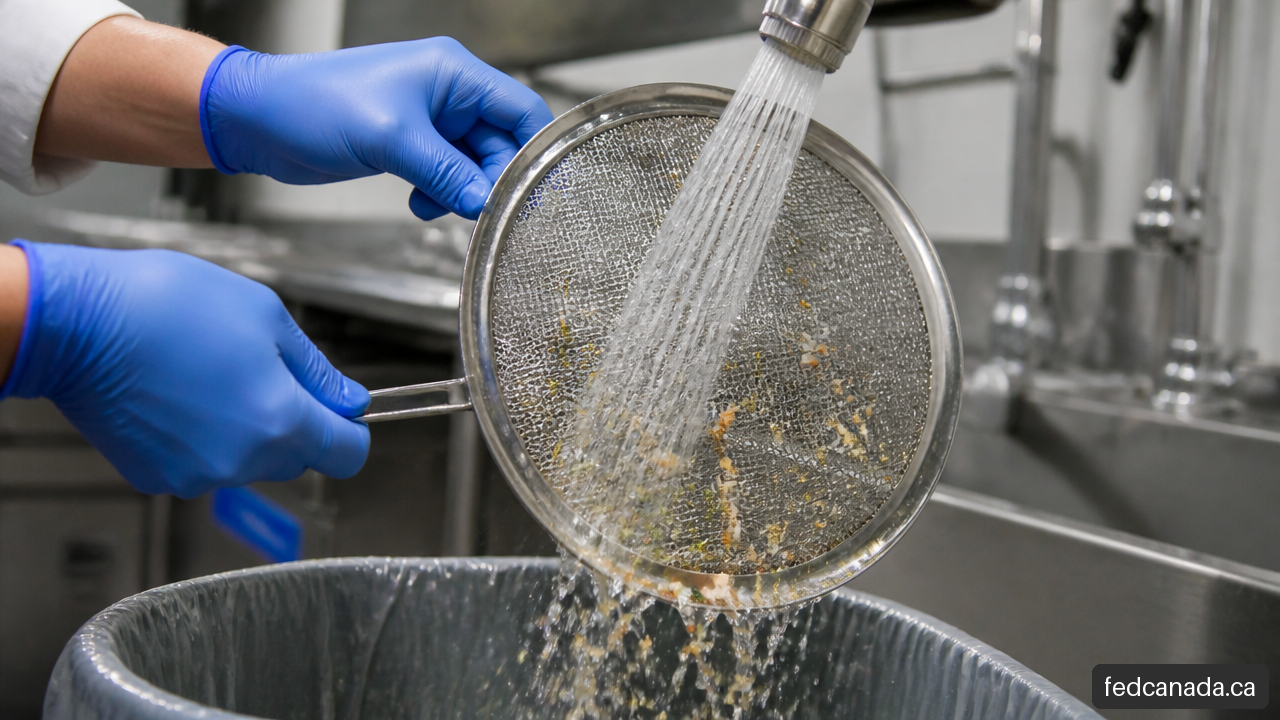
- Rinse from the reverse side. For mesh, spray water through the side opposite the buildup. This pushes particles back out of the openings instead of packing them in further.
- Wash with an appropriate detergent. Use a brush that reaches the mesh or perforations without tearing them.
- Address grease promptly. Warm water and suitable detergent are generally more effective before grease cools and hardens.
- Rinse thoroughly and dry. Residual food, detergent, or moisture can encourage odours and leave deposits.
- Reinstall securely. Confirm that baskets seat correctly and that screens lie flat without rocking.
When to replace instead of clean
Cleaning cannot correct every issue. Replace the strainer if you find:
- Torn or separating mesh
- A bent rim that no longer seats flat
- Persistent corrosion, rough pitting, or flaking material
- A basket that sticks, tips, or drops below its intended position
- Cracks in plastic or nylon components
- A damaged flange, seal, or drain connection that contributes to leakage
For a sink assembly, leakage below the basin deserves prompt attention. A loose part may only need adjustment, but an incorrectly fitted or damaged assembly can cause repeated water damage. When the problem involves the drain body, seals, or plumbing connections rather than a removable basket, use a qualified plumbing professional if the repair is beyond routine maintenance.
Key Takeaways
- A strainer can refer to a food-prep tool, sink component, or pipe-protection device. Identify the application before selecting a product.
- Choose opening size by balancing particle capture against drainage speed. Finer mesh catches more but clogs sooner under heavy solids loading.
- Use a colander for large foods, a fine-mesh strainer for small particles, and a removable basket for routine sink debris.
- For sink replacements, measure the actual drain opening and confirm the installation type. Nominal size alone is not enough.
- Select materials based on heat, cleaning demands, rigidity, and intended food contact. Replace damaged mesh, warped screens, and unstable baskets.
- Clean from the reverse side of mesh whenever possible, empty debris before it blocks flow, and do not rely on a strainer to manage grease or large food waste.
FAQ
What is a strainer?
A strainer is a perforated or mesh barrier that lets liquid pass while retaining solids. In kitchens, it can drain or refine food. In sinks, it catches debris before it enters the drain. In piping, it protects downstream equipment from particles.
What is the difference between a strainer, sieve, colander, and filter?
A colander drains large food solids. A sieve separates particles by size, often in dry ingredients. A fine-mesh strainer handles smaller food particles and liquids. A filter usually targets finer particles and may use media such as paper, cloth, or cartridges. The terms overlap in everyday conversation, so the task and opening size matter more than the label.
Which type of strainer should I use in a kitchen sink?
Choose a removable basket strainer when the sink regularly receives food scraps and you need easy emptying. Choose a flat screen for lighter-duty use or temporary coverage. Avoid a very fine screen if it clogs repeatedly and slows normal drainage.
How do I measure my sink opening for a replacement strainer?
Remove the existing basket or screen and measure the inside diameter of the drain opening. If replacing the complete assembly, also measure the visible flange and review the manufacturer’s installation dimensions. Confirm whether the opening is part of a standard drain or a disposal connection before purchasing.
Is stainless steel better than plastic for a strainer?
Not in every situation. Stainless steel is usually better for rigidity, heat tolerance, and frequent washing. Plastic can be lighter and less expensive for low-demand tasks. Choose based on use: hot liquids and commercial prep generally call for a durable, food-contact stainless steel design, while light cold-food draining may suit plastic.
Will a fine-mesh sink strainer slow drainage?
It can. Fine openings offer more capture but become restricted faster when food particles, grease, or soap residue collect on the surface. If drainage slows often, empty the strainer more frequently or use a design with more open area, such as an appropriately sized basket.
How often should a strainer be cleaned?
Clean it whenever captured debris noticeably affects flow, after each use for food-prep mesh strainers, and before residue dries in the openings. High-volume sinks may need several quick emptying cycles during the day. There is no reliable universal interval because loading varies widely.
Can a sink strainer prevent all drain blockages?
No. It can reduce the amount of solid debris entering the drain, but it cannot stop grease, dissolved residue, fine particles, or debris that bypasses a poor-fitting screen. Proper scraping, waste handling, and routine drain maintenance remain necessary.
Sources and References
- Oatey — How to Choose the Right Sink Strainer — https://www.oatey.com/faqs-blog-videos-case-studies/blog/how-choose-right-sink-strainer
- Zoro — Drain & Sink Strainers — https://www.zoro.com/drain-strainers/c/7624/
- Wikipedia — Sink Strainer — https://en.wikipedia.org/wiki/Sink_strainer
- Reddit r/mildlyinfuriating — Built-in sink strainer discussion — https://www.reddit.com/r/mildlyinfuriating/comments/1lsmarr/my_wife_refuses_to_use_the_built_in_stainer_in_my_sink/
Recent Posts

Leave a Comment
Your email address will not be published. Required fields are marked *