




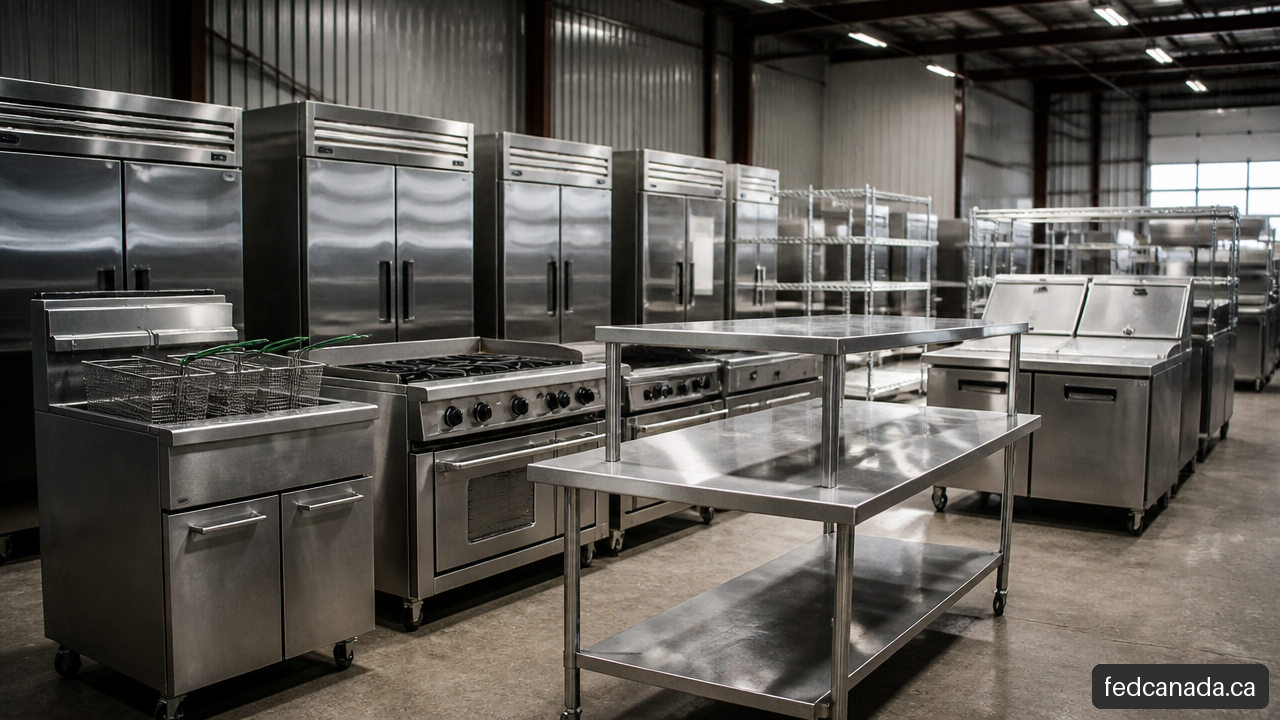
Used Restaurant Equipment Toronto: Buy Smarter, Avoid Costly Mistakes
Used Restaurant Equipment Toronto buyers can find meaningful value in preowned ovens, fryers, refrigeration, dishwashers, prep tables, mixers, and smallwares. The purchase only works, however, when the equipment fits the site, performs reliably under load, and does not create a larger repair or installation bill after delivery.
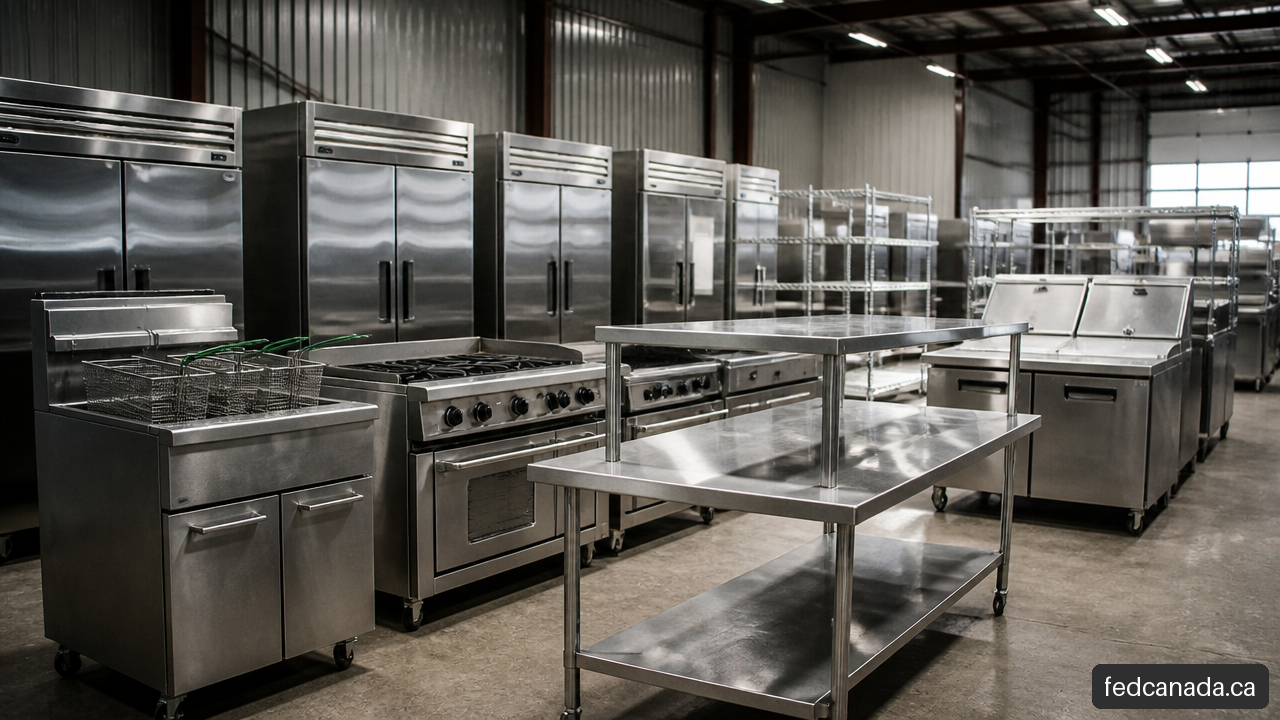
A used commercial appliance is not simply a lower priced version of a new one. It is an asset with a specific service history, utility requirement, condition level, and remaining parts support. I recommend treating the purchase as a short technical project: verify the model, inspect it while operating, confirm site compatibility, and calculate the full cost to place it in service before committing.
Table of Contents
- Key Takeaways
- Where to Find Used Restaurant Equipment in Toronto
- How to Inspect Used Commercial Kitchen Equipment
- Plan for Installation, Utilities, and Landed Cost
- FAQ: Used Restaurant Equipment Toronto
- Sources and References
Key Takeaways
- Certified used equipment is usually the lower risk option when the item is business critical, such as a walk in cooler, fryer bank, dishwasher, or primary range. The higher purchase price may include inspection, servicing, delivery coordination, and warranty protection.
- Private sales and auctions can be suitable for simple, noncritical items such as stainless work tables, shelving, sheet pans, display fixtures, or spare equipment. They require more buyer diligence and may offer no return rights.
- The serial plate matters. It identifies the exact model, serial number, electrical rating, fuel type, manufacturer information, and often the production details needed to investigate parts availability.
- Purchase price is not the full cost. Transport, rigging, elevator access, electrical work, gas connection, ventilation, plumbing, repairs, and disposal can materially change the value of a deal.
- A test is more useful than a promise. Record temperature stability, burner ignition, recovery time, controls, visible leaks, and electrical behavior before accepting equipment whenever practical.
A used unit that cannot pass through the doorway, connect to available utilities, or obtain service parts is not a bargain. It is an operational delay with a price tag.
Where to Find Used Restaurant Equipment in Toronto
Toronto and the GTA offer several channels for used food service equipment. The right channel depends on how much risk your operation can absorb, whether the unit is urgent, and whether you have technical support available after purchase.
Dealer certified inventory
Dealer supplied certified used inventory is often the most practical starting point for restaurant owners who need a major appliance running quickly. The term certified used is not a universal technical standard, so ask what the seller actually completed: cleaning, diagnostic testing, component replacement, refrigerant work, electrical repair, cosmetic refurbishment, or a basic functional check.
Toronto buyers can use certified used suppliers, online classifieds, and auctions, but delivery and warranty terms vary by seller.
A dealer sale may be worth a premium when the equipment is central to daily production. Consider a café replacing its only undercounter refrigerator. A lower private sale price offers little comfort if a compressor failure closes the cold station for several days. A dealer warranty and a clear contact point can reduce that risk, though it does not eliminate downtime.
Some sellers describe equipment as cleaned and serviced before sale. For example, EconoLease’s certified used restaurant equipment description states that its units are cleaned and serviced and include a stated 90 day parts and labour warranty. Confirm whether that warranty applies to the exact item, what starts the coverage period, and what service calls may cost outside the stated area.
Private listings, closures, and auctions
Restaurant closure inventory, liquidators, online classified listings, and auctions can produce lower asking prices. They can also leave buyers responsible for disconnection, loading, transport, repairs, and removal deadlines. At an auction, equipment may be sold as is, where is. That means a unit can look clean but have an untested compressor, a faulty control board, or a gas valve issue.
These channels make the most sense when all three conditions apply:
- You can inspect the equipment before bidding or paying.
- You have budget and time for potential repair work.
- The item is not a single point of failure for opening day or daily service.
A stainless prep table is usually easier to assess than an ice machine or a combi oven. The first is largely a physical condition question. The others combine refrigeration, electronics, water management, controls, and sanitation concerns.
What is commonly available
Used inventory changes quickly, but common categories include the following:
| Equipment category | Typical used examples | Main buying concern |
|---|---|---|
| Cooking | Ranges, ovens, grills, fryers, griddles | Fuel type, heat output, controls, ventilation |
| Refrigeration | Reach in refrigerators, freezers, prep tables | Compressor performance, gaskets, temperature stability |
| Food preparation | Mixers, slicers, processors, dough equipment | Guards, motors, attachments, sanitation |
| Warewashing | Glasswashers, dishwashers, sinks | Water supply, drainage, heating, chemicals |
| Storage and smallwares | Shelving, tables, pans, racks | Corrosion, dimensions, cleanability |
FED states that its certified used selection can include fryers, ovens, and soft serve machines. Availability should never substitute for suitability. Measure first, then shop for the model class that matches your menu volume, footprint, and utilities.
Compare warranty terms, not just warranty length
A 90 day warranty can mean very different things. Parts and labour coverage may include a technician’s time for a covered repair. Parts only coverage can leave you paying diagnostic, travel, and installation labour. A warranty may also exclude misuse, consumables, gaskets, glass, improper installation, transportation damage, or failures linked to inadequate electrical supply.
The geography of service can matter as much as duration.
How to Inspect Used Commercial Kitchen Equipment
Inspection should follow a repeatable order. Start with identity and compatibility, then inspect physical condition, then run the equipment long enough to expose unstable performance. A quick power on test alone may not reveal cycling issues, leaks, overheating, or recovery problems.
Start with the serial plate and documentation
Ask for a clear photo of the serial plate before arranging delivery. Compare it to the seller’s listing and verify that it identifies the same model. The plate commonly shows voltage, phase, amperage, hertz, gas type, and manufacturer information. Those details determine whether the appliance can connect to your site and whether replacement parts can still be sourced.
Check these items before payment:
- Model and serial number match the invoice.
- Electrical rating matches the building service.
- Gas equipment identifies the fuel type required.
- The manufacturer still supports parts or provides manuals.
- Required accessories are included, such as racks, baskets, legs, probes, filters, trays, or mixing attachments.
- There is no evidence of altered wiring, missing safety guards, bypassed switches, or damaged plugs.
If the seller cannot provide a serial plate image or will not allow a reasonable inspection, treat that as a reason to slow down. It may be innocent, but it removes information needed for a responsible purchase.
Test by equipment type
The acceptance test should reflect the equipment’s job. A fryer must heat safely and hold oil. A refrigerator must pull down and maintain temperature. A convection oven must heat evenly enough for the intended production, not merely display a temperature on the control panel.
| Equipment | Practical test | Warning signs |
|---|---|---|
| Refrigerator or freezer | Run long enough to observe pull down and cycling; inspect door seals | Excessive noise, frost buildup, warm cabinet, damaged gaskets |
| Fryer | Check tank condition, thermostat response, drain valve, ignition or elements | Oil leaks, unstable heat, corrosion, delayed ignition |
| Range or oven | Light every burner, inspect flame or element response, test controls | Uneven flame, gas odor, failed igniters, hot spots |
| Dishwasher | Run a full cycle and inspect fill, drain, heat, leaks, and door action | Drips, poor drainage, error codes, scale buildup |
| Mixer or slicer | Run under a suitable load where possible; inspect guards and attachments | Motor noise, vibration, missing guards, worn gears |
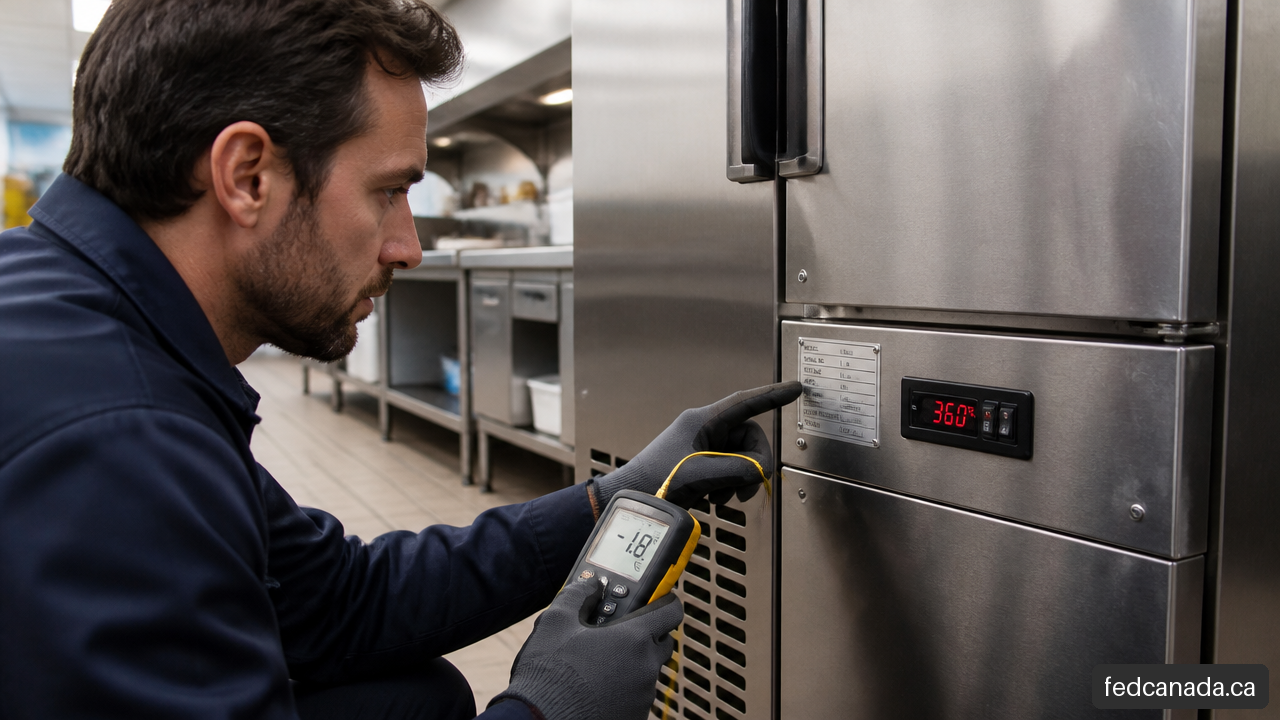
For refrigeration, use an independent thermometer rather than relying only on the built in display. Watch for repeated short cycling, water pooling, excessive frost, or a cabinet that cannot settle at its intended temperature. A refrigerator can sound normal for the first few minutes while still having a weak compressor or airflow problem.
For gas equipment, do not improvise a connection merely for an inspection. A qualified professional should handle gas connections and commissioning. Visible corrosion, missing knobs, damaged burners, or a gas smell should stop the test rather than prompt a workaround.
Inspect safety, sanitation, and repairability
Used equipment must be capable of being cleaned and maintained in a food service setting. Look closely at food contact surfaces, welded seams, door seals, drain areas, fan guards, fryer vats, and areas around refrigeration evaporators. Deep corrosion, cracked surfaces, flaking coatings, or inaccessible residue may make a unit difficult to keep sanitary even if it still operates.
Also assess repairability. Ask whether key parts are currently available and whether local technicians service the brand. Older equipment can be mechanically durable yet expensive to repair if its control board, proprietary sensor, or door assembly is obsolete.
Continental Restaurant Equipment states that its used units are serviced, tested, cleaned, and sold with a stated three month parts and labour warranty on its used equipment program page. That type of supplier process can reduce uncertainty, but I would still ask for the specific work completed on the individual unit. “Refurbished” can describe anything from thorough repair work to a much lighter cosmetic refresh.
Plan for Installation, Utilities, and Landed Cost
The most expensive surprise is often not a mechanical failure. It is discovering after delivery that the equipment cannot physically enter the site or cannot legally and safely connect to the available service.
Confirm site compatibility before buying
Create a simple compatibility worksheet for each major appliance. Give a copy to the seller, installer, electrician, gas contractor, or ventilation professional as appropriate.
| Site check | What to verify | Why it affects the purchase |
|---|---|---|
| Access route | Door widths, turns, stairs, elevator size, loading dock | Determines whether delivery, disassembly, or rigging is needed |
| Electrical | Voltage, phase, breaker capacity, plug or hardwire requirement | Prevents unsafe or unusable connections |
| Gas | Fuel type, line capacity, shutoff location | Affects safe installation and appliance performance |
| Ventilation | Hood coverage, fire suppression, makeup air | Required for many heat producing appliances |
| Plumbing | Water supply, drainage, floor drain location | Essential for warewashing, ice, steam, and some combi equipment |
| Clearance | Manufacturer spacing, cleaning access, service access | Reduces overheating and makes maintenance possible |
A downtown Toronto location may have a narrow service corridor, shared freight elevator, restricted delivery hours, or no loading dock. In that scenario, a compact refrigerator that costs more at purchase may still be the better choice if it fits the elevator and avoids crane or stair carry planning. Measure the full route, not only the kitchen opening.
Build a landed cost, not a sticker price
Use this formula before negotiating:
Landed cost = equipment price + tax + transport + rigging + installation + permits or site work + immediate repairs + disposal or storage costs
Do not assume every category will apply, but actively rule each one in or out. A used gas range might be attractively priced until the quote includes disconnecting old equipment, delivering the range, moving it through a tight access route, adapting the gas connection, confirming ventilation suitability, and removing the old unit.
A sensible contingency is not a prediction that equipment will fail. It is recognition that used equipment may reveal a worn gasket, failing caster, missing fitting, or electrical issue after it reaches the site. The exact amount depends on the unit and project, and there is no reliable public Toronto benchmark for a universal contingency percentage. For example, a used shelving unit may need no reserve beyond transport, while a used ice machine should leave room for water filtration, cleaning, drainage adjustments, and possible service work.
When buying used is the wrong decision
Used equipment is not automatically the economical choice. I would consider new, leased, rented, or manufacturer supported equipment when one or more of these conditions apply:
- The unit is essential to food safety, such as primary refrigeration with no backup capacity.
- The appliance has complex electronics or specialized parts with uncertain availability.
- The restaurant requires a specific efficiency, capacity, or certification feature that older models may not provide.
- Opening day depends on precise installation timing and there is little tolerance for a repair delay.
- The used price is too close to a new model with stronger warranty protection and clearer service support.
The decision is not used versus new in the abstract. It is a comparison between two complete operating plans: the used unit plus its expected setup and risk costs, versus the new unit plus its warranty, financing, and availability terms.
FAQ: Used Restaurant Equipment Toronto
Where can I buy used restaurant equipment in Toronto?
Start with commercial kitchen equipment dealers that sell certified used inventory, then compare restaurant closure sales, liquidators, online classified listings, and auctions. Dealers can be a better fit for major appliances when you need delivery coordination, documentation, and warranty support. Auctions and private sales can suit simpler items or buyers with inspection and repair capacity.
Is certified used equipment worth paying more for?
Often, yes, for high consequence equipment. The added value is not the label itself. It is the documented inspection, servicing, test process, warranty scope, and ability to obtain help after delivery. It may not be worth the premium for a basic stainless table, shelving, or other low complexity equipment that you can inspect easily.
How do I inspect a used commercial refrigerator before buying it?
Verify the model and electrical rating first. Then inspect seals, hinges, interior surfaces, condenser cleanliness, fans, drain condition, and visible corrosion. Run the refrigerator long enough to observe temperature pull down and cycling with an independent thermometer. Ask whether the compressor, controller, fan motor, or door gaskets have been replaced and whether parts remain available.
What should I test on a used fryer, oven, or range?
For a fryer, inspect the vat, drain valve, thermostat response, heating system, and oil containment. For an oven or range, test every burner or element, knobs, igniters, thermostats, doors, and safety features. Do not connect gas equipment without appropriate professional handling. Any gas odor, flame irregularity, damaged wiring, or bypassed safety device should stop the purchase process until qualified assessment is available.
Can used equipment be delivered and installed in downtown Toronto?
It can be delivered, but delivery and installation are separate planning tasks. Confirm building access, freight elevator rules, loading access, turning clearances, delivery windows, stairs, and kitchen route dimensions before booking. Heavy units may need specialized rigging. Also confirm who is responsible for final utility connections and commissioning.
What does a used equipment warranty usually cover?
Coverage varies widely. It may be parts only, parts and labour, limited to a stated period, restricted by distance, or subject to exclusions for installation errors and wear items. Ask for the written terms, service area, response process, labour limits, shipping responsibility for parts, and a list of excluded components before purchasing.
Should a new restaurant buy used refrigeration?
It depends on redundancy and risk tolerance. Used refrigeration can work well when it has been properly inspected, tested, and supported, especially for secondary storage. For a restaurant relying on one refrigerator or freezer for critical inventory, new equipment or certified used equipment with meaningful warranty support may be safer. The cost of food loss and interrupted service can outweigh a lower initial purchase price.
Recent Posts


Leave a Comment
Your email address will not be published. Required fields are marked *