



Ventless Hood System: A Practical Guide for Commercial Kitchens
A ventless hood system can make a commercial kitchen possible in spaces where roof penetrations, duct runs, or major structural work are impractical. It is not a universal substitute for a ducted hood, however. The right decision depends on the exact cooking appliance, the hood’s listing, local approval, fire protection requirements, heat load, and the operator’s willingness to keep up with filtration maintenance.
Table of Contents
- How a Ventless Hood System Works
- Matching Equipment and Approval Requirements
- Ventless vs. Ducted Hoods: Cost, Heat, and Maintenance
- Key Takeaways
- FAQ
How a Ventless Hood System Works
A ventless hood system, also called a ductless hood or recirculating hood system, captures cooking contaminants, filters the air, and returns treated air to the room rather than exhausting it outside. This is the defining difference from a conventional Type I hood, which generally moves contaminated air through ductwork and discharges it outdoors. For food facilities, ventilation is still a legal and operational requirement. San Diego County’s ventilation guideline describes ventless systems as recirculating hoods and cites California requirements for adequate ventilation and mechanical exhaust over cooking equipment to control odors, smoke, steam, grease, heat, and vapors. The important distinction is simple: ventless does not mean no ventilation rules apply. It means the system uses a listed recirculation method instead of a duct connection.
What happens inside the hood
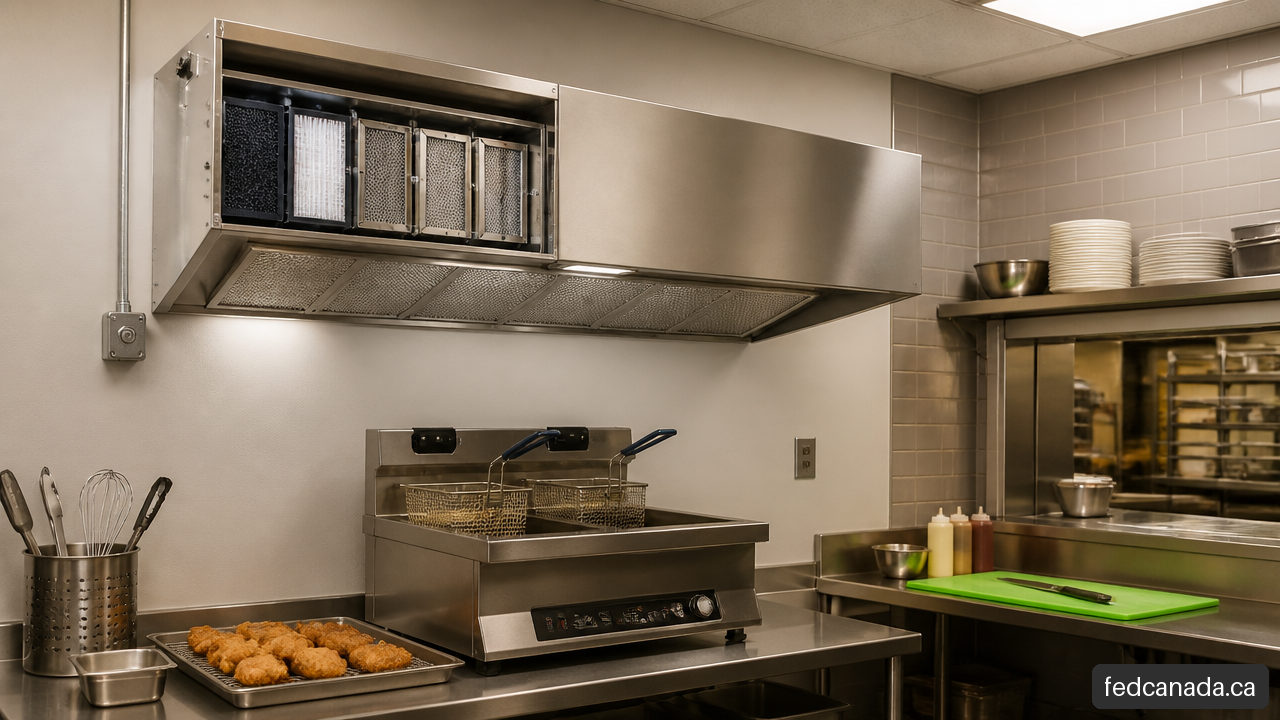
Most commercial ventless hoods use several treatment stages. The exact arrangement varies by manufacturer and appliance category, but the system commonly includes the following components:
- Capture area and blower: The hood draws cooking vapors into the unit and moves them through the filtration path.
- Grease filtration: Baffle filters, mesh filters, electrostatic stages, or other grease collection components remove suspended grease particles before they travel deeper into the system.
- Particulate and smoke control: Some designs use additional filter banks, water based treatment, or electrostatic precipitation to remove fine airborne particles.
- Activated carbon filtration: Carbon media helps reduce odors and certain vapor compounds before air returns to the kitchen.
- Fire protection integration: Depending on the listed system, fire suppression may be built into the hood or designed for field installation.
This layered approach is why a ventless hood can support certain controlled cooking applications. It is also why a hood cannot be evaluated on appearance alone. A stainless enclosure over a fryer is not automatically a compliant ventless package.
Filtration is not the same as outdoor exhaust
A recirculating hood can reduce grease, smoke, and odors within the limits of its design. It does not create the same airflow path as a ducted exhaust system. That difference matters most when cooking produces substantial heat, moisture, grease, or combustion byproducts. Orange County Health Care Agency guidance specifically notes that recirculating hood systems are not designed to eliminate heat from exhausted air. In practical terms, a ventless fryer station may filter cooking emissions effectively while the kitchen still becomes uncomfortably warm during a busy service period.
Consider a compact café using an electric fryer, a countertop oven, and a refrigerated prep table. The fryer may be suitable for a listed ventless hood, but the room’s HVAC still has to absorb heat from the fryer, oven, refrigeration equipment, lighting, staff, and customers. A ventless hood changes the exhaust approach. It does not erase the kitchen’s cooling load.
Why the appliance and hood must be treated as one system
The most common misunderstanding is assuming that any electric appliance can sit beneath any ventless hood. In reality, the approval scope is usually much narrower. The hood listing can identify compatible appliances, limits on oil capacity, electrical load, cooking surface area, mounting arrangement, and required fire suppression configuration. If the appliance differs from the listed configuration, even slightly, the local reviewer may treat it as a new proposal rather than an approved installation. That is why the useful question is not, “Can this hood handle frying?” It is, “Is this exact hood listed and locally accepted for this exact electric fryer in this exact location?”
Matching Equipment and Approval Requirements
A ventless hood system is best selected through a compatibility and approval process, not through a generic equipment category. Electric equipment is commonly the starting point, but electricity alone does not guarantee acceptance.
Equipment compatibility: what commonly works and what usually does not
The table below provides a practical screening tool. It is not a substitute for manufacturer documentation, local health review, building review, or fire authority approval.
| Equipment type | Typical ventless potential | Why the answer varies |
|---|---|---|
| Electric countertop fryer | Often possible | Must match the hood listing, oil capacity limit, and fire protection arrangement |
| Electric conveyor or rapid cook oven | Often possible | Many units are designed for ventless applications, but only with approved appliance and hood combinations |
| Electric griddle or induction unit | Sometimes possible | Grease output, cooking duty, and listed use determine suitability |
| Electric holding cabinet or warmer | Sometimes possible | Steam and moisture output may still trigger ventilation concerns |
| Gas fryer | Typically unsuitable | Combustion products and fuel fired cooking requirements generally exceed the scope of electric only ventless approvals |
| Gas range, charbroiler, or wok | Typically unsuitable | High heat, grease, smoke, and combustion emissions usually call for a ducted Type I system |
| Solid fuel equipment | Not suitable | Wood, charcoal, and similar fuels require specialized exhaust and fire protection approaches |
In one California approval context, a Los Angeles ventless hood approval letter documents appliance specific conditions that limit use to electric commercial cooking appliances, require no duct connection, and allow the system to operate without a separate ventilation hood above it. That letter is useful because it illustrates the real approval standard: acceptance can be specific to a listed appliance and configuration, rather than broad permission for all ventless cooking.
Why gas equipment is usually the stopping point
Gas cooking adds combustion gases to the air stream. Carbon dioxide, water vapor, nitrogen oxides, and other combustion related byproducts create a different ventilation problem than electric cooking alone. Grease filters and carbon filters may reduce certain contaminants and odors, but that does not mean they are intended to manage every gas combustion condition.
This is why a gas fryer should not be treated as an easy swap under a ventless hood. Even if the hood appears physically large enough, the listing and local approval may not support it. A ducted Type I hood is usually the more realistic path for gas frying, charbroiling, wok cooking, or other high output cooking methods.
A practical California approval workflow
California food facilities often involve more than one reviewing authority. The exact sequence varies by city and county, but operators should expect several related reviews rather than a single yes or no decision.
- Confirm the equipment package. Obtain the ventless hood model, appliance model, installation manual, listing information, electrical specifications, and suppression documentation before discussing the proposal with reviewers.
- Start with the local environmental health department. Health reviewers commonly evaluate the food facility layout, equipment placement, cleanability, ventilation approach, and whether cooking operations fit the proposed facility design.
- Submit to building or mechanical review. Building officials may review electrical work, clearances, structural support, accessibility, and applicable mechanical code requirements. SF Port ventilation guidance quotes California ventilation and mechanical exhaust requirements relevant to food facilities, reinforcing that ventilation obligations do not disappear because a hood is ductless.
- Coordinate with the fire authority. The fire marshal or fire prevention bureau may review the suppression system, appliance hazard, electrical disconnects, clearances, and inspection requirements.
- Wait for written approval before purchase or installation. A manufacturer’s literature can support the application, but it does not override the authority having jurisdiction.
A useful preapproval packet should include a floor plan, hood cutsheet, appliance cutsheet, installation instructions, UL listing information where applicable, fire suppression details, electrical requirements, proposed cooking menu, and photographs or drawings showing nearby walls, ceilings, exits, and HVAC equipment. The menu matters because a reviewer may view reheating frozen products very differently from continuous frying during peak service.
Location constraints can disqualify an otherwise suitable system
Site conditions matter as much as appliance compatibility. Clearance around the unit, ceiling height, electrical supply, access for filter changes, nearby combustibles, emergency egress, and make up air or cooling capacity can all affect approval. Some product specific requirements are stricter than buyers expect. For example, GFSE’s installation requirements for one ventless hood line show restrictions that include avoiding basement or cellar installation. This does not establish a statewide ban on all ventless hoods in lower level spaces. It does show why operators need to read the manual for the exact model instead of relying on a general statement that ventless systems can go “anywhere.”
Ventless vs. Ducted Hoods: Cost, Heat, and Maintenance
A ventless hood is often chosen to avoid the cost and construction complexity of a duct run to the roof. That can be a rational decision in leased retail space, historic buildings, kiosks, limited service restaurants, hotels, and foodservice areas built inside larger facilities. Still, reduced ductwork does not automatically mean lower total cost over the equipment’s life.
Side by side comparison
| Decision factor | Ventless hood system | Ducted hood system |
|---|---|---|
| Air path | Filters and recirculates air to the room | Exhausts contaminated air outdoors |
| Construction work | Often avoids roof penetration and long duct runs | May require ductwork, roof curb, fan, and structural coordination |
| Appliance scope | Usually limited to listed, approved equipment | Can support a broader range of commercial cooking equipment |
| Heat removal | Limited; room HVAC must handle much of the heat | Removes a meaningful portion of cooking heat with exhaust air |
| Gas cooking | Often excluded or highly restricted | Commonly used for gas fired cooking when properly designed |
| Ongoing maintenance | Frequent filter, carbon media, and component service | Hood cleaning, duct cleaning, fan maintenance, and fire system service |
| Approval risk | High if listing, appliance, or local rules do not align | High if duct design, airflow, make up air, or suppression are inadequate |
The maintenance burden is part of the operating model
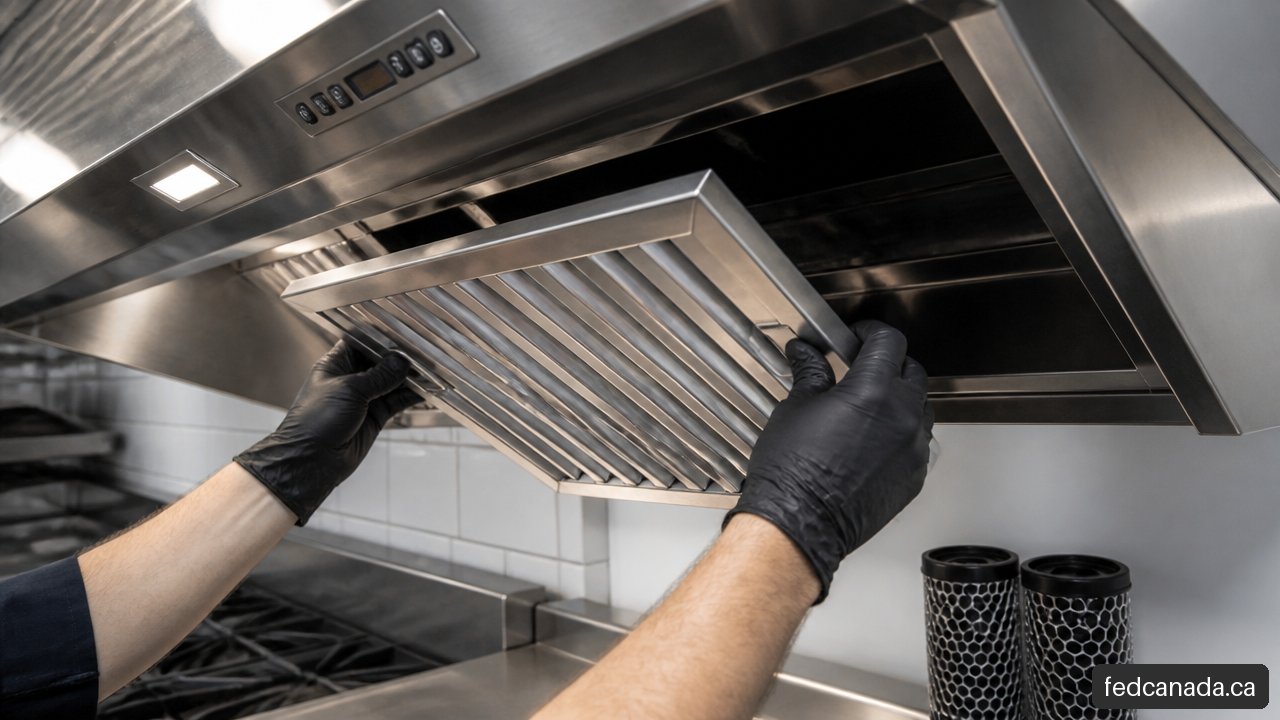
A ventless system depends on filtration performance every day. If grease filters are loaded, electrostatic components are not maintained, carbon media is exhausted, or airflow is obstructed, the hood may lose capture efficiency and odor control. In some cases, this can lead to smoke accumulation, grease odors, nuisance shutdowns, or failed inspections.
The exact service interval should come from the manufacturer and should reflect cooking volume. A low volume café reheating prepared food has a different maintenance profile than a compact operation frying product throughout lunch and dinner. There is no reliable universal replacement schedule that applies to every ventless hood.
We can think of it this way: ducted systems move the contamination outside and then require periodic cleaning of that exhaust path. Ventless systems keep the treatment process on site, so staff or service providers must maintain the filters and internal components that make recirculation possible.
Fire suppression needs careful review
Some ventless hoods include an integrated suppression system. Others are designed to accept a field installed system. This distinction affects installation cost, permit review, inspection responsibilities, and service coordination. Do not assume that a hood with filters automatically includes fire suppression, or that an appliance with a built in safety control eliminates suppression requirements. The decision rests on the listed package, the appliance, the cooking operation, and the local fire authority’s requirements. A strong purchasing process asks for written confirmation of all four items:
- The appliance is approved for the hood.
- The hood is listed for the proposed application.
- The required suppression arrangement is included or clearly specified.
- Local reviewers have accepted the planned installation.
When a ducted system is the better choice
A conventional ducted hood is generally the stronger option when the menu includes gas cooking, charbroiling, wok cooking, high volume frying, smoke intensive production, or equipment that runs for long continuous periods. It also may be the better operational choice when kitchen heat is already a serious issue. A ventless hood can be appropriate when the menu is narrow, the appliance is electric and listed, the site cannot reasonably accommodate ductwork, and management has a realistic maintenance plan. The key is not choosing the least expensive equipment line item. It is choosing the system that the site, menu, and regulators will support over time.
Key Takeaways
A ventless hood system is a listed recirculating treatment system, not a generic stainless hood and not a blanket exemption from ventilation, fire, or health requirements.
- Choose ventless only after confirming compatibility between the exact hood, appliance, menu, and installation location.
- Expect electric commercial equipment to be the most common approved category. Gas and solid fuel cooking usually require a different ventilation approach.
- Obtain health, building or mechanical, and fire review before buying equipment when permits are required.
- Plan for HVAC capacity because filtration does not meaningfully remove the kitchen’s heat load.
- Treat filter cleaning, carbon replacement, airflow checks, and suppression service as recurring operating costs.
- Use a ducted hood when cooking volume, fuel type, grease production, or heat output goes beyond the listed scope of a ventless package.
FAQ
What is a ventless hood system?
A ventless hood system is a commercial recirculating hood that captures cooking emissions, filters grease, particulates, and odors, then returns treated air to the room. It does not use a duct run to exhaust air outdoors. It must be matched to approved cooking equipment and installed according to its listing and local requirements.
Are ventless hood systems allowed in California?
They can be allowed, but approval is not automatic. California food facility requirements still require adequate ventilation, and local health, building, mechanical, and fire authorities can apply additional conditions. Approval often depends on the exact listed hood and appliance combination, especially for electric cooking equipment.
Do I need health department approval for a ventless hood system?
In a permitted food facility, health department review is commonly part of the process. The reviewer may assess the menu, appliance type, facility layout, ventilation method, sanitation access, and whether the proposed equipment fits the approved plan. Building and fire review may also be required.
Can a gas fryer be used under a ventless hood?
Usually, no. Many ventless hood approvals and manufacturer programs are limited to specific electric appliances. Gas fryers introduce combustion emissions in addition to grease and heat. A ducted Type I hood is generally the more appropriate route unless the exact gas appliance and hood package have explicit listing and local approval.
How much heat does a ventless hood system remove?
Ventless systems are not designed to remove heat the way a ducted exhaust system does. They filter and recirculate air, so the room’s HVAC system remains responsible for much of the heat generated by cooking equipment. This should be evaluated early in small kitchens, kiosks, and enclosed service areas.
What certifications or listings should a ventless hood have?
Look for the manufacturer’s applicable listing documentation, appliance compatibility information, installation manual, electrical specifications, and fire suppression details. UL 710B is commonly associated with recirculating commercial cooking hood systems, but the most useful question is whether the exact equipment package is listed for the intended application and accepted locally.
Are ventless hoods cheaper than ducted hoods?
They can reduce initial construction costs by avoiding ductwork, roof penetrations, and some structural work. But the total cost depends on equipment price, electrical upgrades, HVAC needs, permits, filter replacement, service labor, and any fire suppression work. A lower installation quote does not necessarily mean a lower long term operating cost.
Why would a reviewer reject a ventless hood installation?
Common reasons include an unlisted appliance and hood combination, gas equipment under an electric only approval, missing suppression documentation, insufficient electrical capacity, poor access for maintenance, inadequate room cooling, prohibited installation locations, or incomplete permit drawings. The best recovery step is usually to identify the specific failed condition, revise the equipment package or site plan, and resubmit with complete documentation.
Recent Posts


Leave a Comment
Your email address will not be published. Required fields are marked *