



Wrought Iron Pan: How to Choose, Season, and Cook With One
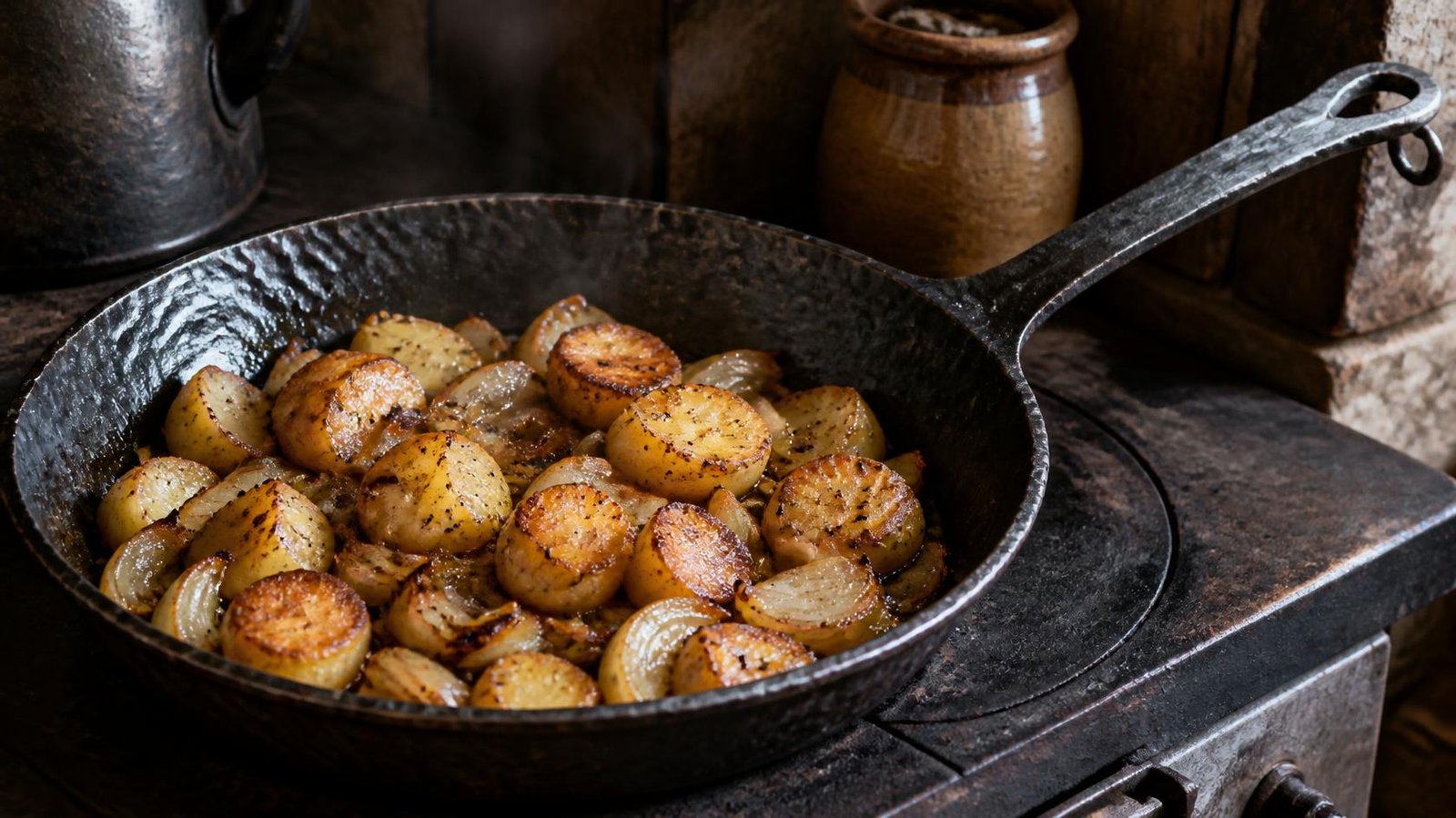
A Wrought Iron Pan can be an appealing middle ground for cooks who want a durable, high heat skillet without the bulk of many cast iron pans. It can sear a steak, finish cornbread in the oven, handle a grill, and develop a dark seasoned cooking surface over time. Still, the name can be confusing: modern pans marketed as wrought iron do not always use the same material or production method as historical wrought iron.
I recommend treating the label as a starting point, not the whole buying decision. The pan’s actual material, thickness, flat base, handle construction, seasoning requirements, and compatibility with your heat source will matter more in day to day cooking than the name stamped on it.
Table of Contents
- What a Wrought Iron Pan Is
- How It Compares With Cast Iron and Carbon Steel
- How to Choose the Right Pan
- Seasoning, Cleaning, and Rust Recovery
- Key Takeaways
- Wrought Iron Pan FAQ
What a Wrought Iron Pan Is
The historical term and the modern cookware label
Historically, wrought iron referred to iron that was repeatedly heated and mechanically worked, rather than poured into a mold. That process produced a material with distinctive characteristics, but it is not safe to assume every modern product using the phrase “wrought iron” follows that historical definition.
This matters because cookware labels can describe several related products: traditional wrought iron, low carbon steel, mild steel, or forged iron cookware. Community discussions reflect that uncertainty. In one discussion, users describe the pans as lighter than cast iron while also discussing their low carbon steel characteristics in this conversation about wrought iron cookware. Another discussion shows that buyers disagree over whether some modern products are historically wrought iron or essentially mild steel under a different marketing label: the material label debate among cooks is a useful illustration.
That does not make a modern pan less useful. It simply means a buyer should focus on disclosed specifications rather than making assumptions from the category name.
What seasoning does under the hood
Most wrought iron pans are sold bare or with a light initial treatment rather than a synthetic nonstick coating. Their food release improves through seasoning: a very thin layer of oil is heated until it bonds to the metal surface and forms a dark protective patina.
Seasoning serves three practical jobs:
- It helps limit moisture contact with bare iron, reducing rust risk.
- It creates a smoother, more release resistant cooking surface when maintained properly.
- It improves gradually through repeated cooking with oil or fat.
A seasoned surface is not identical to a factory applied nonstick coating. It is tougher in some ways, because it can be renewed, but it is also more dependent on cooking technique. A cold pan, wet food, weak seasoning, or too little fat can still cause sticking.
Why these pans appeal to high heat cooks
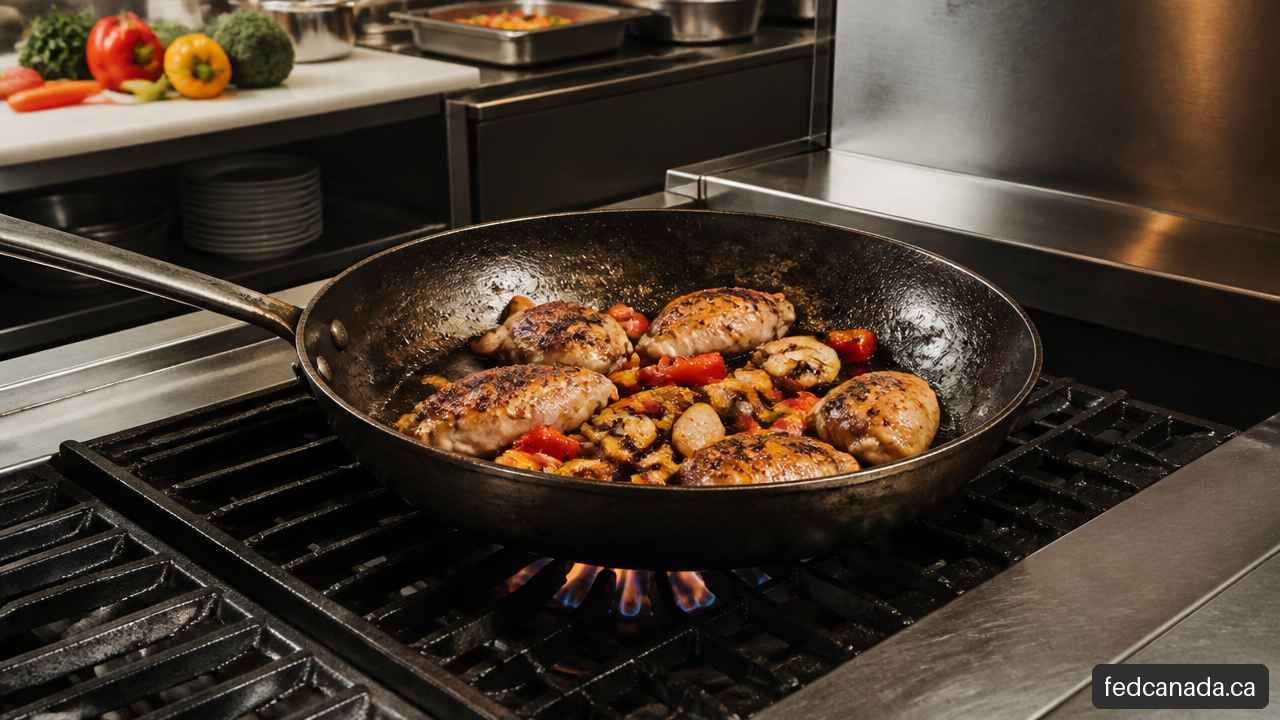
A wrought iron pan is commonly chosen for browning and searing. Bare iron cookware can tolerate heat levels that would be inappropriate for many coated pans, provided the handle and any accessory parts are rated for that use.
For example, the Petromax SP28 is marketed for high heat searing, use on multiple cooking surfaces, open fire cooking, and seasoning based food release in the Petromax SP28 product listing. Those are model specific claims, not a guarantee that every pan sold under the wrought iron label has identical capabilities.
The practical appeal is straightforward: preheat the pan, add a suitable cooking fat, and place dry food into the hot surface. That sequence supports browning rather than steaming. For steak, chops, mushrooms, burgers, and fried potatoes, that direct contact can be the point of using iron cookware.
How It Compares With Cast Iron and Carbon Steel
Weight and heat behavior are separate questions
It is tempting to ask which pan is “best,” but that skips the more useful question: best for which cooking task? Weight, heating speed, and heat retention are related, but they are not the same property.
A lighter pan may respond faster when the burner is turned up or down. A heavier pan generally has more stored heat and may cool less dramatically when cold food is added. In practice, a lighter wrought iron or steel style pan can feel more nimble for sautéing, while a thick cast iron skillet can be more forgiving when searing several cold portions at once.
Reddit users often describe wrought iron cookware as smoother and lighter than cast iron, while noting that it seasons in a similar way in this discussion of smooth wrought iron pans. That is useful practical context, but it should not replace a model by model comparison of thickness, weight, and cooking surface size.
| Feature | Wrought iron or forged iron pan | Cast iron pan | Carbon steel pan |
|---|---|---|---|
| Typical feel | Often lighter and smoother than cast iron | Often heavier and more massive | Often light to moderate in weight |
| Heating response | Can respond relatively quickly, depending on thickness | Usually slower to change temperature | Often responsive, depending on gauge |
| Heat retention | May be lower than a heavy cast iron skillet | Often strong because of mass | Varies with thickness and size |
| Surface care | Needs seasoning and thorough drying | Needs seasoning and thorough drying | Needs seasoning and thorough drying |
| Best fit | Searing, oven use, outdoor cooking, general skillet work | Steaks, cornbread, deep browning, steady heat | Quick sautéing, eggs after seasoning, high heat cooking |
The table describes common tendencies, not universal rules. A thick forged pan may hold heat better than a thin cast pan, and a heavy carbon steel skillet may behave differently from a lightweight wok.
Match the pan to the food
For a restaurant prep kitchen, pop up operation, or home kitchen, a pan should solve a repeatable cooking need.
| Cooking task | When a wrought iron pan can work well | Watch for |
|---|---|---|
| Steak and chops | Strong surface browning after a full preheat | Crowding the pan can lower surface temperature |
| Fried potatoes | Durable surface for turning and crisping | Uneven cuts cook unevenly regardless of pan material |
| Eggs | Possible after seasoning develops and with moderate heat | High heat and a poorly seasoned surface encourage sticking |
| Delicate fish | Useful for skin crisping with careful preheat and oil | Thin fillets may stick if moved too early |
| Tomato or wine sauces | Brief cooking is generally more manageable | Long acidic cooking may weaken fresh or patchy seasoning |
| Oven finishing | Useful when the pan and handle are oven safe | Verify the specific handle material and temperature limit |
Fair warning: eggs and fish are not the best first meals for a new bare iron pan. Start with foods that use oil and tolerate a little surface contact, such as onions, hash, bacon, grilled cheese, or sautéed vegetables. Once the seasoning becomes more even, delicate foods become less demanding.
Induction, glass, grills, and fire
Many iron pans can work on induction because the material is magnetic, but compatibility remains model specific. The pan needs a sufficiently flat base, and the cooking surface needs to support its weight. On a glass or ceramic cooktop, avoid dragging the pan. Set it down gently and lift it when repositioning.
Some manufacturers market specific iron pans for electric, ceramic, gas, induction, oven, grill, and open fire use. A pan’s geometry changes how well it performs in each setting. A deeply curved base may heat poorly on a flat induction zone, while a broad flat base can make better burner contact but may be less convenient over uneven campfire grates.
How to Choose the Right Pan
Verify the material before paying a premium
A higher price may be justified by craftsmanship, thickness, handle design, finish, warranty, or manufacturing method. It should not be justified solely by a romantic sounding material label.
Before buying, I suggest asking the seller or manufacturer these direct questions:
- What material is the pan made from, and is a steel grade or composition available?
- Is it forged, pressed, spun, welded, or made by another process?
- What is the pan weight and wall thickness?
- What is the flat base diameter, not just the rim diameter?
- Is it approved for induction, oven use, grill use, or open fire use?
- Is there food contact documentation for the exact product sold in Canada?
Food contact testing and compliance statements are product specific. A testing claim made for one manufacturer or one model should not be treated as proof for every wrought iron pan on the market.
Pay close attention to geometry
A pan’s rim diameter can look generous while its usable cooking area is quite small. The flat base diameter is especially important on electric, ceramic, and induction cooktops because it determines how much of the pan directly meets the heat zone.
A useful example comes from a Petromax listing: its 20 centimetre pan is listed at about 0.8 kilograms with a 14 centimetre flat base. Those dimensions are available in the Petromax 20 centimetre specification listing. That may suit one or two portions, but the 14 centimetre base is the more important number for burner matching and usable searing space.
Look at the following design details before committing:
- Wall height: Lower walls make flipping and turning easier; higher walls better contain splatter and shallow braises.
- Handle angle: A long upward angled handle can provide leverage, but may require more storage space and make oven use awkward.
- Helper handle: Helpful on larger pans, especially for oven transfers or heavy foods.
- Pour spouts: Convenient for pan sauces, but not essential for searing.
- Base flatness: Critical for stable use on smooth cooktops and efficient induction contact.
When it is worth choosing over cast iron
Choose a wrought iron pan when you value a potentially lighter skillet, a smooth seasoned surface, high heat capability, and stovetop to oven flexibility. It can be especially attractive when a heavy cast iron skillet feels cumbersome but you still want bare metal cookware that can be maintained rather than discarded.
Avoid buying one just because it is advertised as “naturally nonstick.” It will require seasoning, routine drying, and sensible heat control. If your priority is low maintenance eggs every morning, a well cared for iron pan can work, but it is not the easiest starting point compared with a conventional nonstick skillet.
Seasoning, Cleaning, and Rust Recovery
A practical first seasoning routine
Manufacturers may provide their own care instructions, and those instructions should take priority. If a pan arrives bare or needs a refresh, this general method is a sensible starting point.
- Wash the pan briefly with hot water and a small amount of mild soap if needed to remove factory residue. Rinse thoroughly.
- Dry it immediately with a towel, then warm it on low heat until no moisture remains.
- Add a very small amount of neutral cooking oil with a high smoke point. Wipe it over the interior and exterior, then wipe again until the pan looks nearly dry.
- Heat the pan gradually until the oil darkens and begins to smoke lightly. Maintain ventilation.
- Let the pan cool, then repeat if the surface still looks uneven or dry.
The thinness of the oil layer matters. Too much oil can leave a sticky, blotchy surface instead of a hard patina. Think of seasoning as several whisper thin coats, not one glossy layer.
How to prevent sticking
When food sticks, the cause is often technique rather than a ruined pan. Use this sequence before assuming the seasoning has failed:
- Preheat the dry pan over moderate heat. Iron retains heat, so rushing with maximum burner power can create hot spots and burnt oil.
- Add oil or fat after the pan is warm, then allow it to heat briefly.
- Pat food dry. Surface water cools the pan and creates steam, which works against browning.
- Place the food in the pan and let it develop contact before trying to move it. Protein often releases more readily after a crust forms.
- Reduce heat for delicate foods. Eggs typically need lower heat than steak.
For instance, a fish fillet placed into a barely warm pan may glue itself to the surface even if the seasoning is decent. The same fillet, dried well and placed skin side down into a properly preheated, lightly oiled pan, is more likely to release after the skin has crisped.
Cleaning without damaging the patina
For routine cleaning, wipe out loose food and rinse with hot water. The care guidance attached to the Petromax listing also recommends wiping the pan or washing it with hot water after use. Use a brush, nonabrasive scrubber, or a small amount of coarse salt for stubborn residue.
Soap is not automatically catastrophic, especially mild soap used briefly, but repeated aggressive scrubbing can weaken fresh seasoning. The more important rule is simple: do not leave iron wet. Dry the pan immediately, warm it briefly to drive off remaining moisture, and apply a barely visible oil film if it will be stored.
Recovery steps for rust and patchy seasoning
Flash rust can appear quickly when bare iron remains damp. It is usually recoverable.
- Scrub the rusted area with a nonabrasive pad, brush, or fine steel wool if necessary.
- Rinse and dry completely over low heat.
- Apply a very thin coat of oil and heat it to rebuild seasoning.
- Cook several oil friendly foods over the next few uses to restore a more even surface.
A patchy pan does not need to look perfectly black to cook well. The goal is a dry, stable surface with no active rust and progressively better food release.
Key Takeaways
- A wrought iron pan may be a historically wrought product, forged iron, or low carbon steel cookware marketed under a traditional label. Ask for the actual material and manufacturing details.
- Weight, heating speed, and heat retention are different variables. Choose based on the food you cook and the handling comfort you need.
- A seasoned iron surface becomes more release resistant through repeated thin layers of heated oil, not through a permanent factory coating.
- Flat base diameter, wall height, handle design, and total weight often matter more than rim diameter alone.
- Drying promptly after cleaning is the most reliable everyday protection against rust.
- A rust spot or weak seasoning is generally a maintenance issue, not the end of the pan. Clean, dry, oil lightly, and rebuild the surface.
Wrought Iron Pan FAQ
What is a wrought iron pan?
A wrought iron pan is bare iron cookware commonly made with a worked, forged, or steel like construction and intended to build seasoning over time. The phrase does not guarantee one exact modern composition, so product specifications are worth checking.
Is a modern wrought iron pan really made from wrought iron?
Sometimes, but not always in the historical sense. Modern cookware descriptions may overlap with mild steel or low carbon steel terminology. Ask the manufacturer for the material description, production method, and food contact documentation rather than relying only on the label.
Is a wrought iron pan naturally nonstick?
Not when new. It develops a more release resistant surface through seasoning and use. Proper preheating, adequate fat, and dry food are still important, particularly for eggs, fish, and other delicate foods.
What oil is best for seasoning a wrought iron pan?
A neutral oil that can tolerate high heat is usually practical. The best choice is less important than applying an extremely thin layer and heating it properly. Thick oil layers tend to become sticky instead of forming an even patina.
Can I cook eggs or fish in a wrought iron pan?
Yes, once the pan has developed seasoning and you use moderate heat. Avoid starting with a cold pan or moving the food immediately. For fragile fish, dry the fillet well, preheat gradually, add oil, and let the surface release naturally before turning.
Can I cook tomatoes and other acidic foods in it?
Short acidic cooking is often manageable, especially in a well seasoned pan. Long simmering with tomatoes, vinegar, or wine may weaken fresh seasoning and can create metallic flavors if the bare surface is exposed. Use enameled cookware for long acidic braises when preserving the seasoning is a priority.
Can a wrought iron pan be used on induction, in the oven, or over a fire?
Many models are marketed for these uses, but verify the exact pan. Check that it has a flat magnetic base for induction and confirm the oven and fire suitability of the handle, rivets, and any accessories. Never assume compatibility based only on the material name.
Is a wrought iron pan worth the price?
It can be worth it if the pan provides a comfortable weight, useful geometry, trustworthy material disclosure, solid construction, and the cooking versatility you need. It is less compelling if the premium is based only on vague heritage language without clear dimensions, compatibility information, or care guidance.
Sources and References
- Reddit — What are people’s opinions on wrought iron pans? — https://www.reddit.com/r/AskCulinary/comments/axarjl/what_are_peoples_opinions_on_wrought_iron_pans/
- Reddit — What do you all think of wrought iron pans? — https://www.reddit.com/r/castiron/comments/10pry1w/what_do_you_all_think_of_wrought_iron_pans_this/
- Reddit — Uses of wrought iron pan — https://www.reddit.com/r/Cooking/comments/t5oyn7/uses_of_wrought_iron_pan/
- Petromax Wrought-Iron Pan SP28 — Wulflund — https://www.wulflund.com/wrought-iron-pan-sp28-petromax
- Petromax Wrought Iron Pan 20 — Scandinavian Outdoor — https://scandinavianoutdoor.com/petromax/gear/food-and-cooking/saucepans-frying-pans/sp-20-wrough-iron-pan/
Recent Posts
Leave a Comment
Your email address will not be published. Required fields are marked *