



Zojirushi Rice Cookers: Smart Buying and Care Guide
Zojirushi is best known for premium rice cookers that make rice preparation more automated, consistent, and convenient. For many households, the real value is not simply cooked rice. It is the combination of programmed rice settings, dependable keep warm performance, timers, and thoughtful details that reduce last minute meal prep.
Table of Contents
- Key Takeaways
- Choosing the Right Zojirushi Rice Cooker
- How Zojirushi Cooking Technology Works
- Ownership Costs, Care, and Canadian Compatibility
- Zojirushi for Home Kitchens and Foodservice Settings
- Frequently Asked Questions
- Sources and References
Key Takeaways
A Zojirushi rice cooker is usually the right choice when rice is a frequent part of your meals and you want more control than a basic one button cooker provides. The best model depends on your household size, the varieties of rice you cook, how much you value timer convenience, and whether you are comfortable paying more for advanced heating and programming.
The practical buying rule: Choose capacity first, rice programs second, and advanced heating technology third. A premium cooker that is too large or lacks the setting you actually need is not automatically the better purchase.
Key points to keep in mind:
Neuro Fuzzy models use adaptive programming designed to make cooking adjustments during the cycle. They suit households that cook several rice varieties and want a flexible everyday appliance.
Induction heating models are generally positioned as a more premium option, using electromagnetic heat to warm the cooking vessel more directly. They can appeal to buyers focused on precision and texture, but the price increase is substantial.
Pressure models are best considered by people who specifically want their texture profile and are willing to accept a more complex, higher cost appliance.
Capacity matters more than it seems. Rice cooker capacity is commonly expressed in uncooked rice cups, not the amount of cooked rice on the table. A small household that usually makes two servings should not automatically buy the largest option.
Replacement parts are part of the purchase decision. The inner pot, lid components, seals, and timer functions can determine the useful life of the appliance as much as the heating system does.
Choosing the Right Zojirushi Rice Cooker
Start with rice type and household size
The simplest way to narrow the Zojirushi range is to begin with your normal cooking pattern. Do you cook jasmine rice for weeknight meals, short grain rice for sushi, brown rice for packed lunches, or multiple varieties throughout the week? The answer should guide the menu settings you prioritize.
A compact model often makes sense for one to three people who cook modest portions. A larger model is more practical for families, meal prep, gatherings, or households that want leftover rice for fried rice and lunches. Bigger is not always better: very small batches in an oversized cooker may not match the results you expect from a properly sized unit.
| Buyer priority | Features to prioritize | When to avoid overbuying |
|---|---|---|
| Everyday white and jasmine rice | White rice program, timer, keep warm, appropriate capacity | Skip premium pressure features if you rarely vary rice types |
| Brown rice and grains | Dedicated brown rice and mixed grain programs | Avoid relying on a basic quick setting for dense grains |
| Sushi and short grain rice | Texture adjustment and short grain settings | Do not assume every white rice setting creates sushi rice texture |
| Busy family meal timing | Programmable timer, clear display, larger capacity | Avoid a small unit if you routinely cook multiple batches |
| Texture focused buyer | Neuro Fuzzy, induction heating, or pressure options | Avoid the highest priced model if convenience is the main goal |
A useful comparison is between a standard basic rice cooker and a Zojirushi model with adaptive controls. A basic cooker often switches from cooking to warming once it detects a temperature change. A programmed Zojirushi rice cooker is designed to follow a sequence of soaking, heating, cooking, and steaming phases. That additional control is why the appliance can be more forgiving across different rice styles, although it does not eliminate the need to use the correct water line and menu setting.
Compare technology without treating every upgrade as essential
Zojirushi model families can differ significantly, even when they look similar on a countertop. Understanding the technology makes it easier to spend where it matters.
| Technology | What it is designed to do | Best fit | Main trade off |
|---|---|---|---|
| Conventional programmed heating | Uses controlled heating cycles and menu programs | Buyers who want reliable daily rice cooking | Fewer premium heating refinements |
| Neuro Fuzzy control | Uses programmed adjustments to manage cooking conditions | Households cooking varied rice types | Higher price than entry level models |
| Induction heating | Heats the cooking vessel through electromagnetic induction | Buyers focused on refined temperature control | Higher purchase cost and more model complexity |
| Pressure cooking | Uses pressure as part of the cooking process | Buyers with specific texture preferences | Premium price and potentially more involved cleaning |
I would not treat induction heating or pressure as mandatory for every kitchen. If your weekly routine is two cups of jasmine rice with dinner, a well sized conventional or Neuro Fuzzy model may be the sensible choice. If you cook brown rice, short grain rice, and mixed grains often, advanced programs may justify the investment because they reduce trial and error.
Choose timer features based on real routines
A timer is most useful when it removes a predictable task. For example, setting rice before leaving for work can make dinner preparation easier, provided the rice, water, and food safety considerations are appropriate for your routine. The feature is less valuable if the appliance is usually kept unplugged in a cabinet.
Some owners have reported that clock batteries eventually stop retaining time when the unit is unplugged. In a community discussion about cycle timing and long term ownership, users also discussed clock battery inconvenience, inner pot concerns, and the different stages of regular versus quick programs in this Zojirushi rice cooker owner conversation. That is not a universal failure forecast, but it is a fair reason to think carefully about how heavily you depend on scheduled cooking.
How Zojirushi Cooking Technology Works
Why regular cycles can take longer than expected
A Zojirushi regular white rice cycle can feel slow if you expect the appliance to work like a saucepan on high heat. Community reports commonly describe regular cycles in the approximate 40 to 60 minute range, depending on the model, rice amount, and selected program. The time is not necessarily spent actively boiling from start to finish.
A typical programmed cycle can include three practical stages:
Soaking: Rice absorbs water before high heat cooking begins. This can support more even hydration.
Cooking: The cooker raises the temperature and manages the main cooking phase.
Steaming: Rice rests after cooking so moisture redistributes and the grains finish setting.
Quick cooking generally shortens the process by reducing or changing part of the soaking stage. That can be helpful when dinner is already underway, but it may not give the identical texture of the regular program. Think of quick cook as a time saving alternative, not a promise of the same result in less time.
Use the correct setting before changing the water
Hard or chewy rice is often treated as a simple water problem. Sometimes it is. But menu selection, rice preparation, and measurement can be just as important.
Use this diagnostic order before deciding that the cooker is malfunctioning:
Confirm the rice variety and select the closest available menu option.
Measure rice with the cup supplied for the cooker, then use the corresponding water line in the inner pot where applicable.
Check whether the rice is conventionally washed, prewashed, or otherwise prepared differently from your usual rice.
Try a softer texture option if the model offers one.
Inspect the inner pot and lid components for visible damage, residue, or seating problems.
A practical example comes from a discussion about the Neuro Fuzzy NS ZCC10. A user reported hard rice after trying water adjustments and a softer setting, then later reported better results after changing preparation and using the prewashed setting. The experience is anecdotal, but the reported prewashed setting solution shows why it is smarter to review the preparation and menu sequence before repeatedly adding water.
Keep warm is useful, but not a substitute for planning
Keep warm is one of the most valued Zojirushi features because it can hold cooked rice for hours without the immediate drying or scorching some people associate with simpler cookers. Still, results vary by rice type, moisture level, model, and holding time.
For best quality, fluff the rice after the cycle finishes so excess moisture can escape, then close the lid promptly. Rice held for a long time may gradually dry near the edges or take on a different texture. If you need rice for tomorrow's lunch, refrigerating it after it has cooled appropriately is usually a better plan than treating warm holding as overnight storage.
Ownership Costs, Care, and Canadian Compatibility
Confirm Canadian electrical use and warranty separately
Canadian buyers should separate two questions that are often blended together: Will this model work in a Canadian outlet? and Will this exact purchase have Canadian warranty and service support?
Zojirushi's official rice cooker FAQ states that its listed electrical products are manufactured for use in the United States or Canada, and it advises against using voltage converters or plug adapters. That does not mean every listing from every marketplace seller has the same Canadian warranty status. Before purchasing, verify the exact model number, seller, documentation, and support terms for Canada.
This distinction matters most when considering imported, used, discontinued, or marketplace models. A cooker may physically plug in, yet warranty eligibility, repair options, or replacement parts can be uncertain. Zojirushi also advises customers seeking service to have the model number ready and to use an authorized service center.
Treat the inner pot as a lifecycle component
The nonstick inner pot deserves the same attention as the appliance's electronics. It is the part exposed to washing, utensils, rice grains, heat cycles, and accidental knocks. Scratches, bubbling, or coating wear are recurring concerns in owner discussions.
The most conservative care routine is straightforward:
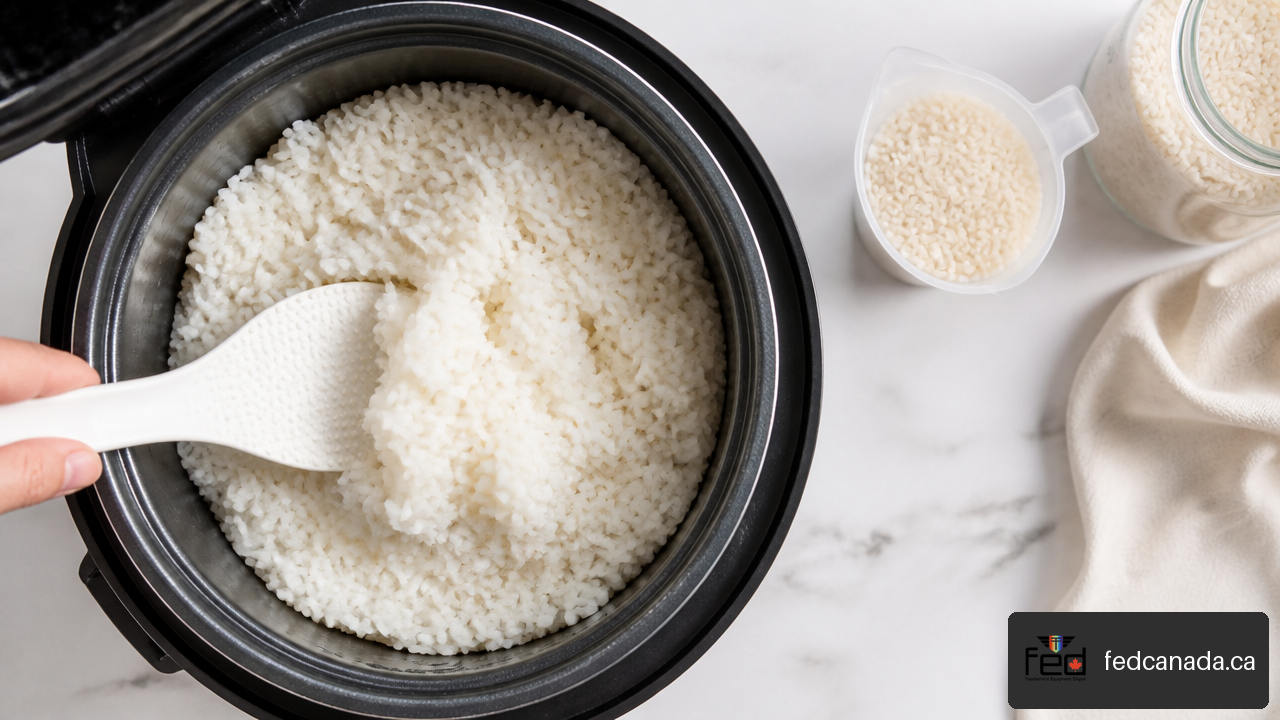
Use the rice paddle supplied with the cooker or another soft utensil.
Avoid metal spoons, forks, abrasive pads, and harsh scouring powders.
Wash rice in a separate bowl if you want to reduce repeated abrasion inside the cooking pot.
Follow the model manual for cleaning removable lids, steam parts, and the inner pot.
Avoid assuming dishwasher use is safe unless the specific model instructions clearly permit it.
Replacement availability should be checked before buying an older or used cooker. In a discussion about long ownership, users described inner pot wear, replacement costs, clock issues, and bowls reportedly unavailable for an older model. Those owner reports about replacement bowl availability illustrate a crucial ownership risk: an appliance can still heat properly but become difficult to use if its cooking vessel cannot be replaced.
Build a parts and service check into the purchase
Before buying, especially from clearance or resale channels, ask these questions:
| Check before purchase | Why it matters |
|---|---|
| Is the exact model number visible? | It is needed for manuals, service, and parts searches |
| Is the inner pot in good condition? | Coating damage may be expensive or impractical to remedy |
| Are lid parts and steam components included? | Missing pieces can affect normal operation and cleaning |
| Is the model still supported? | Discontinued models may have limited parts availability |
| Does the seller state Canadian warranty coverage? | Electrical compatibility does not automatically confirm warranty eligibility |
Longevity should be viewed as model specific rather than guaranteed. Some owners report many years of service, while others describe early failures or repair frustrations. In this discussion of a Zojirushi failure after four years, users shared both early failure and repair experiences. The practical takeaway is not that Zojirushi is unreliable. It is that brand reputation cannot replace checking service options, model age, condition, and part availability.
Zojirushi for Home Kitchens and Foodservice Settings
Where a Zojirushi fits in a commercial setting
A Zojirushi rice cooker is typically better suited to small batch, specialty, staff meal, catering support, or front of house applications than to high volume restaurant rice production. A busy restaurant serving hundreds of rice bowls per service usually needs commercial rice cooking equipment designed for larger capacities, faster batch turnover, and heavier duty daily use.
For a café, boutique caterer, culinary school, or small hospitality operation, a Zojirushi can still be useful where consistency matters more than volume. It can produce a controlled small batch for a sushi feature, staff meal, tasting menu component, or limited service period without tying up a stovetop burner.
That decision belongs within the broader importance of food preparation equipment in today's commercial kitchens. The right appliance is not the one with the most buttons. It is the one that matches output, menu demands, cleaning capacity, and available counter space.
Pair specialty appliances with the right workflow
Specialty appliances can improve a kitchen only when they fit the menu and labor plan. A rice cooker supports controlled grain preparation. A thermal carafe supports beverage holding without repeatedly reheating coffee or tea. A bread maker may help with limited batch production in the right setting. A beverage dispenser can simplify self serve beverage stations.
For home cooks building a more capable countertop setup, it can help to elevate your culinary experience with specialty cooking equipment by choosing appliances around real habits rather than novelty. For example, a household that hosts brunch may gain more from a thermal carafe and dependable rice cooker than from a large appliance used twice a year.
There is also a clear line between rice preparation and beverage production. If frozen drinks are part of a business plan, a rice cooker is not the answer. Equipment selection should reflect the specific service task, including considerations covered in understanding commercial milkshake machines.
When a less expensive cooker may be enough
A basic rice cooker remains a reasonable choice when your needs are simple: white rice, occasional use, modest budget, and no need for precise timers or multiple grain settings. It may be the better fit for a dorm, vacation property, or household that cooks rice once or twice a month.
Choose Zojirushi when the convenience features solve a repeated problem. If you cook rice three or four times a week, use different varieties, want a dependable timer, or value warm rice that stays serviceable through a meal, the premium can be easier to justify. The benefit comes from repeated use, not from owning a more complicated appliance.
Frequently Asked Questions
What is Zojirushi best known for?
Zojirushi is widely associated with premium rice cookers, thermal carafes, insulated beverage products, bread makers, and other kitchen appliances. Its rice cookers are especially known for programmed rice settings, timers, and keep warm functions.
Which Zojirushi rice cooker is best for a Canadian household?
The best choice depends on household size and rice habits. A smaller capacity model suits modest portions, while a larger model is better for families and meal prep. Choose rice specific programs before paying extra for induction heating or pressure technology.
Are Zojirushi rice cookers compatible with Canadian outlets?
Zojirushi states that its listed electrical products are manufactured for use in the United States or Canada. Confirm the exact model and seller documentation before purchase, particularly for imported or used appliances.
Do Zojirushi rice cookers need a voltage converter in Canada?
No converter should be necessary for a Zojirushi electrical product listed for United States or Canadian use. Zojirushi advises against voltage converters and plug adapters for its listed electrical products.
How long does a Zojirushi rice cooker take to cook white rice?
Regular white rice programs are often reported by users to take roughly 40 to 60 minutes, depending on the model and settings. The full cycle may include soaking and steaming, so the displayed time can be longer than active boiling time.
Why is my Zojirushi rice hard or chewy?
First verify the rice type, water line, measuring cup, and selected menu. Then check whether the rice is prewashed or conventionally washed and test the appropriate setting. If the issue continues, inspect the inner pot and lid components and consult the model manual.
Can the Zojirushi inner pot go in the dishwasher?
Do not assume it is dishwasher safe. Follow the instructions for your exact model. Many owners prefer hand washing to reduce concern about nonstick coating wear, especially when the replacement pot may be difficult to source later.
Is an expensive Zojirushi worth it compared with a basic rice cooker?
It can be worth it for frequent rice eaters who use timers, cook multiple rice varieties, or value programmed texture control and warm holding. For occasional plain white rice, a less expensive cooker may meet your needs just as well.
Sources and References
- Reddit r/Cooking — Do you have a Zojirushi rice cooker? https://www.reddit.com/r/Cooking/comments/1l4ve57/do_you_have_a_zojirushi_rice_cooker/
- Reddit r/BuyItForLife — Zojirushi Rice Cooker https://www.reddit.com/r/BuyItForLife/comments/13r45us/zojirushi_rice_cooker/
- Reddit r/RiceCookerRecipes — Issues with brand new Zojirushi’s Neuro Fuzzy NS-ZCC10 https://www.reddit.com/r/RiceCookerRecipes/comments/18ywa17/issues_with_brand_new_zojirushis_neuro_fuzzy/
- Reddit r/BIFLfails — Zojirushi Made in Japan rice cooker fails in 4 years. HOW? https://www.reddit.com/r/BIFLfails/comments/1bqtzba/zojirushi_made_in_japan_rice_cooker_fails_in_4/
Recent Posts

Leave a Comment
Your email address will not be published. Required fields are marked *