



Bread Knives & Serrated Knives: The Ultimate Selection & Care Guide
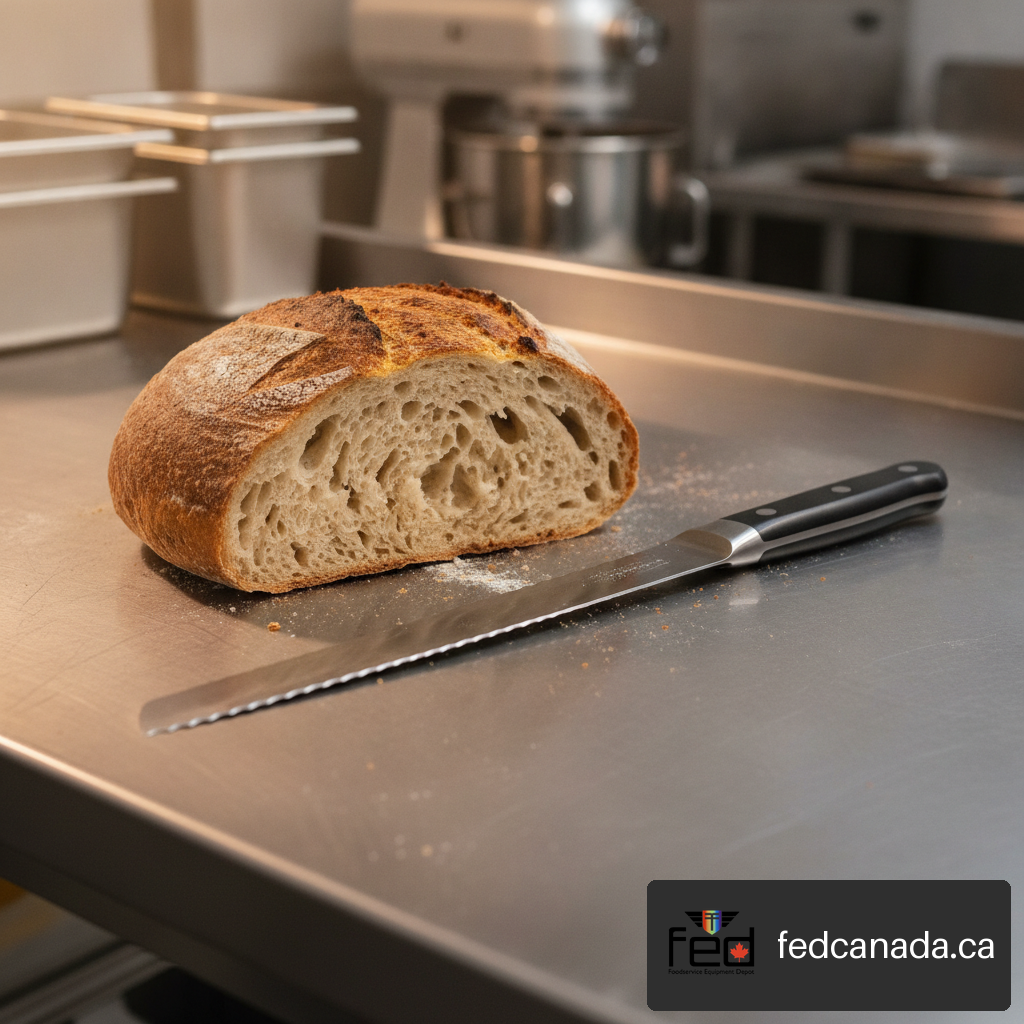
A specialized bread knife remains an indispensable cutting instrument in both commercial bakeries and residential kitchens. When confronting a loaf with a thick, caramelized crust and a pillow-soft interior, standard straight-edged knives frequently fail. Pressing down with a traditional chef's knife compresses the delicate crumb, tearing the structure long before penetrating the outer crust. Serrated edge mechanics allow kitchen professionals and home bakers to achieve uniform, clean slices without flattening tender baked goods. In this comprehensive guide, we examine the physics of serrated cutting edges, deconstruct key blade profiles, analyze steel formulations, and establish clear criteria for selecting, using, and maintaining the ideal bread knife for your kitchen.
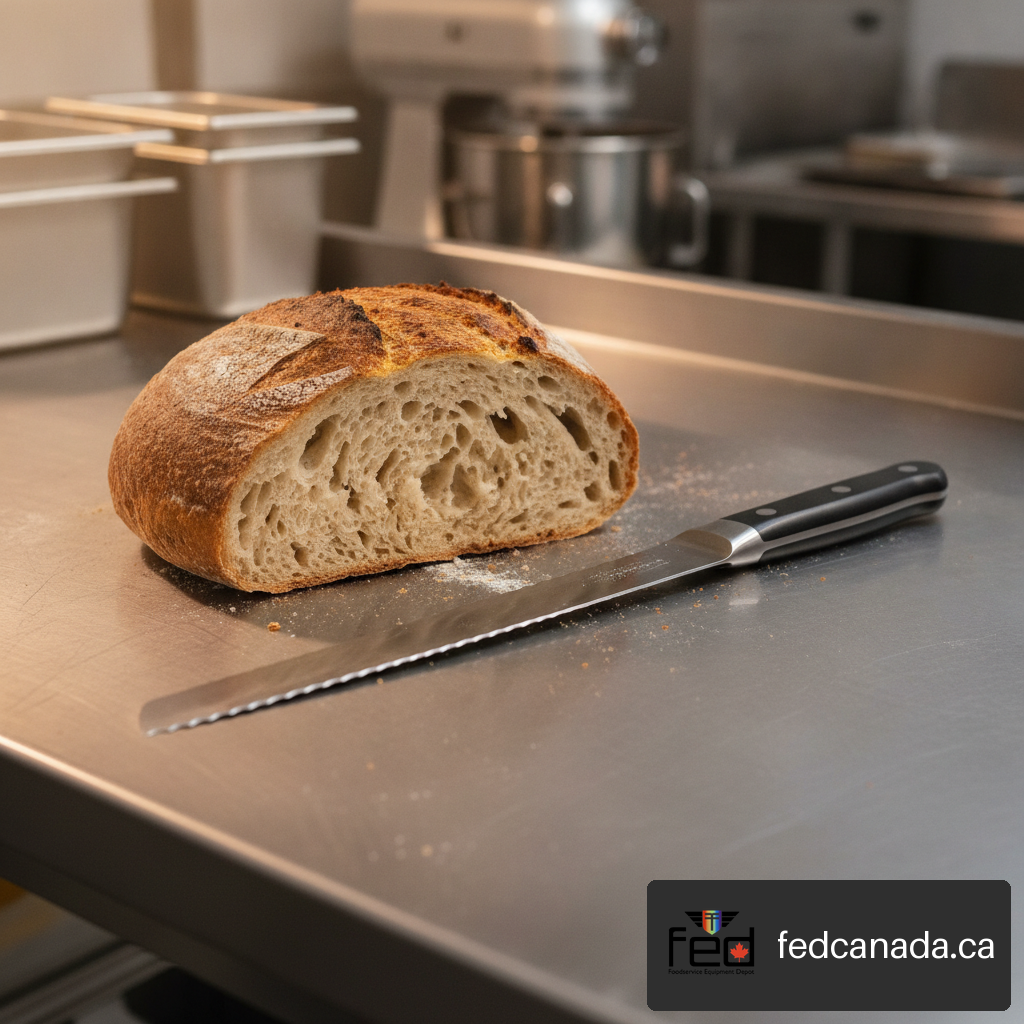
Table of Contents
- Key Takeaways
- 1. Understanding Bread Knife Mechanics and Serration Engineering
- 2. Essential Specs: Blade Length, Steel Types, and Construction
- 3. Slicing Techniques for Diverse Baked Goods and Foods
- 4. Bread Knife Comparison & Decision Framework
- 5. Care, Maintenance, Sharpening, and Storage Guidelines
- 6. Frequently Asked Questions
- Sources / References
Key Takeaways
Serration Geometry Dictates Cut Quality: Deep, pointed serrations aggressively puncture hard, artisan crusts, while scallop-shaped or wavy edges slide cleanly through soft brioche, sandwich bread, and ripe tomatoes with minimal tearing.
Blade Length Controls Stroke Efficiency: An 8-inch blade works for standard pan loaves, but 9-inch to 10-inch blades provide the clearance necessary to slice wide boules and large cakes in smooth, continuous strokes.
Technique Prevents Compression: Slicing relies on continuous horizontal motion and light downward force, allowing the high-pressure points of the teeth to initiate cuts without crushing soft interiors.
Material & Construction Balance Longevity and Cost: High-carbon and alloy steels retain tooth geometry through years of heavy use, whereas stamped stainless options offer lightweight maneuverability and lower replacement costs.
Specialized Care Extends Edge Life: Dishwashers and loose drawer storage rapidly degrade serrated tips; hand washing and wood or magnetic storage protect tooth tips from rounding.
1. Understanding Bread Knife Mechanics and Serration Engineering
To understand why a bread knife excels where flat-edged blades struggle, we must look at how force is distributed along the cutting edge. A straight-edge blade distributes applied downward pressure across a continuous line of contact. When encountering a dense, elastic artisan crust, the crust resists penetration until enough downward force is applied to collapse the soft air pockets beneath it.
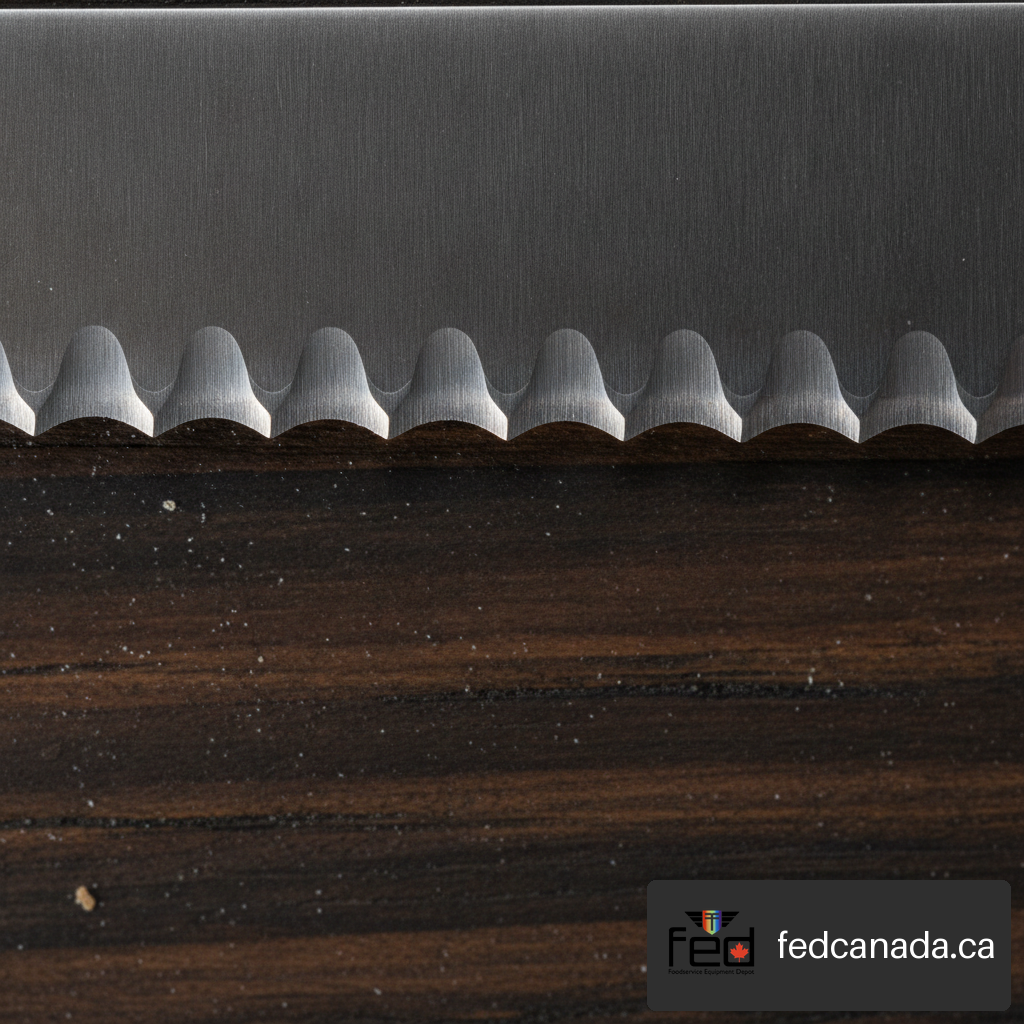
Serrated blades solve this issue by concentrating applied force onto discrete points. The individual tips of the knife’s teeth act as small points of high pressure, puncturing tough outer skins or hardened crusts with minimal effort. Once the teeth break through the exterior shell, the scalloped valleys (or gullets) between the teeth function like tiny saw blades, slicing through the interior crumb as the knife glies horizontally back and forth.
Comparing Serration Patterns: Coarse, Fine, Pointed, and Wavy Edges
Not all serrated knives feature identical edge geometry. Blade manufacturers alter tooth spacing, depth, and curvature to target specific cutting tasks. Selecting the right pattern depends heavily on the primary types of bread or foods processed in your kitchen.
- Pointed Serrations (Aggressive Teeth): Featuring sharp, triangular tips, pointed serrations are engineered specifically for hard, thick-crusted breads like sourdough boules and crusty baguettes. The tips pierce tough outer surfaces instantly. However, on soft, delicate breads, aggressive pointed teeth can catch on loose fibers, causing tearing and excessive crumb generation.
- Wavy or Scalloped Edges: Rather than sharp points, wavy edges feature smooth, rounded crests and wide gullets. Marketed for versatile cutting across soft rolls, brioche, and sandwich loaves, this profile glides through softer textures without snagging. It requires slightly more horizontal motion on extremely hard crusts but leaves a noticeably smoother finish on soft crumbs.
- Reverse Serrations: Some modern knife profiles feature serration points that curve backward or inward. This profile engages the material smoothly on both forward and backward drawing strokes, distributing wear evenly across the blade face.
The Role of Concave Curves and Tip Designs
Beyond tooth shape, overall edge contour dramatically alters cutting dynamics. A traditional straight-backed bread knife maintains a flat profile parallel to the cutting board. However, engineered variations introduce subtle curves to improve leverage and board clearance.
For example, WÜSTHOF Gourmet 9-inch bread knife specifications showcase how concave serrated edges help penetrate tough crusts while reducing the required downward cutting pressure. Additionally, select commercial models feature specialized tip geometries. While standard bread knives terminate in a sharp tip, certain designs incorporate a blunt or reinforced tip engineered to help finish cuts cleanly through hard bottom crusts without digging into wood or polymer cutting boards.
Key Technical Insight: The distance between serration points (pitch) dictates crumb formation. Wide-pitch serrations (6 mm to 8 mm apart) bite aggressively into dense artisan loaves, while narrow-pitch serrations (3 mm to 5 mm apart) yield cleaner slices on delicate cakes and tender sandwich breads.
2. Essential Specs: Blade Length, Steel Types, and Construction
Choosing the right bread knife requires evaluating structural dimensions and material performance against your kitchen's specific volume and output needs.
Selecting the Right Blade Length for Loaf Geometry
Blade length directly determines how many back-and-forth sawing motions are required to complete a slice. When slicing a loaf that measures 8 inches in diameter, an 8-inch blade leaves zero margin at the tip or heel. This forces shorter strokes, increasing friction, crumb displacement, and uneven slice thickness.
8-Inch Blades: Compact and easy to control on crowded prep tables. Ideal for standard sandwich loaves, small baguettes, small cheeses, and small fruits. However, they struggle to span large round boules in a single pass.
9-Inch to 10-Inch Blades: The industry standard for versatility. A 9-inch or 10-inch blade provides 1 to 2 inches of clearance on either side of typical loaves, enabling smooth, full-length drawing strokes that yield clean, uniform slices.
11-Inch to 12-Inch+ Blades: Favored in high-volume commercial bakeries and catering facilities. These extended blades effortlessly cut wide artisan loaves, large sheet cakes, and delicate layer cakes in minimal passes, though they require larger storage blocks and wider cutting boards.
Steel Alloys, Forging vs. Stamping, and Hardness Ratings
Blade steel composition influences initial sharpness, edge retention, corrosion resistance, and overall blade flexibility. Serrated edges are significantly harder to sharpen than straight edges, making long-term edge retention a key specification.
- Stamped Stainless Steel: Cut from cold-rolled steel sheets, stamped blades are lightweight, flexible, and economical. Alloys like molybdenum/vanadium stainless steel provide good corrosion resistance and reasonable sharpness at budget-friendly price points. They are excellent for fast-paced commercial kitchens where tools see rugged utility.
- Forged High-Carbon Steel: Forged blades are heated and hammered from single steel billets, featuring an integral bolster that enhances balance and weight. Forged high-carbon steels maintain sharp serration points over extended periods of heavy daily slicing.
- Premium Alloy & Damascus Construction: High-end specialty blades utilize advanced Japanese or European steel cores wrapped in decorative stainless layers. For instance, the Le Creuset 8-inch Damascus bread knife incorporates a 64-layer Damascus steel construction surrounding a high-performance VG-10 steel core rated at a Rockwell hardness of 61. High Rockwell hardness (60+) ensures exceptional edge retention, though extremely hard steels can be more brittle if subjected to twisting forces against bone or hard surfaces.
Handle Ergonomics, Weight Distribution, and Full-Tang Designs
Cutting hard-crusted bread repeatedly creates mechanical stress on the hand and wrist. Handle material, shape, and overall balance are vital for operator comfort and safety.
Full-Tang Construction: A full tang means the blade steel extends in one continuous piece through the full length of the handle scales. This design maximizes structural durability and moves the center of gravity rearward toward the hand, offering superior balance.
Ergonomic Synthetic Polymers: Materials like thermoplastic elastomers (TPE), Polyoxymethylene (POM), and textured polypropylene offer slip-resistant grip even when handling oily crusts or wet food items. Synthetic handles are non-porous and easily sanitized in commercial environments.
Natural Hardwoods: Premium hardwood handles (such as olive wood, walnut, or pakkawood) provide warmth, natural grain aesthetics, and comfortable hand feel, though they require routine hand washing and occasional mineral oil treatment to prevent cracking.
3. Slicing Techniques for Diverse Baked Goods and Foods
Even the highest quality serrated blade can produce poor results if used with incorrect slicing technique. Mastering bread knife mechanics involves balancing horizontal stroke length with vertical pressure based on the density and crust structure of the food item.
Master Sourdough, Baguettes, and Hard-Crusted Breads
Thick, crusty sourdough boules present the greatest challenge to clean slicing. When preparing sliced portions of rich artisan breads—such as those featured in our savory mustard kale and cheddar pull-apart bread recipe—maintaining crisp crust edges without crushing the savory interior is paramount.
- Positioning the Knife: Place the heel of the blade against the top crust at a slight 15-degree angle rather than perfectly horizontal. This allows the initial tooth to puncture the crust cleanly.
- The Sawing Motion: Initiate a long drawing motion backward toward yourself, applying gentle downward pressure. Allow the teeth to cut the hard outer layer. Avoid forcing or pushing downward vertically.
- Leveling the Cut: Once the crust is breached, level the blade horizontally and use long, fluid, full-length strokes. Let the weight of the knife do the work as you approach the bottom crust.
- Finishing the Bottom Crust: If the bottom crust is exceptionally hard, tilt the tip slightly downward or flip the loaf sideways to cut through the base crust cleanly without squishing the center.
Preserving Delicate Sandwich Breads, Brioche, and Cakes
Soft breads lack the structural rigidity of sourdough. Applying heavy force instantly compresses soft sandwich loaves, cinnamon rolls, or tender brioche into dense dough masses.
Light Slicing Pressure: Use maximum stroke speed and minimal downward force. Let the razor-sharp tips glide across the soft surface.
Flipping the Loaf: If a soft sandwich loaf has a tough upper crust, turn the loaf onto its side or upside down. The flat, supported side provides better structural resistance during the initial cut.
Slicing Delicate Cakes: For tender sponge cakes or layered baked goods (where dough may have been pre-rolled using guidance from our rolling pins guide), warm the blade briefly under hot running water and wipe dry before slicing. The warm metal glides cleanly through delicate fats and frosting without pulling soft cake layers.
Beyond Bread: Tomatoes, Soft Fruits, and Tender Cuts
A quality bread knife is a versatile cross-over tool in prep kitchens. Its specialized tooth profile easily handles soft-skinned or fibrous foods that cause flat chef's knives to slip.
Ripe Tomatoes and Citrus: The sharp points puncture tough tomato skins without squeezing interior juices out onto the cutting board.
Hard-Skinned Melons and Squash: Serrated edges bite into slippery rind textures of butternut squash, cantaloupe, and pineapple safely.
Roasts and Tender Meats: Mid-length serrated blades slice soft prime rib, crisp roast pork belly crackling, and smoked brisket cleanly without tearing meat fibers.
4. Bread Knife Comparison & Decision Framework
To simplify your purchasing evaluation, we have compiled a comparative decision matrix evaluating blade construction, tooth profile, targeted applications, and trade-offs across common bread knife categories.
| Category / Type | Typical Blade Length | Serration Profile | Ideal Applications | Key Advantages | Potential Limitations |
|---|---|---|---|---|---|
| Stamped Commercial | 8" to 10" | Medium Pointed or Wavy | High-volume kitchens, sandwich stations, cafes | Lightweight, low cost, easy to sanitize, highly resilient | Less aesthetic appeal; moderate edge retention under high volume |
| Forged European | 8" to 9" | Deep Concave or Pointed | Crusty sourdough, baguettes, dense rye, daily kitchen prep | Exceptional balance, full-tang durability, heavy leverage | Higher price point; heavier weight requires more wrist support |
| Damascus / Premium Alloy | 8" to 10" | Fine Pointed or Micro-Serrated | Cake decorating, artisan bakeries, high-end display prep | Superior edge retention (60+ HRC), gorgeous aesthetics, razor-sharp cuts | Higher cost; susceptible to chipping if mishandled or bone-contacted |
| Offset Serrated Knife | 8" to 9" | Pointed or Scalloped | High-volume sandwich assembly, deli slicing | Keeps knuckles elevated off board; reduces wrist fatigue | Can feel awkward for vertical slicing of tall round boules |
Matching Your Baking Workflow to the Right Knife Profile
Selecting the right knife configuration depends on your primary volume, available budget, and product mix:
- High-Volume Commercial Sandwich Prep: An 8-inch to 9-inch stamped stainless steel knife with an ergonomic, non-slip synthetic handle offers low maintenance, lightweight handling, and fast NSF-compliant cleaning.
- Artisan Bakery & Sourdough Production: A 9-inch to 10-inch forged high-carbon knife with pointed serrations provides the mass and bite needed to break through hundreds of dense, crackly artisan crusts daily.
- Pastry Shops & Cake Decorating: A long 10-inch to 12-inch blade with fine, wavy serrations ensures broad coverage across large sheet cakes, leveling sponge layers cleanly without creating excessive crumbs.
5. Care, Maintenance, Sharpening, and Storage Guidelines
Proper maintenance protocols protect the mechanical integrity of serrated blades, preserving sharpness and ensuring food safety compliance over years of operational service.
Dishwasher Risks and Proper Cleaning Protocols
While many manufacturers label stamped stainless steel bread knives as dishwasher safe, commercial dishwasher environments degrade cutting tools rapidly:
Thermal Expansion and Handles: High water temperatures expand and contract handle materials, weakening rivets and causing microscopic gaps where organic debris and moisture collect.
Chemical Corrosion: Aggressive dishwashing detergents dull sharp serration tips through chemical oxidation over time.
Mechanical Impact: High-pressure water jets cause knife edges to collide against silverware baskets or dish racks, blunting delicate tooth points.
Best Cleaning Practice: Always hand wash your bread knife immediately after use using mild dish soap, warm water, and a non-abrasive sponge. Dry the blade thoroughly with a soft cloth before storing.
Sharpening Serrated Teeth: Ceramic Rods vs. Replacement
Unlike straight chef's knives, which can be honed on flat whetstones or pull-through sharpeners, serrated blades require specialized sharpening techniques. Pull-through sharpeners will flatten and destroy serrated teeth.
- Using a Ceramic Tapered Sharpening Rod: Identify the bevel side of the serrated edge (most bread knives are ground on one side only). Fit a tapered ceramic sharpening rod into each individual gullet (valley) between the teeth. Angle the rod to match the factory bevel angle (typically 15 to 20 degrees) and stroke the rod forward through each gullet until a micro-burr forms on the flat back side of the blade.
- Removing the Burr: Once all gullets have been honed, turn the knife over to the flat side. Lightly draw the flat side across a fine whetstone or leather strop once or twice to remove the raised metal burr.
- When to Replace vs. Professional Refurbishing: Sharpening dozens of individual gullets by hand is time-consuming. In commercial operations using stamped knives, replacing a dull blade when tearing exceeds acceptable levels is often more cost-effective. High-end forged or Damascus blades should be sent to a professional cutlery service equipped with specialized serrated grinding wheels.
Safe Storage Solutions to Protect Edges and Hands
Storing a long, sharp serrated knife loose in a kitchen drawer creates severe safety hazards for personnel and causes tooth points to collide with metal utensils.
Magnetic Knife Strips: Wall-mounted magnetic bars keep blades visible, dry, and easily accessible while protecting tooth geometry from contact damage.
In-Drawer Wooden Knife Blocks: Slot-based wooden drawer inserts organize long bread knives horizontally, keeping edges isolated and away from bare hands.
Blade Guards / Edge Sheaths: Protective plastic edge guards slide securely over the blade length, making them essential for caterers or cooks transporting tools in knife rolls.
6. Frequently Asked Questions
What is a bread knife used for?
A bread knife is engineered to slice through baked goods with hard outer crusts and tender interiors. Its serrated edge also excels at cutting delicate-skinned fruits like tomatoes, hard-rinded melons, soft cakes, and delicate roasts without crushing their interior structures.
Why does a bread knife have a serrated edge?
Serrations concentrate downward force into sharp, high-pressure points that puncture tough, resistant outer crusts effortlessly. The recessed gullets between the teeth then saw through soft interior crumbs without applying heavy vertical force that would compress and squash the loaf.
Is a wavy bread knife better than one with pointed serrations?
Neither profile is universally superior; each serves distinct needs. Pointed serrations bite aggressively into dense, hard-crusted artisan sourdough boules. Wavy or rounded serrations excel at slicing soft sandwich bread, tender brioche, and ripe tomatoes without catching or tearing loose fibers.
What blade length is best for a bread knife?
A 9-inch to 10-inch blade length is ideal for most applications. It provides sufficient length to cut across standard 8-inch artisan loaves and wide round boules in smooth, continuous strokes without running out of edge clearance.
Can you sharpen a serrated bread knife at home?
Yes, but you cannot use standard flat sharpeners or pull-through devices. You must use a tapered ceramic sharpening rod sized to fit inside each individual serration gullet, honing the beveled edge stroke by stroke to restore sharpness.
How do you slice crusty sourdough without crushing it?
Position the knife at a slight angle on top of the crust and use long, light, horizontal drawing motions rather than pushing down vertically. Allow the sharp serration points to break the crust, then use smooth sawing strokes through the crumb.
How do you know when a bread knife needs replacing?
A bread knife requires sharpening or replacement when it begins tearing soft bread crumb fibers, crushing sandwich loaves, or slipping off hard crusts rather than biting immediately into the surface.
Sources / References
WÜSTHOF. Gourmet 9-inch Bread Knife Specifications. Available at: https://wusthof.com/products/wusthof-gourmet-9-bread-knife-1025045723
Le Creuset. Bread Knife Details & Specifications. Available at: https://www.lecreuset.com/bread-knife-olive-wood-handle/43005020001001.html
Recent Posts

Leave a Comment
Your email address will not be published. Required fields are marked *